Congratulations to this year’s recipients of the Vancouver Coastal Health Research Institute Investigator Awards.
Vancouver Coastal Health Research Institute (VCHRI) supports clinician-scientists in advancing discoveries that improve the health and well-being of patients across the lifespans. The Investigator Awards provide salary support to leading health research investigators, helping reduce their clinical commitments and expand their capacity for innovation-driven research that creates new health care knowledge.
The 2026 VCHRI Investigator Awards recipients are:
- Dr. Michael Bond, clinical assistant professor in the UBC Department of Orthopaedics
- Dr. Shari Li, clinical assistant professor in the UBC Department of Emergency Medicine
- Dr. Aresh Sepehri, clinical assistant professor in the UBC Department of Orthopaedics
- Dr. Marie-Pier St-Laurent, assistant professor in the UBC Department of Urologic Sciences
Which treatment options are most effective for low back pain recovery?

Award: Mentored Clinician Scientist
Study: Understanding low back pain: A prospective longitudinal cohort study
Low back pain (LBP) is one of the leading causes of pain and disability, affecting one in four Canadians. While treatments exist, there is no standardized care pathway for patients with LBP in British Columbians. This can lead to potential redundancies in care, including duplication of imaging tests and interventional procedures. Evidence on LBP treatment effectiveness and long-term outcomes also remains limited.
Dr. Bond’s research will address knowledge gaps in LBP care by following patients from the Vancouver General Hospital Spine Rapid Access Clinic to evaluate long-term treatment and outcomes. An electronic database will capture demographic and clinical data at regular intervals to assess longitudinal trends. Study data will also be linked with administrative health care databases to better understand how patients with LBP use services across the B.C. health care system.
“This research will provide evidence on which patient characteristics and treatment options are most effective for recovery from LBP,” says Dr. Bond. “Findings will inform policy recommendations for best practices, benefiting patients and streamlining care for this common condition.”
Can goals of care discussions in the emergency department improve care for older adults?

Award: Mentored Clinician Scientist
Study: Patient and family perspectives on goals of care discussions in the emergency department: a mixed methods study
Many medically complex older adults admitted to hospital receive aggressive interventions they may not want, underscoring the need for goals of care (GOC) discussions. These conversations clarify patients’ preferred level of care and are often initiated in emergency departments (ED). However, the factors and influencing ED-based GOC discussions and their impacts remain underexplored, particularly from patient or caregiver perspectives.
Using chart reviews, surveys and interviews, Dr. Li’s research will examine factors associated with ED GOC discussions, patient and caregiver experiences as well as the impact on care. The study will also explore sociodemographic influences and identify opportunities to better support culturally appropriate care.
“There is an urgent need from ethical, patient-centered and health systems perspectives to ensure medically complex older adults have GOC discussions prior to receiving aggressive interventions,” says Dr. Li. “Findings will help strengthen culturally sensitive ED GOC practices and inform initiatives to improve these discussions.”
Can minimally invasive surgery improve outcomes for older adults with pelvis fractures?
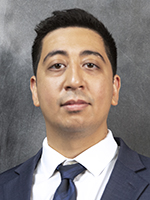
Award: Mentored Clinician Scientist
Study: Comparing early operative stabilization to nonoperative treatment following fragility fractures of the pelvic ring
Fragility fractures of the pelvic ring are common after a fall in older adults and can significantly affect quality of life, including the ability to walk and live independently. Historically, these pelvic ring fractures were treated nonoperatively as surgery was deemed too invasive for this population. However, advances in minimally invasive pelvic ring surgery have led to new treatment options and expanded indications.
Dr. Sepehri’s observational study will compare outcomes among patients treated with and without surgery across various international sites. Treatment groups will be matched using novel statistical methods, and patient important outcomes, including independent mobility, return to home and survival, will be evaluated.
“With our aging population, fragility fractures of the pelvic ring are becoming more common,” says Dr. Sepehri. “The results from this study will guide treatment decision-making aimed at maximizing outcomes that matter most to patients.”
Is active surveillance feasible for treating bladder cancer without bladder removal?

Award: Mentored Clinician Scientist
Study: NEO-BLAST: Neoadjuvant therapy for bladder cancer followed by active surveillance vs. treatment
Muscle-invasive bladder cancer is one of the most challenging urologic cancers to treat. The standard approach — systemic therapy (chemotherapy, immunotherapy) followed by bladder removal — can be lifesaving but carries significant impacts on quality of life. For up to one in three patients, chemotherapy eliminates detectable cancer prior to surgery, suggesting some patients may not require bladder removal. However, there is currently no reliable way to identify these individuals and know with certainty that the bladder could be left intact.
Dr. St-Laurent’s NeoBLAST trial will test whether patients with no visible or molecular evidence of cancer after presurgical systemic therapy can be safely managed with active surveillance. The study will assess whether this approach is as effective as standard bladder treatment. A complementary translational research program co-led by Drs. St-Laurent, Peter Black and collaborators will also investigate biomarkers of treatment response and recurrence.
“NeoBLAST could transform bladder cancer treatment by offering a personalized, less invasive alternative for select patients with a complete response to systemic therapy — preserving bladder function while maintaining excellent cancer control,” says Dr. St-Laurent. “Beyond its clinical impact, this work will establish a patient-centered translational research platform aligned with VCHRI’s mandate for innovative discovery.”
Investigator Awards are made possible with the generous support of the VGH & UBC Hospital Foundation in partnership with VCHRI.