Main menu

  • About
    • Leadership
    • Our Team
    • Vision, Mission and Values
    • Health and Economic Impact
    • Strategic Plan
    • News and Stories
    • Careers
  • Research
    • Research Focus
      • Brain Health
      • Cancer
      • Digital Health and Artificial Intelligence
      • Healthy Aging and Mobility
      • Immune System
      • Injury and Rehabilitation
      • Lung Health
      • Mental Health and Substance Use
      • Other Research Focus Areas
    • Research Centres and Programs
      • BC Centre on Substance Use
      • Centre for Aging SMART
      • Centre for Clinical Epidemiology and Evaluation
      • Centre for Lung Health
      • Dilawri Cardiovascular Institute
      • Djavad Mowafaghian Centre for Brain Health
      • International Collaboration On Repair Discoveries
      • M. H. Mohseni Institute of Urologic Sciences
      • Ovarian Cancer Research Centre
      • Community Research Program
      • Emergency Medicine Research Program
      • Hematology Research Program
      • Skin Research Program
    • Research Cores
      • Clinical Trials Platform
      • VCH-VCHRI AI Hub
      • Indigenous Health Research Unit
    • Researcher Directory
    • Events and Workshops
    • Participate in Research
  • Research Services
    • New to VCHRI
      • Working at VCHRI
      • Regulations and Training
      • Membership with VCHRI
    • Research Development
      • Awards and Funding
      • Research Facilitation
      • Grant Management
      • Learning and Development
    • Contracts and Compliance
      • Contract Facilitation at VCHRI
      • Operational Approval
      • Research Privacy
      • Clinical Trials Administration
    • Research Support
      • Communications and Media Relations
      • Financial Policies and Procedures
      • VCH-VCHRI AI Hub
    • Find a Study
    • Indigenous Research
  • Clinical Trials
    • Clinical Trials Platform
      • Phase 1 Clinical Trials Research Unit
      • Hematology Research Unit
      • Clinical Research Unit
    • Find a Study
    • Researcher Directory
  • Participate in Research
    • Reasons to Participate
    • Participant Stories
    • Find a Study
    • Recruitment Support

User menu

  • Log in

Breadcrumb

  1. Home
  2. Research
  3. Participate in Research
  4. From tissue takers to research partners

From tissue takers to research partners

Stories Jul 8, 2017 3 minutes

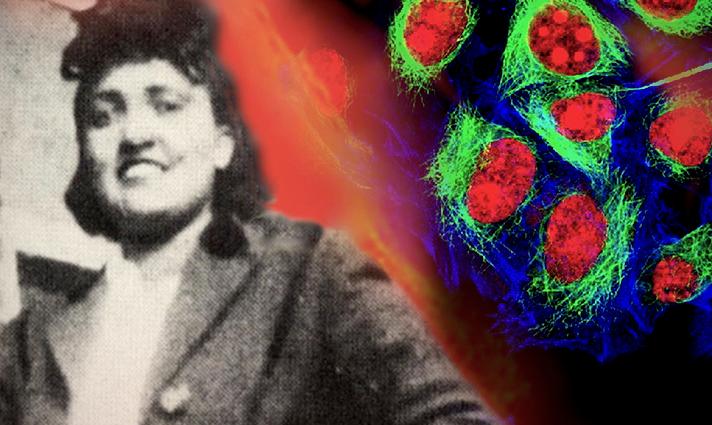
Ethical practices have come a long way since the 1950s when cancer cells were taken from Henrietta Lacks without her knowledge.

The immortal cell line of Henrietta Lacks, known as HeLa, has had innumerable applications in medical research, from developing a vaccine for polio to new cancer treatments. However, these advances came at an ethical cost, as consent for conducting research on Lacks’ cervical cancer cells was not obtained when her tissue sample was taken in 1951. 

Flash forward to today, and much has changed in ethics research. Groups like BC’s Ovarian Cancer Research Team (OVCARE) are collecting tissue samples to make innovative discoveries, but with the full knowledge and consent of patients. 
Listen to a podcast about Henrietta Lacks’ immortal cell line in this Radiolab production.

“We are very diligent about making sure the patient actually understands what it is they are consenting to,” says Dr. Dianne Miller, Vancouver Coastal Health Research Institute researcher and co-founder of OVCARE. 

Every OVCARE patient is given a booklet that explains how his or her tissues would be used at the time he or she receives a consent form. If there is a language barrier, the team ensures an interpreter is present so that the patient has a full understanding of what his or her consent entails. Patients take home a copy of the form and are instructed that they can remove their consent at any time.
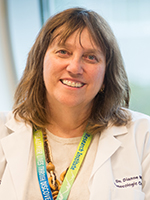
Dr. Miller is co-founder of the OVCARE research group and associate professor of obstetrics and gynecology at the University of British Columbia.

Asking patients if they would like to donate their tissues is done in a manner that is as uncoercive as possible, and occurs only after they have consented to the recommended treatment, Dr. Miller notes. Patients are informed that participation is entirely voluntary. Most patients do volunteer to donate their tissues to research, she adds, because they understand that researchers are using their tissue cultures to find new cancer treatments. 

Tissue donation supports cancer research

Collected tissues are placed in tissue banks, such as the OVCARE Tissue Bank at the Vancouver General Hospital (VGH) Department of Pathology and British Columbia Cancer Agency. The OVCARE Tissue Bank, which contains tumour samples from over 2,100 consenting patients, is shared with national and international researchers and has contributed to over 60 research projects.
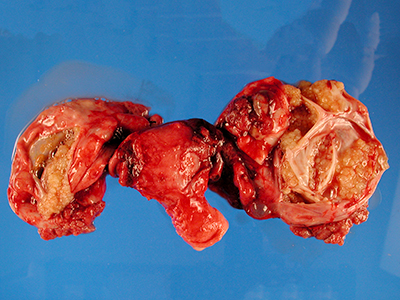
Ovarian cancer tissue sample from the OVCARE Tissue Bank at the VGH Department of Pathology.  

“Most of the research at OVCARE wouldn’t have been possible without our tissue bank and the ability to look at and compare cancer tissues,” says Dr. Miller. “Particularly with translational research—the application of research to enhance patient care—it is absolutely critical that we are as close to what is going on in a cancer patient as possible. We need to find out what is happening in the DNA and RNA of a patient’s tumour.”

While the HeLa cell has been instrumental in treating many conditions, Dr. Miller notes that those cells are unlikely to be used in research into ovarian cancers—a focus of OVCARE, along with endometriosis—as the HeLa cells were derived from cervical cancer and are infected with the human papilloma virus (HPV). As such, it is imperative that researchers continue to partner with patients to collect new samples for tissue banks. 

Tissue bank samples supported OVCARE’s discovery that some ovarian cancers originate in the fallopian tubes. Currently, OVCARE is banking endometriosis—along with ovarian—tissue samples. These samples support OVCARE’s research into cancerous mutations in endometriosis, which can be associated with ovarian cancers. 

 

Related Articles

Harnessing AI to improve ovarian cancer outcomes

Canadian surgical innovation cuts ovarian cancer risk by nearly 80 per cent

Ask an expert: How do I prevent ovarian cancer?

Share:

  • Facebook
  • Linkedin
  • Twitter
  • Instagram
  • Email

Related Research Centres/Programs

Ovarian Cancer Research Centre

Get the latest research headlines in your inbox

Subscribe

Recent News and Stories

Type
Stories

Improving respiratory protection for wildland firefighters

Sep 3, 2026 lung, safety
Type
Announcement

Knowledge Translation Challenge 2026 Recipients

Aug 25, 2026 award
Type
Stories

A new possible treatment for severe bipolar depression

Aug 23, 2026 bipolar disorder, treatment options
See more news

Get updates!

Join our newsletter mailing list to stay up to date on features and releases.

Subscribe

Quick Links

  • News and Stories
  • Careers
  • Events
  • Media Enquiries

Follow Us

  • LinkedIn
  • Instagram
  • Bluesky
  • YouTube

© 2026 VCHRI. All rights reserved.

  • Contact
  • Privacy Policy