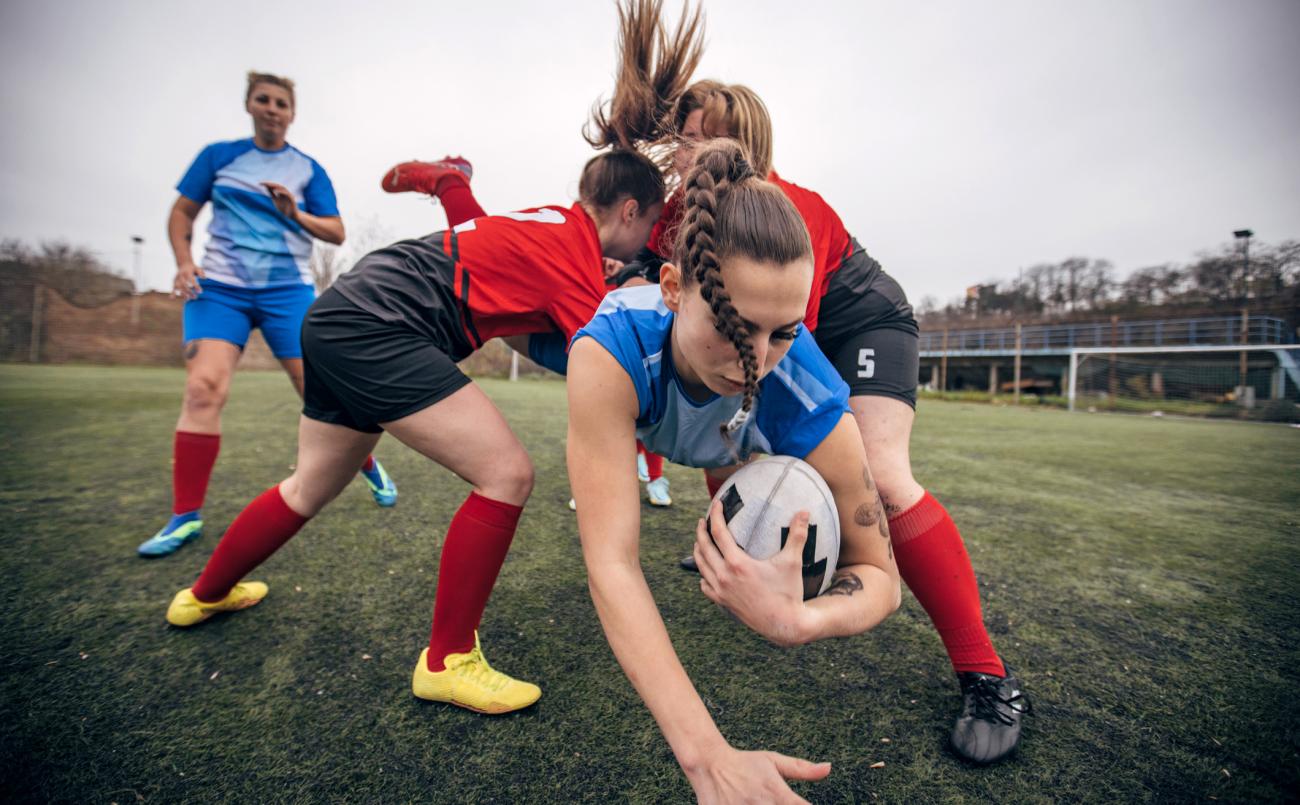
New research suggests that patterns of repetitive head impacts may be more similar across sports than previously thought, raising questions about how we understand brain injuries in athletes.
A tackle on the football field and a header in a soccer match may appear very different, but new research led by Vancouver Coastal Health Research Institute (VCHRI) researcher Dr. Lyndia Wu and University of British Columbia (UBC) PhD student Zaryan Masood suggests the brain may experience some of those impacts in surprisingly similar ways.

Published in Scientific Reports, the study compared subconcussive head impacts across university-level men’s football, men’s ice hockey, women’s soccer and women’s rugby teams. By analyzing data across multiple sports simultaneously, the researchers aimed to better understand how repetitive head impacts differ between athletes and what those differences could mean for long-term brain health.
The idea for the project came from a common question parents and athletes often ask: which sports are safest when it comes to head and brain injuries?
“Comparing head impacts across different sports gives a clearer picture of how the brain experiences repeated impacts.”
“Most head impact studies focus on a single sport and single sex, which makes it difficult to compare studies apples-to-apples,” says Masood. “Using standardized methods to investigate multiple sports and sexes within the same study can help us better understand their similarities and differences.”
Findings challenge assumptions about high-risk sports
For their research, the study team analyzed data sets from athletes who wore instrumented mouthguards — wearable sensors that measure how the head accelerates and rotates during play — and used statistical comparisons and clustering methods to analyze differences and similarities across sports.
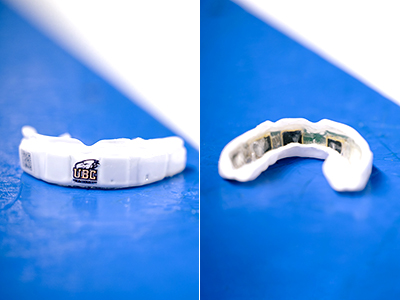
The researchers used statistical and machine learning approaches to compare impact patterns across sports, looking not only at overall force but also at factors such as impact direction, duration and frequency.
While men’s football athletes experienced the highest overall impact magnitudes, some of the highest forward-and-backward head accelerations occurred during headers in women’s soccer.
“We found that headers in soccer can produce accelerations similar to a typical football impact in certain directions,” says Masood. “That challenges the common belief that football is always the highest-impact sport.”

The study also showed that impact profiles in men’s football, women’s rugby and men’s hockey appeared remarkably similar, despite major differences in equipment and gameplay.
The findings add to growing research into subconcussive head impacts — repeated hits to the head that do not lead to a clinical concussion diagnosis but may still affect brain health over time.
“One of the key takeaways from this research is that repeated subconcussive impacts can be similar across different sports and thus could have similar brain health outcomes,” says Masood. “The danger does not only come from hits that cause concussions. Understanding subconcussive patterns can help researchers and clinicians guide strategies to reduce risk and improve athlete safety across contact sports.”
Expanding research on subconcussive head impacts improves long-term outcomes
Findings from the study could one day help guide future injury prevention strategies, including training techniques, rule changes and improvements to protective equipment tailored to the most common types of impacts. The study also contributes valuable new insights to sports science by expanding the evidence base on women athletes.

“Small hits can add up. Understanding them is key to protecting brain health in athletes.”
Wu and Masood are planning to build data sets that include both men’s and women’s teams in the same sport, including rugby and soccer, to better understand potential differences in head impact exposure.
“Continued research is crucial to understand how repetitive head impacts influence long-term outcomes,” says Wu. “This study is one step toward developing strategies to protect athletes across sports.”