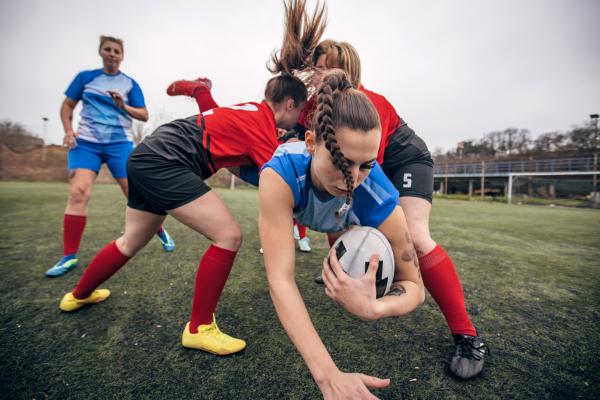
Our expert explains why sports injury prevention is critical to long-term health for both elite and recreational athletes, and which interventions can make the biggest difference.
Ahead of the World Cup™ in Vancouver this summer, VCHRI researcher Dr. Jackie Whittaker discusses what we can learn from how elite athletes train to reduce injury risk and what prevention strategies recreational athletes and people returning to exercise should consider.
Q: What can watching elite footballers at the World Cup™ teach us about preventing sports injuries?
A: The World Cup™ highlights the most common football injuries and the importance of prevention. Most football injuries involve the knee and ankle joints, as well as the hamstring, groin and calf muscles. While some injuries are relatively minor, others — such as an Anterior Cruciate Ligament (ACL) tear — require extensive rehabilitation and can increase the risk of long-term conditions like osteoarthritis.
Preventing sports injuries goes beyond staying on the field. Serious injuries, especially knee injuries, can affect physical activity, body weight, joint health and quality of life for years after an athlete’s sporting career ends.
Q: Why do movements like cutting, pivoting and sudden stops increase the risk of injuries such as ACL tears — and what can players do to reduce that risk?
A: These foundational football movements place large and rapidly changing forces through the knee and ankle joints and require quick, coordinated responses from the hip, thigh and calf muscles. Because the ACL helps control movement within the knee joint during these actions, it can be vulnerable to injury when the muscles around the knee don’t kick in to help.
Fortunately, many ACL tears are preventable with exercise-based injury prevention programs. These programs typically include strength, balance, jumping, agility and movement-control exercises. Research in men’s football has shown these programs can reduce lower-extremity injuries by up to 40 per cent. Our recent FAIR (Female, women and girl Athlete Injury pRevention) consensus also found that these programs significantly reduce ACL tears, knee injuries and ankle sprains in women footballers.
Q: Are there specific warm-up or strength-training routines that are proven to reduce injury risk?
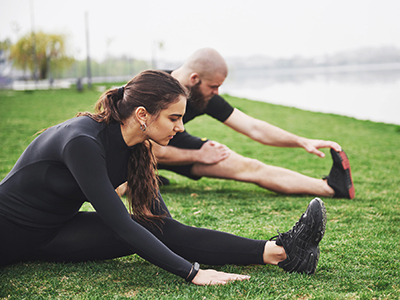
A: Research shows that structured exercise-based programs can effectively reduce football injuries. Well-known examples include the 11+, the PEP (Prevent injury and Enhance Performance) and Knee Control+ programs. Designed to fit into regular warm-ups before training and games, these programs combine strength, balance and sport-specific movement exercises shown to reduce injury risk. In contrast, stretching-based programs have not been shown to provide the same protective benefit.
It is also important to recognize that athletes do not all have the same injury prevention needs. Research in women’s athlete injury prevention highlights the importance of equitable access to training, coaching and health care expertise, as well as reducing stigma around topics such as menstruation, pregnancy and strength training.
Q: For people inspired by the World Cup™ to become more active, what’s the safest way to start or increase exercise while avoiding injury?
A: A common mistake when starting or returning to exercise is doing too much too quickly. A safer and more sustainable approach is to gradually build activity over time by starting at a manageable level and progressively increasing exercise as the body adapts.
Q: How can people reduce long-term effects of sports injuries, such as osteoarthritis?
A: Around one in four people with an ACL tear experience a second injury. Research shows they are also at higher risk of becoming less physically active, gaining weight and developing osteoarthritis within 10 years.
There are four key factors for reducing long-term knee problems after an ACL injury: monitor the knee and address symptoms early; support cartilage health through regular movement; build and maintain muscle strength; and maintain a healthy body weight.
One of the biggest mistakes people make is waiting too long to seek help when they notice pain, swelling, instability or declining activity levels. Regular weight-bearing activities such as walking, running, squatting and climbing stairs help support cartilage health, while strong thigh, calf and gluteal muscles help stabilize and protect the knee joints. Maintaining a healthy body weight is also important for reducing the long-term risk of osteoarthritis and supporting overall health.