Main menu

  • About
    • Leadership
    • Our Team
    • Vision, Mission and Values
    • Health and Economic Impact
    • Strategic Plan
    • News and Stories
    • Careers
  • Research
    • Research Focus
      • Brain Health
      • Cancer
      • Digital Health
      • Healthy Aging and Mobility
      • Heart Health
      • Immune System
      • Injury and Rehabilitation
      • Lung Health
      • Mental Health and Substance Use
      • Other Research Focus Areas
    • Research Centres and Programs
      • BC Centre on Substance Use
      • Centre for Aging SMART
      • Centre for Clinical Epidemiology and Evaluation
      • Centre for Lung Health
      • Dilawri Cardiovascular Institute
      • Djavad Mowafaghian Centre for Brain Health
      • International Collaboration On Repair Discoveries
      • M. H. Mohseni Institute of Urologic Sciences
      • Ovarian Cancer Research Centre
      • Community Research Program
      • Emergency Medicine Research Program
      • Hematology Research Program
      • Skin Research Program
    • Research Cores
      • Clinical Trials Platform
      • VCH-VCHRI AI Hub
      • Indigenous Health Research Unit
    • Researcher Directory
    • Events and Workshops
    • Participate in Research
  • Research Services
    • New to VCHRI
      • Working at VCHRI
      • Regulations and Training
      • Membership with VCHRI
    • Research Development
      • Awards and Funding
      • Research Facilitation
      • Grant Management
      • Learning and Development
    • Contracts and Compliance
      • Contract Facilitation at VCHRI
      • Operational Approval
      • Research Privacy
      • Clinical Trials Administration
    • Research Support
      • Communications and Media Relations
      • Financial Policies and Procedures
      • VCH-VCHRI AI Hub
    • Internal Awards
    • Clinical Research
    • Indigenous Research
  • Clinical Trials
    • Clinical Trials Platform
      • Phase 1 Clinical Trials Research Unit
      • Hematology Research Unit
      • Clinical Research Unit
    • Find a Study
    • Researcher Directory
  • Participate in Research
    • Reasons to Participate
    • Participant Stories
    • Find a Study
    • Recruitment Support

User menu

  • Log in

Breadcrumb

  1. Home
  2. Research
  3. Participate in Research
  4. How now, green cow?

How now, green cow?

Stories Dec 1, 2014 2 minutes

Naturally occurring nitric oxide defends against rampant beef cattle disease.

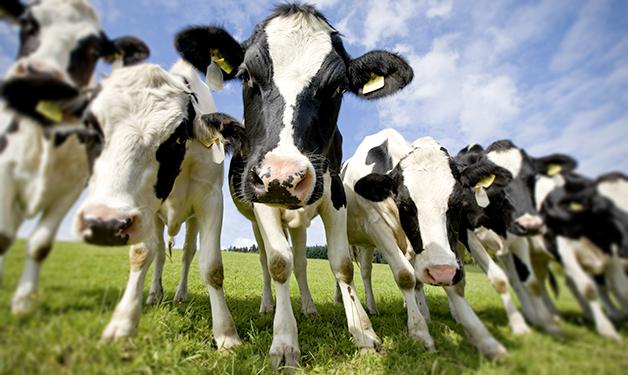
Canadians love their beef. In 2012, Canadians consumed an average of 44.1 lbs of beef per person yearly1. The greatest challenge to mass producing beef in order to meet this demand is Bovine Respiratory Disease Complex (BRDc) – a multi-factorial disease that accounts for 75% of the morbidity and more than 50% of the mortality in feedlot cattle and requires broad use of antibiotics.

A novel nitric oxide (NO)-releasing solution intranasal spray developed by Vancouver Coastal Health Research Institute scientist Dr. Chris Miller is presenting Canada’s beef cattle industry with the opportunity to continue mass production and reduce the prevalence of BRDc without the use of medication.

“The industry wants to move towards alternatives to antibiotics in preventing and treating BRDc and nitric oxide may be the answer – it’s the body’s first defense,” explains Dr. Miller, scientist at the Immunity and Infection Research Centre and Assistant Professor at the UBC Faculty of Medicine, Respiratory Division. 

NO is a naturally occurring cellular molecule in most mammals, and possesses a wide variety of biochemical characteristics. Studies have shown it to be an effective antimicrobial agent against a broad range of microorganisms, including multi-drug resistant strains of bacteria and viruses.
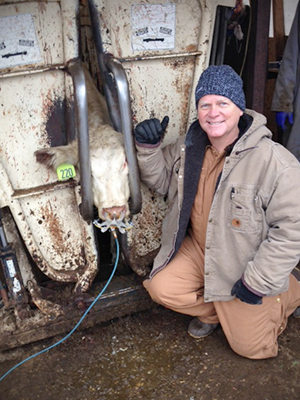
Dr. Miller has been researching NO since 1990 and wrote the first review article of NO in 1992. Through their company Bovicor Pharmatech Inc., Dr. Miller and the team have developed the first NO-nitrosylite as an intranasal NO-releasing spray called BovinexTM that can be administered in a few seconds to beef cattle during processing at the feedlot. 

Their first study of BovinexTM given to beef cattle showed that, in comparison to a placebo, incidence of BRDc in cattle arriving in the feedlot was reduced from 72 per cent to 28 per cent.
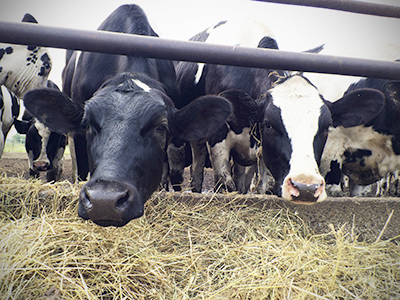
In fall of 2013, the team completed a study (in the process of being published in a peer review periodical) of 1,080 feedlot animals in in Alberta and found that the spray was as effective against BRDc as antibiotics. A subsequent study has also shown that the NO administered to the cattle leaves no residue or trace in the beef ready for consumption.

BovinexTM has been presented to the U.S. Food and Drug Administration and Health Canada and is going through the approval process to be the first NO-based therapy for prophylactic use in cattle. 

“Our hope is that 90% of the animals will be antibiotic free,” says Dr. Miller. “My dream is to see this being used in all animals in B.C. This could give us ‘green’ antibiotic-free B.C. beef.”


1 Canada's Beef Industry Fast Facts 2013 

 

Share:

  • Facebook
  • Linkedin
  • Twitter
  • Instagram
  • Email

Get the latest research headlines in your inbox

Subscribe

Recent News and Stories

Type
Stories

Ask an expert: How can I strike a healthier balance with my daily habits?

Sep 10, 2026 exercise, mobility
Type
Stories

Moving endometrial cancer prevention upstream

Sep 8, 2026 women, cancer, uterine
Type
Stories

Improving respiratory protection for wildland firefighters

Sep 3, 2026 lung, environment, safety
See more news

Get updates!

Join our newsletter mailing list to stay up to date on features and releases.

Subscribe

Quick Links

  • News and Stories
  • Careers
  • Events
  • Media Enquiries

Follow Us

  • LinkedIn
  • Instagram
  • Bluesky
  • YouTube

© 2026 VCHRI. All rights reserved.

  • Contact
  • Privacy Policy