Main menu

  • About
    • Leadership
    • Our Team
    • Vision, Mission and Values
    • Health and Economic Impact
    • Strategic Plan
    • News and Stories
    • Careers
  • Research
    • Research Focus
      • Brain Health
      • Cancer
      • Digital Health and Artificial Intelligence
      • Healthy Aging and Mobility
      • Immune System
      • Injury and Rehabilitation
      • Lung Health
      • Mental Health and Substance Use
      • Other Research Focus Areas
    • Research Centres and Programs
      • BC Centre on Substance Use
      • Centre for Aging SMART
      • Centre for Clinical Epidemiology and Evaluation
      • Centre for Lung Health
      • Dilawri Cardiovascular Institute
      • Djavad Mowafaghian Centre for Brain Health
      • International Collaboration On Repair Discoveries
      • M. H. Mohseni Institute of Urologic Sciences
      • Ovarian Cancer Research Centre
      • Community Research Program
      • Emergency Medicine Research Program
      • Hematology Research Program
      • Skin Research Program
    • Research Cores
      • Clinical Trials Platform
      • VCH-VCHRI AI Hub
      • Indigenous Health Research Unit
    • Researcher Directory
    • Events and Workshops
    • Participate in Research
  • Research Services
    • New to VCHRI
      • Working at VCHRI
      • Regulations and Training
      • Membership with VCHRI
    • Research Development
      • Awards and Funding
      • Research Facilitation
      • Grant Management
      • Learning and Development
    • Contracts and Compliance
      • Contract Facilitation at VCHRI
      • Operational Approval
      • Research Privacy
      • Clinical Trials Administration
    • Research Support
      • Communications and Media Relations
      • Financial Policies and Procedures
      • VCH-VCHRI AI Hub
    • Find a Study
    • Indigenous Research
  • Clinical Trials
    • Clinical Trials Platform
      • Phase 1 Clinical Trials Research Unit
      • Hematology Research Unit
      • Clinical Research Unit
    • Find a Study
    • Researcher Directory
  • Participate in Research
    • Reasons to Participate
    • Participant Stories
    • Find a Study
    • Recruitment Support

User menu

  • Log in

Breadcrumb

  1. Home
  2. Research
  3. Participate in Research
  4. Help on call for medical professionals

Help on call for medical professionals

Stories Oct 21, 2023 3 minutes

Introduced during the pandemic, this support service became an invaluable resource for health care workers.

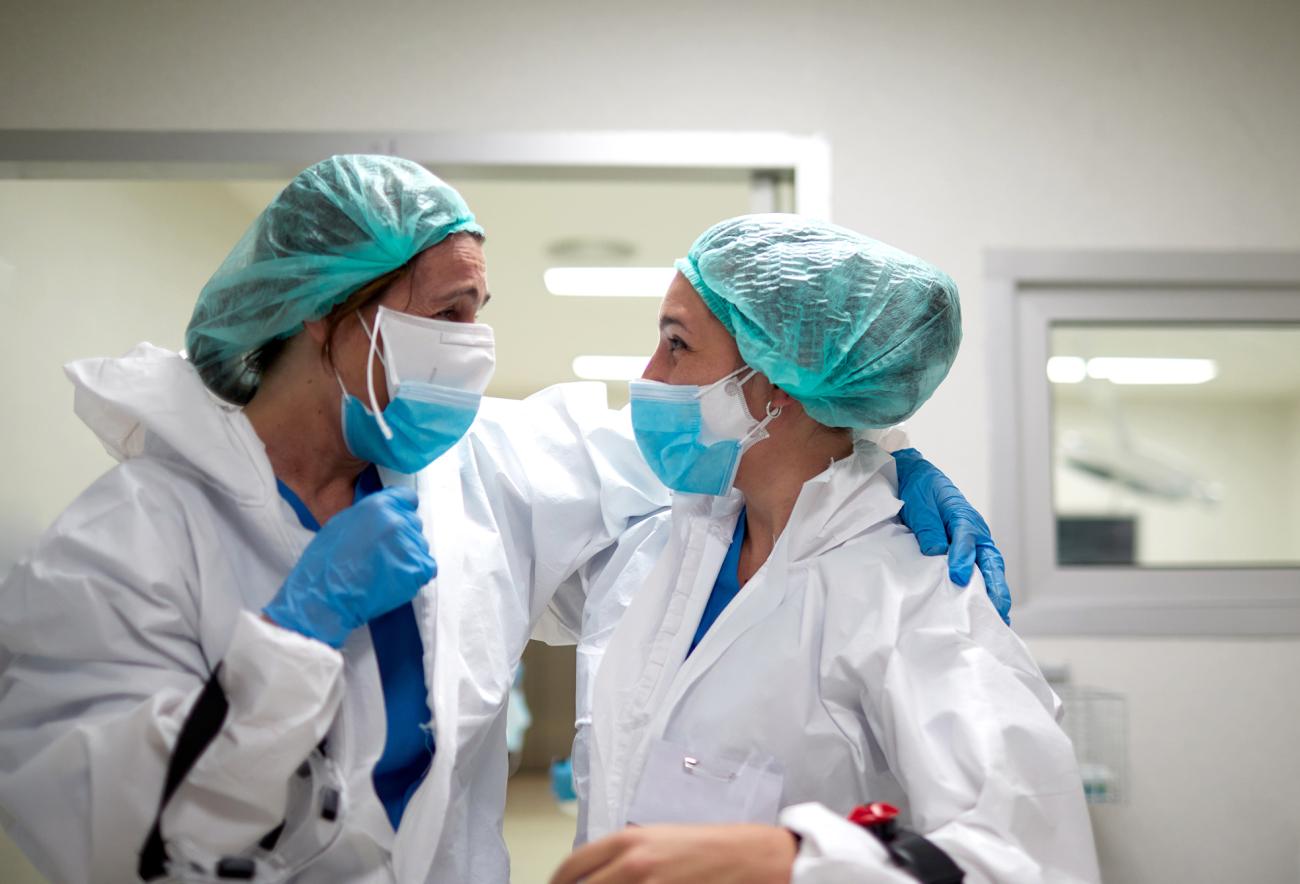
A rapid response line for medical professionals with workplace-related health and safety questions and concerns has apparently been a long time coming, according to Vancouver Coastal Health Research Institute researcher Dr. Annalee Yassi. Together with other health care workers and researchers, Yassi led the medical Practitioner Occupational Safety and Health (mPOSH) initiative, which provides prompt dedicated support and guidance to medical professionals.

“Physicians are largely independent contractors and, before mPOSH was launched, they did not have a dedicated resource within the health care system where they could ask occupational health and safety questions with complete confidentiality,” says Yassi. 

“Being able to connect with a human being who can help answer workplace questions and concerns allows physicians and other medical staff to feel cared for.” 

Innovation, community partnerships and a growing portfolio of services and patients have led to incredible advances in medicine, as well as added layers of complexity within the profession. This was particularly true during the COVID-19 pandemic, when there was a high frequency of new health care policies that could sometimes raise further questions among health practitioners. 

Dr. Annalee Yassi is a professor in the School of Population and Public Health at the University of British Columbia.

“There was a lack of consistent information surrounding workplace occupational health and safety concerns that may have impeded knowledge acquisition and understanding of policy changes in health care settings,” notes Yassi. 

Rapid peer support for medical practitioners in the workplace

mPOSH was launched at Vancouver Coastal Health (VCH) during the early days of the pandemic. It offered a confidential resource to medical practitioners who had questions related to exposures, had to be reached for contact tracing or wanted information on what to do if infected with COVID-19, along with return-to-work protocols following illness or exposure to a communicable disease. 

Emails to mPOSH are triaged by medically trained individuals, including medical students, physicians and specialists, who would then aim to reply with a phone call or email within two hours.

Below is a sample of questions posed by mPOSH users:

  • “My partner has concerns about implications for our kids, etc. What do you recommend?”
  • “I am a general practitioner working in the community. I have a question regarding the risk of exposure outside of work.”
  • “I may have been exposed at work. Can I still go out to Costco? Thank you for your hard work. This is very stressful.” 

mPOSH is well-integrated throughout VCH, supporting prevention initiatives and facilitating the development of return-to-work strategies for health practitioners, states Yassi. The mPOSH team also provides resources and collaborates with other B.C. health authorities, including Interior Health and Providence Health Care. 

“I think that the gap mPOSH fills makes the whole occupational health team stronger.”

In addition to these services, mPOSH promotes and offers important information about COVID-19 vaccination, monitors exposures to other infectious diseases, including tuberculosis, and connects health care professionals with workplace violence supports. 

Around 50 per cent of physicians have experienced a physical or psychological safety event in their workplace, according to the findings of a Doctors of B.C. Engagement survey.

Another significant mPOSH mandate is to analyze anonymised data and do research to develop resources and guides that can address identified gaps in health care settings. For example, mPOSH tracks violent incidents, as well as addresses the need among medical staff for respirator fit-testing to reduce the risk of exposure to transmissible diseases in the workplace.

“Thanks for giving helpful medical information, especially after hours!”
— mPOSH caller and VCH nurse practitioner

“We see the role of mPOSH as one of advocating for medical staff,” says Yassi. “So long as it continues to be beneficial to medical practitioners and the health sector, our hope is to continue offering this service long into the future.”

 

Researchers

Annalee Yassi

Related Articles

On-hand support while awaiting eating disorder care

Reducing crash risk among people with schizophrenia

Ask an expert: What are some signs that gambling is starting to affect my brain health?

Share:

  • Facebook
  • Linkedin
  • Twitter
  • Instagram
  • Email

Related Research Centres/Programs

Other Research Focus Areas

Get the latest research headlines in your inbox

Subscribe

Recent News and Stories

Type
Stories

Improving respiratory protection for wildland firefighters

Sep 3, 2026 lung, safety
Type
Announcement

Knowledge Translation Challenge 2026 Recipients

Aug 25, 2026 award
Type
Stories

A new possible treatment for severe bipolar depression

Aug 23, 2026 bipolar disorder, treatment options
See more news

Get updates!

Join our newsletter mailing list to stay up to date on features and releases.

Subscribe

Quick Links

  • News and Stories
  • Careers
  • Events
  • Media Enquiries

Follow Us

  • LinkedIn
  • Instagram
  • Bluesky
  • YouTube

© 2026 VCHRI. All rights reserved.

  • Contact
  • Privacy Policy