
Main menu

  • About
    • Leadership
    • Our Team
    • Vision, Mission and Values
    • Health and Economic Impact
    • Strategic Plan
    • News and Stories
    • Careers
  • Research
    • Research Focus
      • Brain Health
      • Cancer
      • Digital Health
      • Healthy Aging and Mobility
      • Heart Health
      • Immune System
      • Injury and Rehabilitation
      • Lung Health
      • Mental Health and Substance Use
      • Other Research Focus Areas
    • Research Centres and Programs
      • BC Centre on Substance Use
      • Centre for Aging SMART
      • Centre for Clinical Epidemiology and Evaluation
      • Centre for Lung Health
      • Dilawri Cardiovascular Institute
      • Djavad Mowafaghian Centre for Brain Health
      • International Collaboration On Repair Discoveries
      • M. H. Mohseni Institute of Urologic Sciences
      • Ovarian Cancer Research Centre
      • Community Research Program
      • Emergency Medicine Research Program
      • Hematology Research Program
      • Skin Research Program
    • Research Cores
      • Clinical Trials Platform
      • VCH-VCHRI AI Hub
      • Indigenous Health Research Unit
    • Researcher Directory
    • Events and Workshops
    • Participate in Research
  • Research Services
    • New to VCHRI
      • Working at VCHRI
      • Regulations and Training
      • Membership with VCHRI
    • Research Development
      • Awards and Funding
      • Research Facilitation
      • Grant Management
      • Learning and Development
    • Contracts and Compliance
      • Contract Facilitation at VCHRI
      • Operational Approval
      • Research Privacy
      • Clinical Trials Administration
    • Research Support
      • Communications and Media Relations
      • Financial Policies and Procedures
      • VCH-VCHRI AI Hub
    • Internal Awards
    • Clinical Research
    • Indigenous Research
  • Clinical Trials
    • Clinical Trials Platform
      • Phase 1 Clinical Trials Research Unit
      • Hematology Research Unit
      • Clinical Research Unit
    • Find a Study
    • Researcher Directory
  • Participate in Research
    • Reasons to Participate
    • Participant Stories
    • Find a Study
    • Recruitment Support

User menu

  • Log in

Breadcrumb

  1. Home
  2. Research
  3. Participate in Research
  4. New solution to treat obstructive sleep apnea

New solution to treat obstructive sleep apnea

Stories Apr 22, 2025 3 minutes

Researchers are developing an effective, affordable and more comfortable treatment to prevent upper airway obstruction during sleep.

People with obstructive sleep apnea (OSA) experience a complete stoppage or a transient reduction in breathing while asleep, which can cause disabling symptoms and long-term health consequences. Current treatments are effective; however, many individuals stop using them due to discomfort, placing them at greater risk of the negative health effects of untreated OSA. 

Dr. John Fleetham is a professor and clinician-scientist at the University of British Columbia (UBC) and a member of the Centre for Lung Health. Fleetham was appointed to the Order of Canada in 2023.

Vancouver Coastal Health Research Institute researcher Dr. John Fleetham and other UBC team members — Dr. Robin Coope, Paul Cubbon, Dr. John Madden and Dr. Lorne Whitehead — are developing a negative airway therapy device that would provide a novel alternative treatment for OSA.

“Our prototype would be akin to a nasal passage opening strip for the neck,” explains Fleetham. “We are designing it to be an effective, comfortable and a more affordable treatment for people with OSA.”
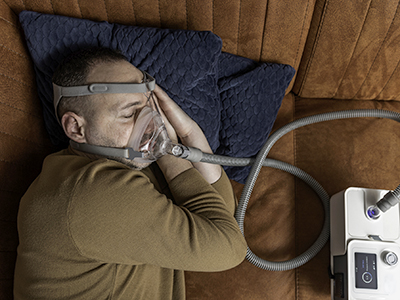
OSA affects approximately 25 per cent of British Columbians, with around five per cent experiencing moderate to severe OSA.

The present recommended treatment for OSA is a continuous positive airway pressure (CPAP) device, which includes a mask worn on the face during sleep. The machine blows air through a tube connected to the mask into the patient’s upper airway, preventing upper airway obstruction.

“When you sleep, all of your muscles relax,” explains Fleetham. “In people with OSA, the relaxing of muscles in the upper airway during sleep closes off the flow of air, leading to recurrent upper airway obstruction and associated asphyxiation.”

The prototype in development by Fleetham and the UBC team would fit over the neck of patients and use negative pressure to keep the upper airway open during sleep.

Negative pressure therapy could increase OSA treatment uptake 

Untreated OSA can lead to an increased risk of heart attack, stroke, depression, high blood pressure, sleepiness, infection and cancer. Despite these risks, many people with OSA discontinue using their CPAP machines within two years of commencing treatment, often related to reasons of discomfort when wearing the mask, shares Fleetham. Some individuals may also confront barriers to accessing CPAP due to the cost of the devices, which range in price from around $800 to $3,000 and are not presently covered under the B.C. Medical Services Plan.

“Our aim is that our novel negative pressure therapy device will feel like wearing a scarf while sleeping, making it as comfortable as possible for the patient.”

Targeted to be a fraction of the cost of CPAP machines, the negative pressure therapy device would also lower the affordability barrier, enabling more individuals to benefit from a life-enhancing if not life-saving clinically approved treatment, adds Fleetham.
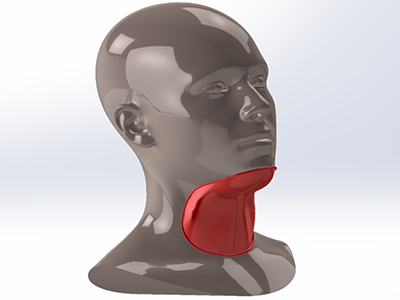
An approximation of what the negative pressure prototype under development could look like when worn.


Fleetham and the UBC team’s project got underway six months ago, springboarding from a COVID-19 pandemic project to identify a negative pressure treatment to treat respiratory disease. The research team anticipates moving their negative pressure therapy prototype through clinical trials and into a real-world application within the next year, with potential commercialization and patient benefits on the horizon.

This project was made possible through philanthropy. Sincere thanks to the Belzberg family, whose generous gift is fueling innovation towards improving the quality of life of patients.

 

Researchers

John Fleetham

Related Articles

Ask an expert: How can I tell if I have sleep apnea?

Ask an expert: How does fatigue affect my ability to drive?

Brain drain: The connection between poor sleep and mild cognitive impairment

Share:

  • Facebook
  • Linkedin
  • Twitter
  • Instagram
  • Email

Related Research Centres/Programs

Centre for Lung Health

Get the latest research headlines in your inbox

Subscribe

Recent News and Stories

Type
Stories

Ask an expert: How can I strike a healthier balance with my daily habits?

Sep 10, 2026 exercise, mobility
Type
Stories

Moving endometrial cancer prevention upstream

Sep 8, 2026 women, cancer, uterine
Type
Stories

Improving respiratory protection for wildland firefighters

Sep 3, 2026 lung, environment, safety
See more news

Get updates!

Join our newsletter mailing list to stay up to date on features and releases.

Subscribe

Quick Links

  • News and Stories
  • Careers
  • Events
  • Media Enquiries

Follow Us

  • LinkedIn
  • Instagram
  • Bluesky
  • YouTube

© 2026 VCHRI. All rights reserved.

  • Contact
  • Privacy Policy