Main menu

  • About
    • Leadership
    • Our Team
    • Vision, Mission and Values
    • Health and Economic Impact
    • Strategic Plan
    • News and Stories
    • Careers
  • Research
    • Research Focus
      • Brain Health
      • Cancer
      • Digital Health
      • Healthy Aging and Mobility
      • Heart Health
      • Immune System
      • Injury and Rehabilitation
      • Lung Health
      • Mental Health and Substance Use
      • Other Research Focus Areas
    • Research Centres and Programs
      • BC Centre on Substance Use
      • Centre for Aging SMART
      • Centre for Clinical Epidemiology and Evaluation
      • Centre for Lung Health
      • Dilawri Cardiovascular Institute
      • Djavad Mowafaghian Centre for Brain Health
      • International Collaboration On Repair Discoveries
      • M. H. Mohseni Institute of Urologic Sciences
      • Ovarian Cancer Research Centre
      • Community Research Program
      • Emergency Medicine Research Program
      • Hematology Research Program
      • Skin Research Program
    • Research Cores
      • Clinical Trials Platform
      • VCH-VCHRI AI Hub
      • Indigenous Health Research Unit
    • Researcher Directory
    • Events and Workshops
    • Participate in Research
  • Research Services
    • New to VCHRI
      • Working at VCHRI
      • Regulations and Training
      • Membership with VCHRI
    • Research Development
      • Awards and Funding
      • Research Facilitation
      • Grant Management
      • Learning and Development
    • Contracts and Compliance
      • Contract Facilitation at VCHRI
      • Operational Approval
      • Research Privacy
      • Clinical Trials Administration
    • Research Support
      • Communications and Media Relations
      • Financial Policies and Procedures
      • VCH-VCHRI AI Hub
    • Internal Awards
    • Clinical Research
    • Indigenous Research
  • Clinical Trials
    • Clinical Trials Platform
      • Phase 1 Clinical Trials Research Unit
      • Hematology Research Unit
      • Clinical Research Unit
    • Find a Study
    • Researcher Directory
  • Participate in Research
    • Reasons to Participate
    • Participant Stories
    • Find a Study
    • Recruitment Support

User menu

  • Log in

Breadcrumb

  1. Home
  2. Research
  3. Participate in Research
  4. Rethinking head impacts across contact sports

Rethinking head impacts across contact sports

Stories Jun 3, 2026 3 minutes

New research suggests that patterns of repetitive head impacts may be more similar across sports than previously thought, raising questions about how we understand brain injuries in athletes.

A tackle on the football field and a header in a soccer match may appear very different, but new research led by Vancouver Coastal Health Research Institute (VCHRI) researcher Dr. Lyndia Wu and University of British Columbia (UBC) PhD student Zaryan Masood suggests the brain may experience some of those impacts in surprisingly similar ways.

Dr. Lyndia Wu is an associate professor and director of the Sensing in Biomechanical Processes Lab in the Department of Mechanical Engineering at the University of British Columbia, as well as a principal investigator at the International Collaboration on Repair Discoveries (ICORD) and the Centre for Aging SMART.

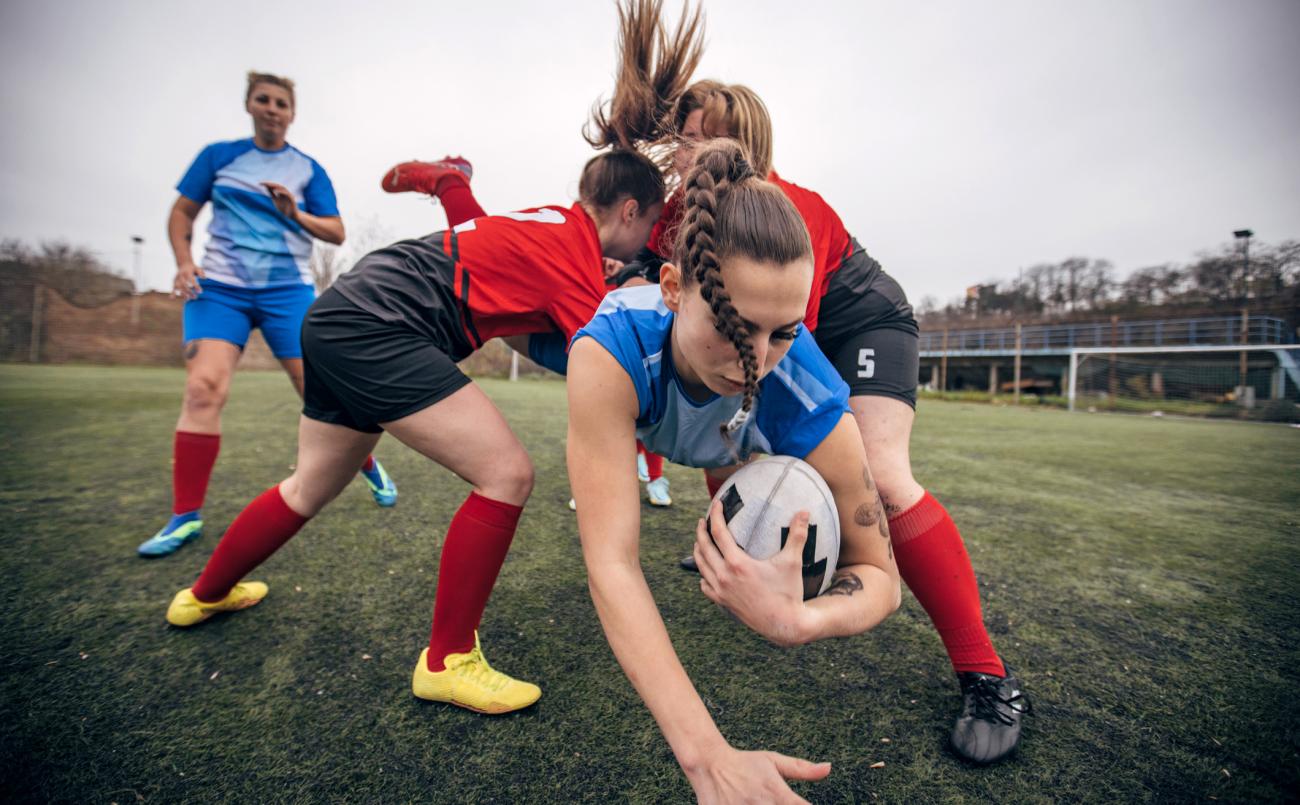
Published in Scientific Reports, the study compared subconcussive head impacts across university-level men’s football, men’s ice hockey, women’s soccer and women’s rugby teams. By analyzing data across multiple sports simultaneously, the researchers aimed to better understand how repetitive head impacts differ between athletes and what those differences could mean for long-term brain health.

The idea for the project came from a common question parents and athletes often ask: which sports are safest when it comes to head and brain injuries?

“Comparing head impacts across different sports gives a clearer picture of how the brain experiences repeated impacts.”

“Most head impact studies focus on a single sport and single sex, which makes it difficult to compare studies apples-to-apples,” says Masood. “Using standardized methods to investigate multiple sports and sexes within the same study can help us better understand their similarities and differences.”

Findings challenge assumptions about high-risk sports

For their research, the study team analyzed data sets from athletes who wore instrumented mouthguards — wearable sensors that measure how the head accelerates and rotates during play — and used statistical comparisons and clustering methods to analyze differences and similarities across sports. 
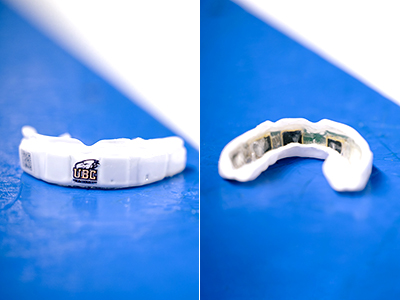
Worn on the upper teeth, instrumented mouthguards move with the head and capture how the brain may shift during an impact.

The researchers used statistical and machine learning approaches to compare impact patterns across sports, looking not only at overall force but also at factors such as impact direction, duration and frequency.

While men’s football athletes experienced the highest overall impact magnitudes, some of the highest forward-and-backward head accelerations occurred during headers in women’s soccer.

“We found that headers in soccer can produce accelerations similar to a typical football impact in certain directions,” says Masood. “That challenges the common belief that football is always the highest-impact sport.”

Zaryan Masood is a PhD student in the Sensing in Biomechanical Processes Lab at UBC.

The study also showed that impact profiles in men’s football, women’s rugby and men’s hockey appeared remarkably similar, despite major differences in equipment and gameplay.

The findings add to growing research into subconcussive head impacts — repeated hits to the head that do not lead to a clinical concussion diagnosis but may still affect brain health over time.

“One of the key takeaways from this research is that repeated subconcussive impacts can be similar across different sports and thus could have similar brain health outcomes,” says Masood. “The danger does not only come from hits that cause concussions. Understanding subconcussive patterns can help researchers and clinicians guide strategies to reduce risk and improve athlete safety across contact sports.”

Expanding research on subconcussive head impacts improves long-term outcomes

Findings from the study could one day help guide future injury prevention strategies, including training techniques, rule changes and improvements to protective equipment tailored to the most common types of impacts. The study also contributes valuable new insights to sports science by expanding the evidence base on women athletes.

Despite some growing interest, Masood notes that research on brain health in women’s sports remains scarce. “It’s essential to understand concussion and subconcussive impacts in both sexes,” he adds.

“Small hits can add up. Understanding them is key to protecting brain health in athletes.”

Wu and Masood are planning to build data sets that include both men’s and women’s teams in the same sport, including rugby and soccer, to better understand potential differences in head impact exposure.

“Continued research is crucial to understand how repetitive head impacts influence long-term outcomes,” says Wu. “This study is one step toward developing strategies to protect athletes across sports.”


Researchers

Lyndia Wu

Related Articles

Computer algorithm tracks head impacts in sport

Overcoming fear after concussion

A snow sport helmet designed with concussions top of mind

Share:

  • Facebook
  • Linkedin
  • Twitter
  • Instagram
  • Email

Related Research Centres/Programs

Centre for Aging SMART

International Collaboration on Repair Discoveries

Get the latest research headlines in your inbox

Subscribe

Recent News and Stories

Type
Stories

Ask an expert: How can I strike a healthier balance with my daily habits?

Sep 10, 2026 exercise, mobility
Type
Stories

Moving endometrial cancer prevention upstream

Sep 8, 2026 women, cancer, uterine
Type
Stories

Improving respiratory protection for wildland firefighters

Sep 3, 2026 lung, environment, safety
See more news

Get updates!

Join our newsletter mailing list to stay up to date on features and releases.

Subscribe

Quick Links

  • News and Stories
  • Careers
  • Events
  • Media Enquiries

Follow Us

  • LinkedIn
  • Instagram
  • Bluesky
  • YouTube

© 2026 VCHRI. All rights reserved.

  • Contact
  • Privacy Policy