The VitalSeer technology can detect heart rate. Now, researchers are testing it in the real world and working to expand its capabilities.
Vital signs are essential indicators of health. However, current technology requires a patient to be present in a care facility for their vital signs to be accurately collected, making virtual visits ill-equipped for this fundamental diagnostic step.
The VitalSeer technology under development by Vancouver Coastal Health Research Institute researcher Dr. Kendall Ho and Dr. Di Jiang could make it possible for clinicians to accurately assess a patients’ vital signs remotely.
“The VitalSeer uses a computer vision approach to detecting vital signs that will be an important part in expanding and enhancing virtual care across British Columbia.”
Vital signs provide baseline health information about a patient. The core four are a patient’s body temperature, pulse/heart rate, blood pressure and respiratory rate. Additional vital signs are blood oxygen saturation, which measures the amount of oxygen circulating in a patient’s bloodstream, and pain, such as evaluating pain on a scale of one to 10.
“We call these ‘vital signs’ because they are vital to understanding a patient’s state of health,” Ho explains. “For example, a high or low heart rate adds a different layer of interpretation to a patient reporting a high temperature or a patient reporting that they feel anxious.”
“An accurate heart rate can help validate whether someone needs to go to an emergency department or not.”
While not all visits with a clinician require a vital signs assessment, health care facilities in B.C. have the necessary tools on hand to detect them quickly and accurately. Contactless tools for vital signs detection have been needed since the advent of virtual care visits — when a clinician meets with a patient over video conferencing using electronic devices, such as a smartphone, computer or tablet.

Initial research into the VitalSeer technology began during the COVID-19 pandemic in 2020 as a priority of the National Research Council Canada toward the development of contactless vital signs software that could be integrated into virtual health care systems.
“The technology has presented several challenges,” states Ho. “It must account for different skin pigments, lighting and electronic devices, along with the abilities of diverse users.”
“Our goal is to make VitalSeer available as soon as possible for integration into health care systems to provide accurate, timely support to patients in need of virtual care, particularly those living in rural, remote and rustic areas far from major hospitals and clinics.”
Designing a contactless vital signs tool for a diverse patient population
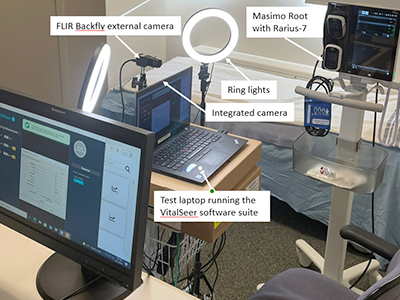
VitalSeer measures vital signs using camera-based remote photoplethysmography (rPPG) — a compound word consisting of “photo,” meaning light; “plethysmo,” meaning volume; and “graphy,” meaning recording. It does this by detecting visible changes in blood vessels in the surface layers of skin, such as how much light is absorbed or scattered by the skin. These biomarkers enable the software to detect the concentration of red and white blood cells, along with oxygen, in veins, indicating how much is present and being pumped by the heart at any given moment.
Already, Ho and his team have been able to use VitalSeer to accurately and remotely detect patients’ heart rates.
“Our current focus is to expand what VitalSeer can detect, specifically its ability to determine a patient’s oxygen saturation and blood pressure.”
In their latest study, Ho and the research team tested the user-friendliness of VitalSeer among 48 participants, mostly seniors, with various skin tones. Researchers collected data on the perceived value of VitalSeer, as well as its ease of use and considerations surrounding data security. On top of insights gleaned from these participant questionnaires, almost all participants reported that a contactless sensing system like VitalSeer would be useful.
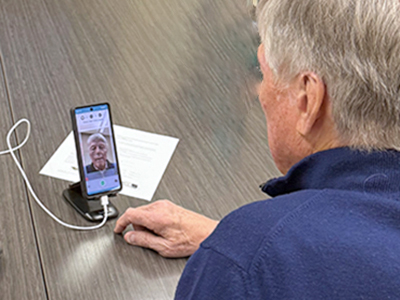
This recent trialing of the evolving VitalSeer technology sets the stage for several upcoming studies, says Ho.
“For seniors, people with accessibility limitations, people living in remote areas and others, we need contactless vital signs technology like VitalSeer to support patient access to effective and timely virtual care.”