
Main menu

  • About
    • Leadership
    • Our Team
    • Vision, Mission and Values
    • Health and Economic Impact
    • Strategic Plan
    • News and Stories
    • Careers
  • Research
    • Research Focus
      • Brain Health
      • Cancer
      • Digital Health
      • Healthy Aging and Mobility
      • Heart Health
      • Immune System
      • Injury and Rehabilitation
      • Lung Health
      • Mental Health and Substance Use
      • Other Research Focus Areas
    • Research Centres and Programs
      • BC Centre on Substance Use
      • Centre for Aging SMART
      • Centre for Clinical Epidemiology and Evaluation
      • Centre for Lung Health
      • Dilawri Cardiovascular Institute
      • Djavad Mowafaghian Centre for Brain Health
      • International Collaboration On Repair Discoveries
      • M. H. Mohseni Institute of Urologic Sciences
      • Ovarian Cancer Research Centre
      • Community Research Program
      • Emergency Medicine Research Program
      • Hematology Research Program
      • Skin Research Program
    • Research Cores
      • Clinical Trials Platform
      • VCH-VCHRI AI Hub
      • Indigenous Health Research Unit
    • Researcher Directory
    • Events and Workshops
    • Participate in Research
  • Research Services
    • New to VCHRI
      • Working at VCHRI
      • Regulations and Training
      • Membership with VCHRI
    • Research Development
      • Awards and Funding
      • Research Facilitation
      • Grant Management
      • Learning and Development
    • Contracts and Compliance
      • Contract Facilitation at VCHRI
      • Operational Approval
      • Research Privacy
      • Clinical Trials Administration
    • Research Support
      • Communications and Media Relations
      • Financial Policies and Procedures
      • VCH-VCHRI AI Hub
    • Internal Awards
    • Clinical Research
    • Indigenous Research
  • Clinical Trials
    • Clinical Trials Platform
      • Phase 1 Clinical Trials Research Unit
      • Hematology Research Unit
      • Clinical Research Unit
    • Find a Study
    • Researcher Directory
  • Participate in Research
    • Reasons to Participate
    • Participant Stories
    • Find a Study
    • Recruitment Support

User menu

  • Log in

Breadcrumb

  1. Home
  2. Research
  3. Participate in Research
  4. Boosting B12 to fight deficiency risk: Researchers study fortified yogurt for better vitamin delivery

Boosting B12 to fight deficiency risk: Researchers study fortified yogurt for better vitamin delivery

Participate in Research Jan 3, 2020 4 minutes

"I say yes to participating in research because I want to give back and be a part of research that helps people.”

– Wendy Harris, Mission

For 57-year-old Mission resident Wendy Harris, being healthy and health conscious is a way of life. Harris runs her own leisure-programming and fitness instructor training business—she knows the importance of good nutrition. So, when she saw an ad for a study requiring participants to eat yogurt, a food Harris regularly enjoys, she happily signed up. “I had already done two other research studies and enjoyed the experience. This vitamin-enhanced yogurt study sounded really interesting.” 

“I love yogurt, so this study was perfect fit for me!”

Harris is one of 80 people ages 50-75 taking part in the study, which tests the potential benefits of fortifying yogurt with vitamin B12. The study is a Master’s project for University of British Columbia (UBC) student Larisse Melo and is being overseen by Vancouver Coastal Health Research Institute scientist Dr. Yvonne Lamers. “B12 is an essential nutrient across the life span—for healthy cell formation, optimal brain and nerve function and cognitive development,” says Lamers. “In later life, lower B12 levels are associated with cognitive decline and other neurological problems, so it’s vital to make sure our bodies get enough of it.”
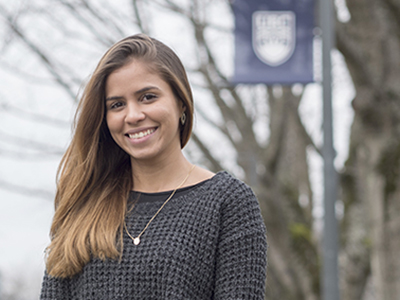
Larisse Melo is completing her Masters of Science in human nutrition at UBC.

Melo and Lamers are focussing on older adults because they are more vulnerable to B12 deficiency. As people age, their ability to digest and absorb B12 may decrease. Supplements in the form of oral pills or intermuscular injection are one option, but Lamers says providing B12 in a fortified food may be a more effective approach as it is a passive strategy and may allow for better absorption. “B12 is naturally occurring in animal products such as meat and dairy. Yogurt is a good option for fortification for a number of reasons. We can regulate the storage temperature, we can offer it to vegetarians, it’s a food many people like and it’s easy to consume.”
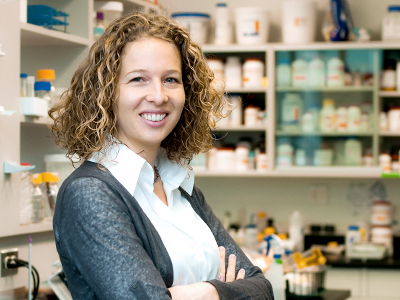
Dr. Yvonne Lamers is an Associate Professor in the Food Nutrition and Health Program at UBC. She is also the Canada Research Chair in Human Nutrition and Vitamin Metabolism.

In the first part of the study, Melo worked in the UBC Nutritional Biomarker Laboratory and UBC Food, Nutrition and Health Pilot Plant to develop a fortified yogurt product. She tested whether it was better to add the B12 before or after fermentation, and whether B12 would be stable throughout the yogurt shelf-life. Melo then handed production over to a local dairy and began recruiting participants. “We gave half of the participants fortified yogurt and half regular yogurt. We tested B12 levels at the outset, midpoint and after the study ended to determine if the fortified version affected the participants’ vitamin levels. All our participants were asked to keep a food diary and, most importantly, eat yogurt every day for eight weeks.”

A taste of mystery 

Did Harris ever tire of eating yogurt? “I definitely needed to mix it up a bit,” she laughs. “I added different fruit and granola or made smoothies. But it was delicious yogurt, with a yummy coconut flavor. And, I still love yogurt. In fact, some days I even ate other yogurt too!”
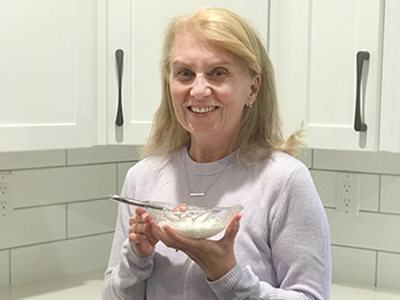
Harris notes how much fun she had taking part in the study. “It was a little mystery for me each day as I ate my yogurt, wondering if I was a control subject or not. And I really enjoyed meeting the research team, they are so dedicated and positive, and they do such good work.”

The research team made each visit so easy. I felt like I was taking part in something important.

Melo and Lamers will have results of the study in 2020. They’ll then leave it up to dairy producers and regulators to decide if B12 fortified yogurt is worth bringing to market. Their study was partly funded by the Dairy Farmers of Canada.

As for Harris, she’s keen to take part in more studies, even if they don’t come with a daily food reward. “I’d say to others, definitely take part in research! It’s worth your time. It’s interesting and you feel like you are giving back to the community.”

Visit Participate in Research to learn more about taking part in research as a healthy participant.


THIS IS ONE PATIENT’S STORY OF PARTICIPATING IN A CLINICAL TRIAL. YOUR EXPERIENCE MAY DIFFER. LEARN MORE ABOUT CLINICAL TRIALS BEFORE PARTICIPATING.


Researchers

Yvonne Lamers

Related Articles

Canadians are at high risk of kidney stones: Dietary interventions could help

Ask an expert: How can I build a balanced approach to healthy eating?

Diet and microbiome potentially linked to childhood-onset multiple sclerosis

Share:

  • Facebook
  • Linkedin
  • Twitter
  • Instagram
  • Email

Get the latest research headlines in your inbox

Subscribe

Recent News and Stories

Type
Stories

Ask an expert: How can I strike a healthier balance with my daily habits?

Sep 10, 2026 exercise, mobility
Type
Stories

Moving endometrial cancer prevention upstream

Sep 8, 2026 women, cancer, uterine
Type
Stories

Improving respiratory protection for wildland firefighters

Sep 3, 2026 lung, environment, safety
See more news

Get updates!

Join our newsletter mailing list to stay up to date on features and releases.

Subscribe

Quick Links

  • News and Stories
  • Careers
  • Events
  • Media Enquiries

Follow Us

  • LinkedIn
  • Instagram
  • Bluesky
  • YouTube

© 2026 VCHRI. All rights reserved.

  • Contact
  • Privacy Policy