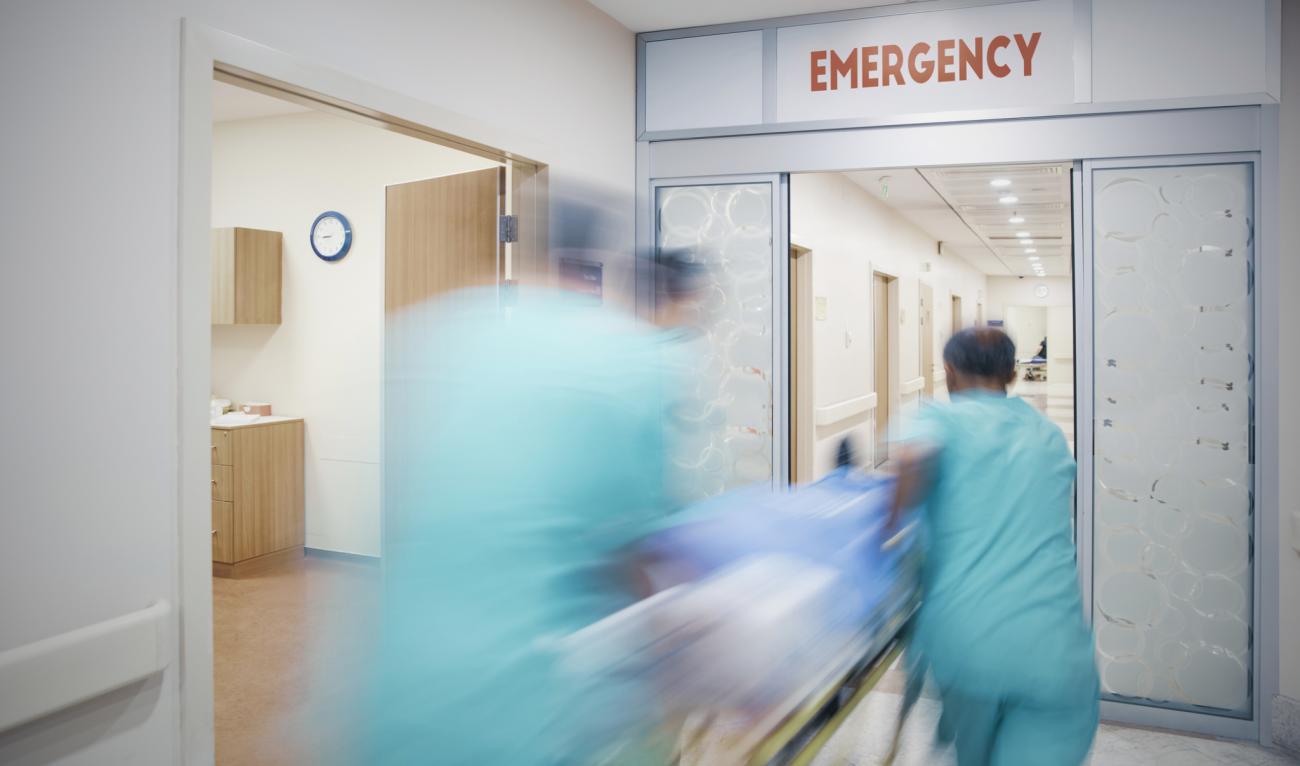
Emergency department health care workers share key barriers and successes in initiating a first-line treatment that could save lives.
The emergency department’s role in providing life-saving care can extend into longer-term treatment plans for people with opioid use disorder (OUD). Vancouver Coastal Health Research Institute researcher Dr. Jessica Moe and clinical pharmacy specialist Dr. Katherin Badke researched emergency department health care worker perceptions on connecting people with OUD to the first-line treatment, buprenorphine/naloxone (Suboxone).
“Emergency departments provide immediate, front-line access and are therefore ideal locations to identify people who are at risk of overdose, and to initiate interventions to provide support and mitigate that risk profile,” says Moe. “Our study builds on findings that there exists an opportunity to expand screening and patient engagement in this area.”

“Our team is building the knowledge base to positively impact clinical practice in the area of emergency department OUD identification and intervention.”
In one British Columbia study, around 60 per cent of individuals who experienced a drug overdose had visited the emergency department at least once within the year prior to their overdose event. However, there is presently no formal procedure to screen for and identify people with OUD, which puts someone at risk of overdose, states Moe.
Moe and Badke’s study, published in BMC Health Services Research, cites context-specific factors identified by 37 emergency department health care workers who participated in the study, including emergency physicians, nurses, pharmacists and social workers.
The research team conducted and drew from interviews and focus groups on OUD identification and patient engagement in emergency department settings to identify key themes regarding the provision of take-home buprenorphine/naloxone kits to people with OUD.
Buprenorphine/naloxone, also known by the brand name Suboxone, is a partial opioid agonist medication given to people with OUD to replace the need for more harmful and potentially deadly opioids, such as unregulated fentanyl. The medication is given to patients at the Vancouver General Hospital emergency department as a take-home kit.
“The kit allows people to take the medication at home at their convenience,” explains Badke. “While other treatments are also available, buprenorphine/naloxone has a track record of being a safer and more convenient option for people with OUD.”

Regular opioid use builds dependence in the brain and body, making stopping a monumental feat for people with OUD. A United States study found that the initiation of buprenorphine/naloxone in the emergency department was able to retain 78 per cent of participants in addiction treatment programs within the first month, compared to 37 per cent in a control group who received referral to addictions care alone, without buprenorphine/naloxone.
Low-barrier actions to address the pervasiveness of opioid use
The study team identified key themes from participant feedback, including difficulty carving out time and space in understaffed and resource-strained emergency departments for confidential discussions with patients about OUD and treatment options. “There are so many patients in emergency and so many things that I am doing,” said a pharmacist participant. A participant who is identified as a nurse echoed this sentiment, stating that the much-needed, in-depth discussions surrounding OUD treatment are often cut short due to competing demands, such as needing to attend to other emergency situations.
A social worker who participated in the study identified a need to spend time building rapport with people with OUD to successfully introduce concepts surrounding treatment.
Providers highlighted multidisciplinary collaboration as a strength that can enable teams to complete multiple, time-sensitive tasks necessary to provide patients with buprenorphine/naloxone in a fast-paced emergency department setting.
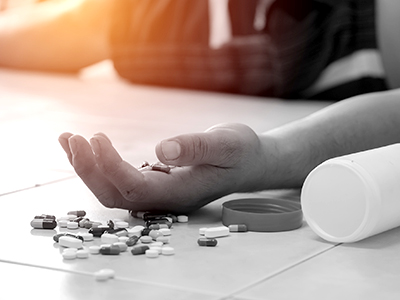
Patient receptivity and ability to absorb information were also cited by study participants as both opportunities for engagement as well as barriers. A nurse participant noted that a person with OUD’s prior awareness and understanding of buprenorphine/naloxone facilitated treatment initiation. Conversely, a physician participant shared an example of a patient who was too drowsy from opioid use to consent to initiating buprenorphine/naloxone.
Likewise, study participants’ familiarity with buprenorphine/naloxone was noted as being either a supporting factor or a barrier to its initiation, which coincided with many participants favouring the idea of ongoing OUD and buprenorphine/naloxone initiation training. This was supported by the belief among many participants that the emergency department is an essential first point of contact to discuss buprenorphine/naloxone with the target patient population.
“Where else in the health care system do we see people at all hours of the day, seven days a week?” asks Moe. “This is a low-barrier setting where the health care system can offer people with OUD support that could save their lives.”
“Our study demonstrates the incredible work that emergency department providers do every day — despite unprecedented strains — to support patients at risk of overdose during a public health emergency.”
“Our team’s resilience, commitment and empathy are true points of pride and must be matched by greater resources and supports to optimize the impact of what we do.”