
Main menu

  • About
    • Leadership
    • Our Team
    • Vision, Mission and Values
    • Health and Economic Impact
    • Strategic Plan
    • News and Stories
    • Careers
  • Research
    • Research Focus
      • Brain Health
      • Cancer
      • Digital Health
      • Healthy Aging and Mobility
      • Heart Health
      • Immune System
      • Injury and Rehabilitation
      • Lung Health
      • Mental Health and Substance Use
      • Other Research Focus Areas
    • Research Centres and Programs
      • BC Centre on Substance Use
      • Centre for Aging SMART
      • Centre for Clinical Epidemiology and Evaluation
      • Centre for Lung Health
      • Dilawri Cardiovascular Institute
      • Djavad Mowafaghian Centre for Brain Health
      • International Collaboration On Repair Discoveries
      • M. H. Mohseni Institute of Urologic Sciences
      • Ovarian Cancer Research Centre
      • Community Research Program
      • Emergency Medicine Research Program
      • Hematology Research Program
      • Skin Research Program
    • Research Cores
      • Clinical Trials Platform
      • VCH-VCHRI AI Hub
      • Indigenous Health Research Unit
    • Researcher Directory
    • Events and Workshops
    • Participate in Research
  • Research Services
    • New to VCHRI
      • Working at VCHRI
      • Regulations and Training
      • Membership with VCHRI
    • Research Development
      • Awards and Funding
      • Research Facilitation
      • Grant Management
      • Learning and Development
    • Contracts and Compliance
      • Contract Facilitation at VCHRI
      • Operational Approval
      • Research Privacy
      • Clinical Trials Administration
    • Research Support
      • Communications and Media Relations
      • Financial Policies and Procedures
      • VCH-VCHRI AI Hub
    • Internal Awards
    • Clinical Research
    • Indigenous Research
  • Clinical Trials
    • Clinical Trials Platform
      • Phase 1 Clinical Trials Research Unit
      • Hematology Research Unit
      • Clinical Research Unit
    • Find a Study
    • Researcher Directory
  • Participate in Research
    • Reasons to Participate
    • Participant Stories
    • Find a Study
    • Recruitment Support

User menu

  • Log in

Breadcrumb

  1. Home
  2. Research
  3. Participate in Research
  4. Social media supports for caregivers of people with spinal cord injury

Social media supports for caregivers of people with spinal cord injury

Stories Jun 6, 2024 3 minutes

New avenues to build connections with others are being accessed by family members to alleviate some of the burden of caregiving.

Family members of individuals with spinal cord injury (SCI) often provide essential care to their loved ones, supplementing and augmenting health care system services. New research led by Vancouver Coastal Health Research Institute researchers Dr. Somayyeh Mohammadi and Dr. William Miller looks at the types of support family caregivers receive through social media. Their research showed that Family Caregivers of individuals with SCI (FC-SCI) turn to social media for informational and emotional support, as well as social companionship. 

“Family caregivers often experience significant lifestyle changes as they learn how to provide care to someone living with an SCI,” notes Mohammadi. “These changes may leave little time for them to practise self-care.”

Dr. Somayyeh Mohammadi has a PhD in health psychology and is a postdoctoral fellow at the GF Strong Rehabilitation Research Lab.

Approximately 86,000 Canadians live with an SCI, with around 1,785 being diagnosed with the condition each year. Over half of individuals with an SCI require assistance with daily living activities, a role that is most often filled by an immediate family member, such as a spouse.

Prior research has found a connection between FC-SCI and higher levels of perceived burden from the physical, emotional and financial demands of providing care. Family caregivers are prone to feelings of depression, anxiety, anger, helplessness and stress, says Mohammadi. These feelings are often intensified by higher demands on the caregiver’s time, social isolation and a sense of lacking choice in their caregiver role.

Dr. Bill Miller is a professor in the Department of Occupational Science and Occupational Therapy with a joint appointment to the School of Rehabilitation Sciences at the University of British Columbia (UBC). He is also a principal investigator at the International Collaboration On Repair Discoveries (ICORD) and Centre for Aging SMART.

“Caregiver burden can lead to health, psychological and social problems that transform caregivers into ‘invisible patients’,” says Miller. “This, in turn, can impact the care they provide to people with SCI.”

Caregivers identify social media platforms as very important

For their research, published in Spinal Cord, Mohammadi and Miller sought to understand the role of social media in alleviating some caregiver burden and providing social connection and support. 

“We knew that caregivers relied on social media, but we did not know to what extent, or what role social media played in their lives,” states Mohammadi. 

“We wanted to know if social media acted as a social support, which can be a valuable tool to protect against caregiver burden by fostering connections with others, leading individuals to feel valued, cared for and engaged in the world around them,” adds Miller. 

“Social media can be accessed from anywhere on a smart device, enabling someone to connect with others when it is most convenient for them.”

Researchers collected online surveys from 115 FC-SCI, most of whom were a partner or spouse of a person with an SCI. Participants reported engaging in around one to three hours of daily social media use, with Facebook use being the greatest, followed by Instagram and YouTube. 
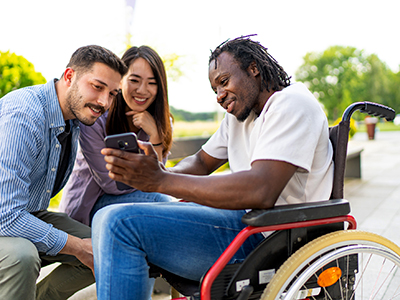
Sixty per cent of caregivers ranked Facebook as “very important” to them as a platform where they could receive or provide support. In comparison, only 26 per cent of participants ranked Instagram and another 17 per cent ranked YouTube as very important.

These results indicate the potential need for moderated social media supports for FC-SCI, says Mohammadi. She and other researchers are currently developing an online health module to provide online information to FC-SCI on such topics as how to access funding for providing care, information on caregiving and additional community-based tools for FC-SCI.

“We understand that social media has its problems, such as misinformation, so we want to ensure that we make available evidence-based guidelines and resources that caregivers find valuable,” says Mohammadi. “Family caregivers are a huge help in the lives of people living with an SCI, and it is important for us to assist them in continuing to provide this invaluable service, and also know how to take care of their own mental and physical well-being while providing care.”

 

Researchers

Bill Miller

Related Articles

Navigating breastfeeding after spinal cord injury

Behind the lab doors: Investigating blood biomarkers as a window into brain health at Wellington Laboratory

Revolutionizing powered wheelchair training for spinal cord injury recovery

Share:

  • Facebook
  • Linkedin
  • Twitter
  • Instagram
  • Email

Related Research Centres/Programs

Centre for Aging SMART

International Collaboration on Repair Discoveries

Get the latest research headlines in your inbox

Subscribe

Recent News and Stories

Type
Stories

Ask an expert: How can I strike a healthier balance with my daily habits?

Sep 10, 2026 exercise, mobility
Type
Stories

Moving endometrial cancer prevention upstream

Sep 8, 2026 women, cancer, uterine
Type
Stories

Improving respiratory protection for wildland firefighters

Sep 3, 2026 lung, environment, safety
See more news

Get updates!

Join our newsletter mailing list to stay up to date on features and releases.

Subscribe

Quick Links

  • News and Stories
  • Careers
  • Events
  • Media Enquiries

Follow Us

  • LinkedIn
  • Instagram
  • Bluesky
  • YouTube

© 2026 VCHRI. All rights reserved.

  • Contact
  • Privacy Policy