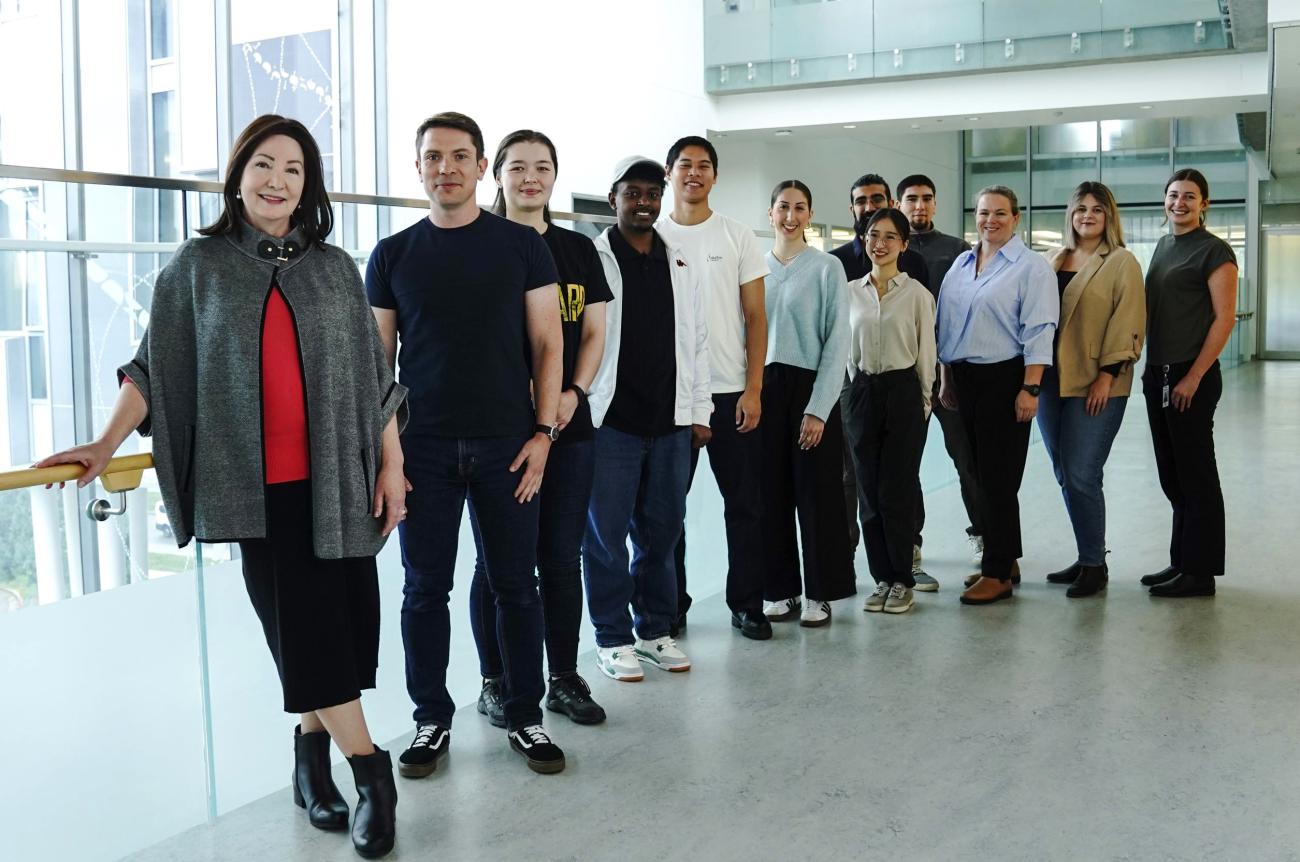
Seasoned and early-career researchers at the Wellington Laboratory are using simple blood tests to bolster our understanding of neurological conditions and brain health.
The brain is the most complex organ to understand, both in health and disease. Today, doctors rely on observable symptoms or use costly and sometimes inaccessible neuroimaging or invasive cerebrospinal fluid analysis to assess patients with brain disorders.
Brain-derived biomarkers measured in the blood have the potential to transform diagnosis and prognosis for neurological conditions, while improving accessibility and reducing the need for patient travel.
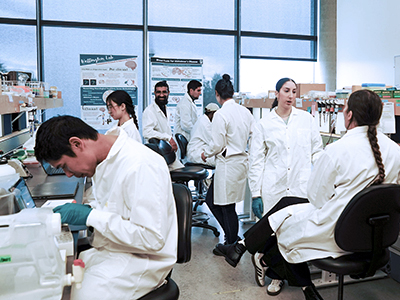
Led by Vancouver Coastal Health Research Institute scientist Dr. Cheryl Wellington, the lab is harnessing sophisticated technologies to detect protein biomarkers in blood and other bodily fluids. These biomarkers offer a window into the brain, reflecting biological and pathological changes that are occurring in real time.

“What makes our research especially meaningful for patients is that we explore the use of a simple, non-invasive blood test to monitor what is happening in the brain.”
Recent technological advances now allow researchers to accurately detect protein biomarkers derived from the central nervous system circulating in the blood — at concentrations equivalent to a grain of sugar in an Olympic-sized swimming pool. The Wellington laboratory is at the forefront of this rapidly evolving area of neurological research.
“A simple blood test could help us assess brain health and disease across settings — from outpatient clinics to critical care,” says Wellington. “It could dramatically improve equitable access to state-of-the-art diagnostics.”
The lab’s research spans a broad spectrum of conditions, including neurodegeneration and dementia such as Alzheimer’s and Parkinson’s diseases, neurotrauma including concussion, traumatic brain injury, spinal cord injury and intimate partner violence, as well as brain development and aging.
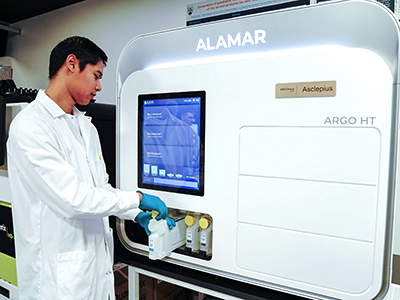
The lab is the first in Canada to operationalize several ultrasensitive immunoanalysers essential for biomarker discovery. This advanced equipment, acquired in-part with the support of the VGH & UBC Hospital Foundation, UBC Development Office, the Canada Foundation for Innovation and other partners, provides researchers with the technical capability to cover the full spectrum of the biomarker pipeline from discovery to analytical and clinical validation.
Benchmarking biomarker levels across the lifespan
Age, trauma and disease influence brain biology. Establishing biomarker benchmarks — normal biological levels across the lifespan — is essential to identify potentially abnormal changes that occur with injury or disease.
One research program in the Wellington Laboratory focuses on identifying reference intervals (RI) for neurological blood tests, providing critical insights to support clinicians in interpreting and validating their results. Using a large Canadian population-based cohort from the Statistics Canada Biobank, the team established RI for four plasma protein biomarkers, with potential implications for screening, diagnostics and treatment especially as they related to neurodegenerative conditions such as Alzheimer’s disease.
Children represent a population in which the effects of brain development on biomarkers are less well understood. Leveraging the Canadian Laboratory Initiative on Pediatric Reference Intervals (CALIPER) cohort, the team explored the potential of using serum total tau biomarker for differentiation of patients with traumatic brain injury and established normal ranges for three brain-based blood biomarkers in healthy children and adolescents aged one to 19 years.
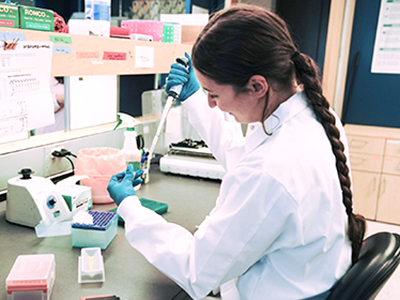
Enhancing traumatic spinal cord injury care with fluid biomarkers
Collaboration is a core strength of the Wellington Laboratory. The team works closely with a broad network of scientists and clinicians across Canada to ensure research findings are clinically relevant.
In partnership with researchers at the International Collaboration on Repair Discoveries (ICORD), led by Dr. Brian Kwon, the lab is identifying biomarkers that can help determine the severity of traumatic spinal cord injury (SCI) and predict recovery outcomes.
Currently, SCI evaluation relies heavily on clinical assessment of motor and sensory function, which can be time-consuming and difficult to perform in acute settings when patients have additional injuries. Fluid biomarkers could support earlier prognostication, inform treatment strategies and strengthen clinical decision-making.
Prior research co-led by Wellington and Kwon identified two promising blood biomarkers in acute SCI patients. These findings have led to a follow-up international study to validate blood-biomarker performance in real-world clinical settings, while also exploring integration with point-of-care technologies.
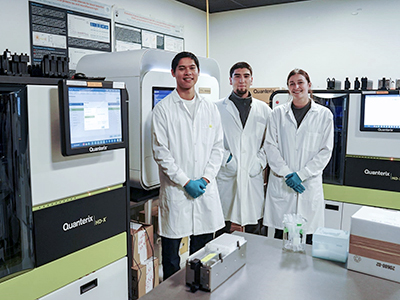
“Our lab focuses on translational research,” says Wellington. “We aim for a truly bench-to-bedside approach and work closely with clinicians to align our research with the current health care needs.”
Learn more about research underway at the Wellington Laboratory.
"Behind the Lab Doors” is a Research Insider series that offers a behind-the-scenes glimpse into the labs of health researchers across VCHRI. These stories will explore research currently in the works, including ongoing and long-term studies that have the potential to directly impact quality of care for patients and clinicians. To feature a study from your VCHRI-affiliated lab, contact us at vchricommunications@vch.ca.