New research demonstrates how a remote-controlled training program could improve wheelchair skills and safety for people with spinal cord injuries, paving the way for faster recovery and greater independence.
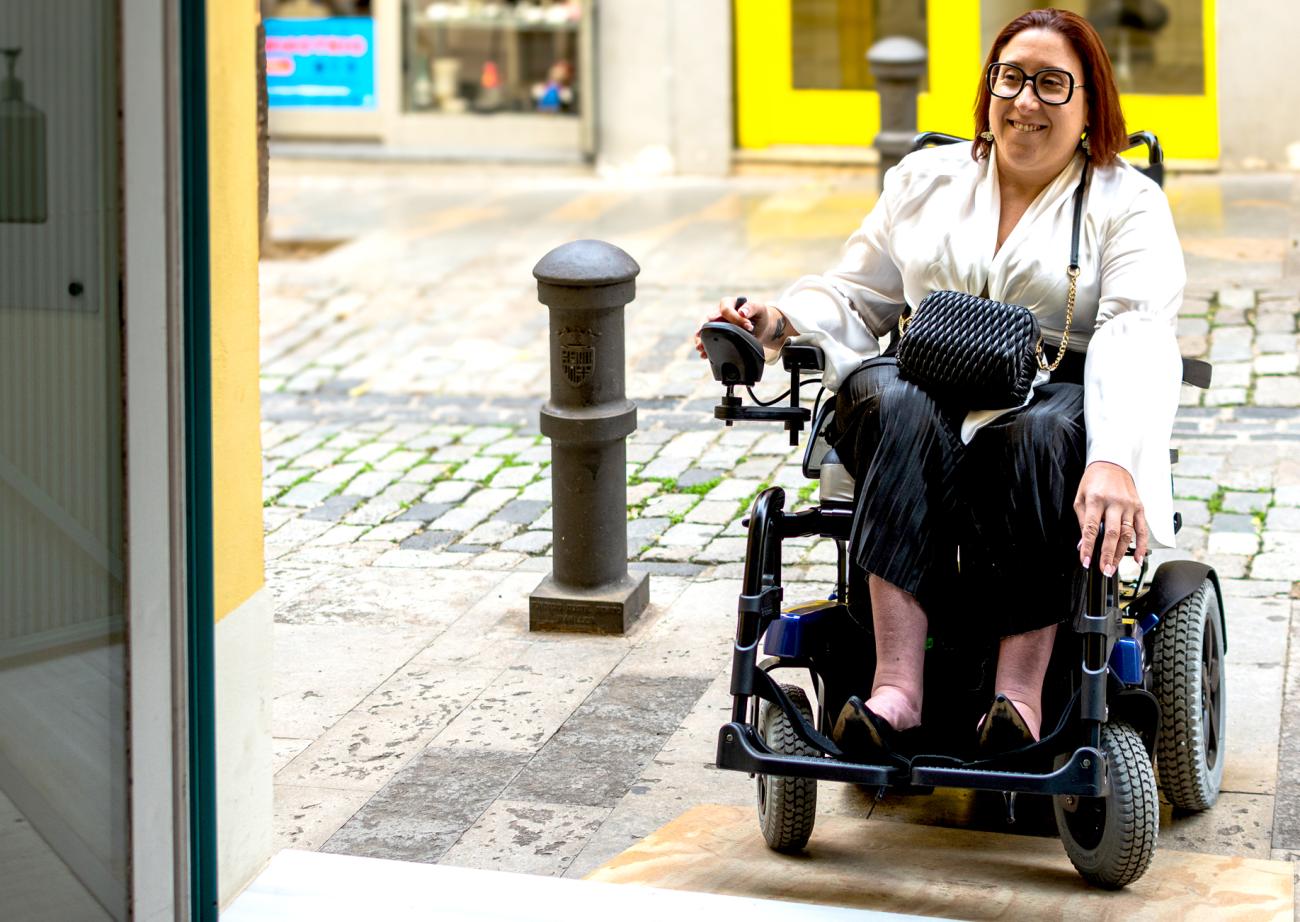
Using a powered wheelchair is an essential component of rehabilitation for individuals with spinal cord injuries (SCI), but traditional training methods often come with risks. The process of learning to maneuver a powered wheelchair requires close supervision from an occupational therapist, which can pose safety hazards for both the patient and the therapist. Many training programs also lack standardization and may not meet the needs of individuals with cognitive impairments.
Vancouver Coastal Health Research Institute researcher Dr. Bill Miller and rehabilitation expert Dr. Emma Smith are investigating a novel approach to address these challenges and make powered wheelchairs safer for both users and therapists. The Collaborative Power Mobility Innovative Learning OpporTunity (CoPILOT) wheelchair training protocol enables therapists to remotely intervene in the training process, ensuring patient safety while enabling greater independence for individuals learning to use a powered wheelchair.

Using shared control techniques, CoPILOT gives the individual with SCI the power to control the wheelchair, while allowing the therapist to override the controls if necessary. Inspired by technology used in remote control cars and planes, the system allows therapists to guide the patient from a distance of 30 meters, removing the need for close supervision while still offering support when needed.
“The goal was to create a system that empowers people with spinal cord injury by giving them control, while reducing the dangers associated with powered wheelchair training.”
“Remote intervention allows people with SCI to learn at their own pace, without the constant fear of making a mistake,” says Miller. “This approach is particularly important for individuals with acute SCI who are still adjusting to their new mobility abilities.”
A safer, more adaptive approach to powered wheelchair training
The study, published in Spinal Cord, aimed to test the feasibility of remote-assisted powered wheelchair training for 10 individuals with SCI. Researchers sought to determine whether this innovative training approach could reduce risks, improve user confidence and increase independence.
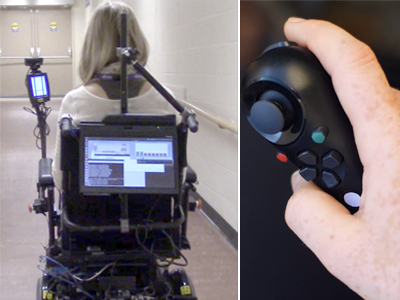
The errorless learning system is designed to minimize the risk of accidents by preventing users from making harmful mistakes, such as veering off sidewalks or colliding with walls.
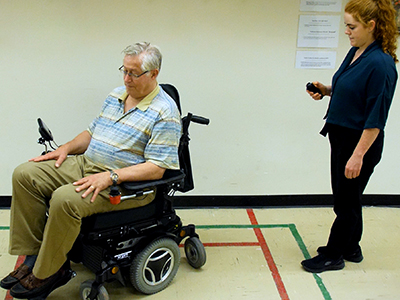
Experienced therapists introduced participants to the powered wheelchair in a controlled environment where they could practice basic maneuvers like turning, stopping and driving in a straight line. As the participants gained confidence and skill over the course of the 12-session program, they gradually progressed to more complex and real-world scenarios, such as navigating small bathrooms and visiting a busy supermarket.
The study found that CoPILOT led to improvements in mobility, safety and independence. Participants demonstrated strong wheelchair skills upon completing the program, scoring high on the Power Mobility Indoor Driving Assessment (PIDA).
However, the researchers also encountered challenges with program adherence. On average, participants attended about eight sessions, which was lower than the target, due to factors like illness and conflicting schedules. Additionally, while there were no safety issues or technical difficulties, researchers occasionally found it challenging to connect the external remote-control system to the wheelchair.
"While we faced some obstacles related to technological integration and program compliance, the study showed that CoPILOT can improve wheelchair skills and keep users safe," Miller emphasizes.
Breaking barriers to independence with assisted technologies
Assisted technologies like CoPILOT play a vital role in breaking down barriers for people with spinal cord injuries. Learning how to use a powered wheelchair is not only crucial for mobility but also essential for improving quality of life. By helping to enable patients to become independent in their use of mobility devices, CoPILOT can help facilitate quicker transitions from hospital to home and reduce reliance on caregivers for everyday tasks.
“The biggest advancement is that patients learn to use a powered wheelchair faster and more effectively,” Miller explains. “This is especially important as hospital wait times grow longer and discharge pressures increase.”
“The CoPILOT program represents a paradigm shift in rehabilitation technology, and one that could eventually set a new standard for better powered wheelchair training across the globe.”
Looking to the future, the CoPILOT team plans to build on the findings from their feasibility study. The next steps include more extensive clinical trials to refine the system and demonstrate its effectiveness on a larger scale. In addition, the team hopes to collaborate with wheelchair manufacturers to directly integrate CoPILOT into their technology.
“This is just the beginning,” says Miller. “We know that CoPILOT can transform the way we train individuals with spinal cord injuries. It is not just about improving mobility; it is about improving quality of life and empowering patients to regain their independence.”