Main menu

  • About Us
    • Leadership
    • Our Team
    • Vision, Mission and Values
    • Health and Economic Impact
    • Research Impact Video
    • Strategic Plan
  • Our Research
    • Research Focus
      • Brain Health
      • Cancer
      • Digital Health and Artificial Intelligence
      • Heart Health
      • Healthy Aging and Mobility
      • Immune System
      • Injury and Rehabilitation
      • Lung Health
      • Mental Health and Substance Use
    • Research Centres and Programs
      • BC Centre on Substance Use
      • Centre for Aging SMART
      • Centre for Clinical Epidemiology and Evaluation
      • Centre for Lung Health
      • Dilawri Cardiovascular Institute
      • Djavad Mowafaghian Centre for Brain Health
      • Immunity and Infection Research Centre
      • International Collaboration On Repair Discoveries
      • M. H. Mohseni Institute of Urologic Sciences
      • Ovarian Cancer Research Centre
      • Community Research Program
      • Emergency Medicine Research Program
      • Hematology Research Program
      • Skin Research Program
      • Other Research Focus Areas
    • News and Stories
    • Researcher Directory
    • Events and Workshops
  • Research Services
    • New to VCHRI
      • Working at VCHRI
      • Regulations and Training
      • Membership with VCHRI
      • Learning and Development
    • Starting Your Project
      • Research Facilitation
      • Awards and Funding
      • Grant Management
      • Operational Approval
      • CST Cerner
    • Developing Your Project
      • Clinical Trials Administration
      • Clinical Research Unit
      • Research Privacy
      • Financial Policies and Procedures
    • Additional Support
      • Indigenous Health Research Unit
      • VCH-VCHRI AI Hub
      • Communications and Media Relations
      • Study Recruitment Support
      • Innovation and Industry Partnership
    • Internal Awards
    • Clinical Research
    • Indigenous Research
  • Participate in Research
    • Reasons to Participate
    • Participant Stories
    • Find a Study
    • Recruitment Support

User menu

  • Log in

Breadcrumb

  1. Home
  2. Our Research
  3. News and Stories
  4. Reducing the environmental impact of kidney care in B.C.

Reducing the environmental impact of kidney care in B.C.

Stories May 22, 2026 3 minutes

New research examines how kidney replacement therapies contribute to health care emissions and identifies opportunities for more sustainable care delivery.

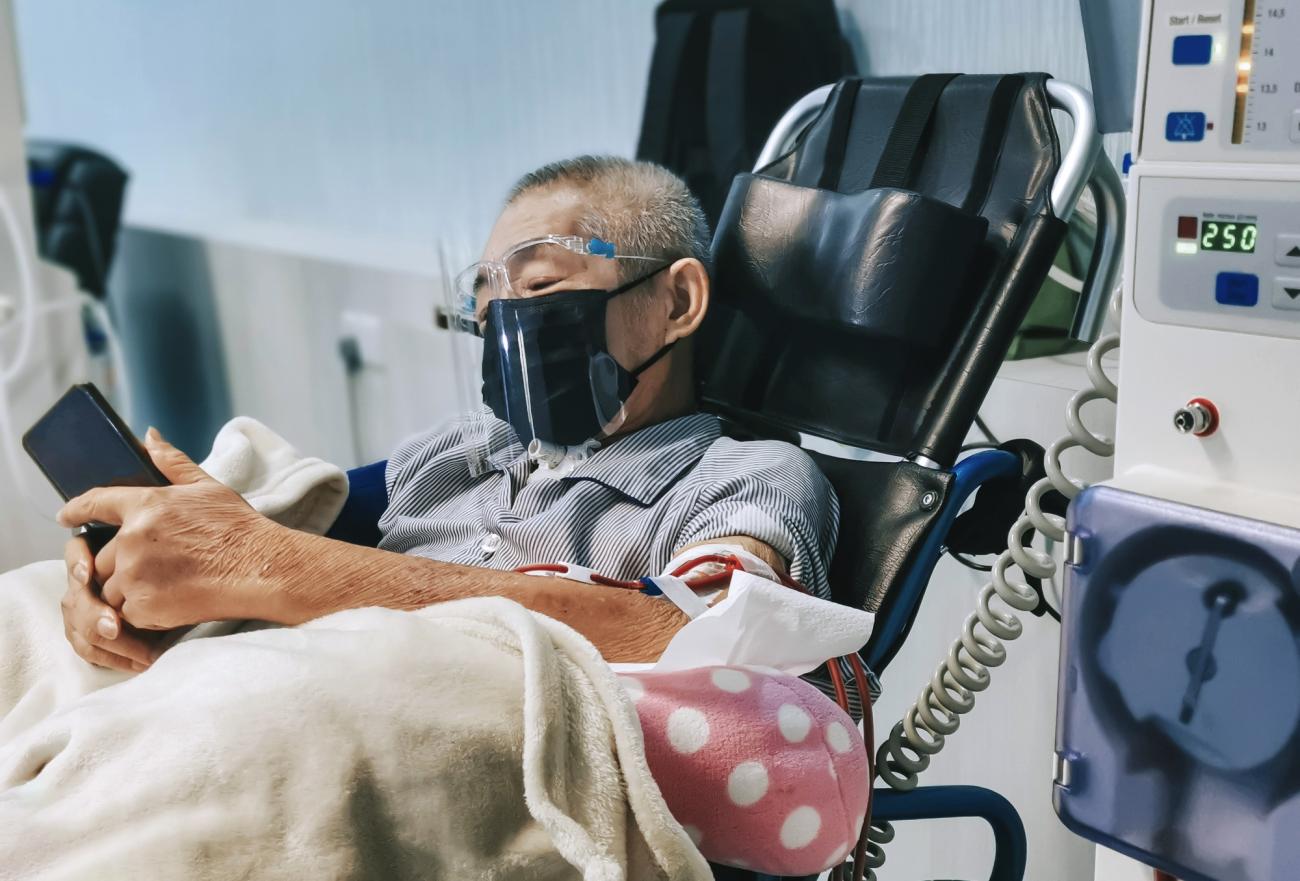
Health care systems are increasingly recognizing their environmental footprint, with the global sector accounting for an estimated four to five per cent of greenhouse gas emissions. Kidney replacement therapies — including dialysis and transplantation — are among the more resource-intensive forms of care, requiring significant infrastructure, medical supplies, water, energy and patient travel. 

A study led by Vancouver Coastal Health Research Institute researcher Dr. Christopher Nguan examined the environmental impacts of kidney replacement therapies in British Columbia, offering insight into how different treatment pathways contribute to emissions and where improvements may be possible. 

“One of the challenges in studying the environmental impact of kidney care is that kidney replacement therapy is not a single intervention — it’s a continuum of care that unfolds over many years,” says Nguan.

Dr. Christopher Nguan is a kidney transplant urologist and surgical director of the Centre for Kidney Transplantation and Immunology at the M.H. Mohseni Institute of Urologic Sciences. He is an associate professor in the Department of Urologic Sciences at the University of British Columbia.

Patients may receive in-centre hemodialysis, peritoneal dialysis, home dialysis or kidney transplantation, often transitioning between therapies over time and across care settings. 

"Kidney care is challenging to study from an environmental perspective, as impacts occur across different locations, treatments and time periods."

Comparing environmental impacts across treatment pathways

Published in the American Journal of Kidney Diseases, the study used a life cycle assessment approach to evaluate environmental impacts across in-centre hemodialysis, peritoneal dialysis and kidney transplantation. This method examines impacts across the full life cycle of care, from material production to use and disposal.

The research team assessed multiple indicators, including greenhouse gas emissions, air pollution, human toxicity and water use. They found clear differences between treatment pathways, with in-centre hemodialysis having the highest environmental impact and kidney transplantation the lowest across most categories. 
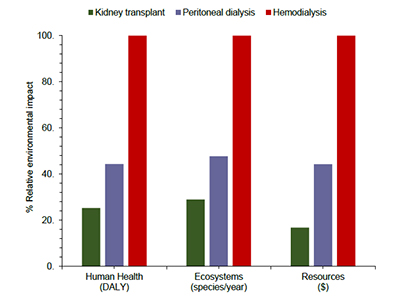
Lifecycle environmental impacts of kidney replacement therapies (end point/damage impact categories). The figure shows the environmental impacts of kidney replacement therapies on 3 major categories, including effects on human health, ecosystems and resource use. 
Abbreviation: DALY, disability adjusted life-year.

Key drivers of environmental impact included medical consumables — such as dialysis tubing and other single-use supplies — as well as transportation associated with frequent dialysis visits. 

“Transportation can account for a substantial portion of dialysis-related emissions,” says Nguan. “In some settings, it represents a third or more of the total footprint.”

This is particularly relevant in B.C., where patients receiving in-centre dialysis typically travel three times per week, often over long distances and for extended periods. Transplant care also requires travel, with specialized services centralized in Vancouver. 

Steps to reducing the environmental footprint

Kidney replacement therapies are essential and lifesaving, and efforts to improve sustainability must not compromise patient safety or access, says Nguan. However, environmental and patient-centred priorities are often aligned.

“When sustainability is considered alongside clinical performance, there are opportunities to improve both,” he says. 
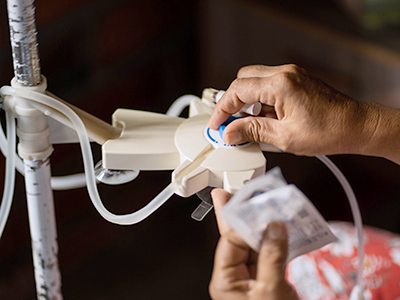
The study highlights several areas where environmental considerations could inform care design — from facility planning to delivery models. This includes optimizing the location of dialysis units, reducing energy and water use in facilities and supporting care closer to home.

"Approaches such as home-based therapies and alternative care models may reduce travel and resource use while also improving quality of life for patients."

Looking ahead, Nguan suggests sustainability metrics could become an additional consideration alongside patient outcomes and health economics in health system planning.

The project also underscores the innovative and collaborative nature of sustainability research, involving expertise across multiple clinical subspecialties and academic units at UBC, including the Department of Environmental Engineering at UBC Okanagan. However, access to detailed clinical and operational data remains a key challenge in advancing this work. 

“The main takeaway is that health care has a meaningful environmental footprint — but it’s one we can measure and improve,” says Nguan. “It’s not about limiting care, but about strengthening health care systems so patients and communities can continue to receive high-quality care for generations to come.”

 

Researchers

Christopher Nguan

Related Articles

Canadians are at high risk of kidney stones: Dietary interventions could help

A gut reaction: The role of microbiome imbalance in kidney stones

Early access to breakthrough, convenient kidney stone treatment

Share:

  • Facebook
  • Linkedin
  • Email

Related Research Centres/Programs

M. H. Mohseni Institute of Urologic Sciences

Get the latest research headlines in your inbox

Subscribe

Recent News and Stories

Type
Announcement

Dr. M-J Milloy extended as interim Director of Research, BC Centre for Substance Use

May 21, 2026
Type
Stories

People in profile: Alice Casagrande Cesconetto

May 20, 2026 people feature
Type
Stories

Ask an expert: How can I navigate a bladder cancer diagnosis?

May 11, 2026 bladder, cancer, preventative
See more news

Get updates!

Join our newsletter mailing list to stay up to date on features and releases.

Subscribe

Quick Links

  • News and Stories
  • Careers
  • Events
  • Media Enquiries

Follow Us

  • LinkedIn
  • Instagram
  • Bluesky
  • YouTube

© 2026 VCHRI. All rights reserved.

  • Contact
  • Privacy Policy