Congratulations to the 2026 Top Doctoral Student and Rising Star Award recipients!
Vancouver Coastal Health Research Institute (VCHRI) is proud to support future research leaders with the Top Graduating Doctoral Student Awards and the Rising Star Awards. These awards recognize the outstanding efforts of VCHRI trainees whose pursuit of research has made them exceptional role models and valued contributors to the Vancouver Coastal Health and University of British Columbia research community.
The 2026 Top Graduating Doctoral Student Award recipient is:
The 2026 Rising Star Award recipients are:
Investigating the effectiveness of error augmentation in stroke rehabilitation
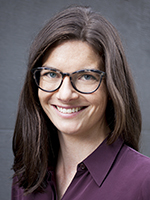
Award: Top Graduating Doctoral Student
Supervisor: Dr. Lara Boyd
Area of research: Stroke rehabilitation
With an impressive list of accomplishments, Beverley Larssen is recognized for her maturity, intelligence and curiosity in rehabilitation research. She has published 14 papers, including several first-authored manuscripts, and received the prestigious Canadian Institutes of Health Research Doctoral Award to support her PhD. Working across two labs, she advances research that directly improves the lives of stroke survivors.
Larssen’s work focuses on error augmentation, a stroke rehabilitation technique that uses visual feedback to make movement errors more noticeable. She investigates how stroke-related changes in brain structure shape performance with this technique and how amplifying errors influences learner motivation and the practice experience. Her research could inform future targeted rehabilitation approaches that help stroke patients relearn movement patterns.
“One of the goals of stroke rehabilitation is to improve arm motor control,” says Larssen. “My research advances our understanding of how error augmentation shapes the recalibration of reaching movements and how stroke influences the use of explicit strategies in novel feedback environments.”
Transforming Peyronie's disease assessment and monitoring
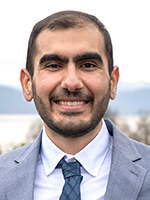
Award: Rising Star
Supervisor: Dr. Faraz Hach
Area of research: Peyronie's disease, artificial intelligence
Ali Balapour is an aspiring researcher known for his independence, perseverance and passion for discovery. With an interdisciplinary background in computer engineering, bioinformatics and artificial intelligence (AI), he bridges methodological innovation with clinical application. Beyond his academic work, Balapour is a strong collaborator, serving on the Vancouver Prostate Centre Trainee Committee and volunteering at scientific events.
Integrating deep learning, medical image analysis and 3D reconstruction, Balapour’s research aims to develop an AI tool for the assessment of Peyronie’s disease, a condition in which scar tissue forms within the penile shaft, causing curvature and pain that can affect sexual function and quality of life. The innovative AI tool could help make Peyronie’s disease evaluation more accurate, less invasive and better aligned with patient needs.
“I am motivated by work that advances both scientific understanding and patient care,” says Balapour. “To address a real unmet need in men’s health, I am developing computational approaches that make biomedical assessment more accurate, interpretable and accessible.”
Improving endometrial cancer surveillance in Lynch syndrome carriers
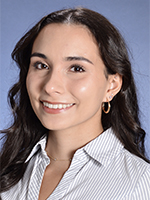
Award: Rising Star
Supervisor: Dr. Aline Talhouk
Area of research: Endometrial cancer
Arabella Helgason is recognized for her strong dedication to patient-centered research and commitment to advancing women’s health. As chair of the Gynecologic Cancer Initiative Trainee Research Day, she leads a team of trainees in delivering a large-scale, interdisciplinary event that brings together trainees, researchers, clinicians and patient partners to foster knowledge exchange and community building.
Helgason’s research focuses on Lynch syndrome (LS), a hereditary condition that can increase a person’s lifetime risk of endometrial cancer up to 49 per cent. She is investigating self-collected vaginal swabs as a minimally invasive approach to endometrial cancer screening, with the potential to improve access, enable earlier detection and support more equitable, patient-centered care.
“I am driven to address persistent gaps in women’s health, particularly in gynecologic cancers, where under-recognition continues to affect outcomes”, shares Helgason. “My interactions with participants in the lab shape my goal: to advance equitable, evidence-based cancer screening that improves both outcomes and patient experience.”
Examining the connection between endometriosis treatment and pregnancy outcomes

Award: Rising Star
Supervisor: Dr. Gillian Hanley
Area of research: Endometriosis and pregnancy
Rising star Jalisa Karim has received multiple honours for her academic excellence, including one of Canada’s most prestigious doctoral awards — the Vanier Canada Graduate Scholarship. Passionate about patient engagement and women’s health, Karim serves as coordinator of the Gynecologic Cancer Initiative’s Patient and Family Advisory Council, where she works closely with people who have personal or family experience with gynecologic cancer.
Karim’s thesis research combines interviews and statistical analysis to better understand the treatment experiences of endometriosis patients who want to become pregnant, and how these experiences relate to pregnancy outcomes. In collaboration with patient partners, she explores how individuals make decisions about their endometriosis treatments while considering their future family-building goals.
“My research has given me the opportunity to work closely with people with lived experience,” says Karim. “Their voices and contributions have been invaluable in guiding my work and ensuring that my research is relevant and impactful for people living with endometriosis.”
Enhancing communication between movement-related brain regions with brain stimulation

Award: Rising Star
Supervisor: Dr. Lara Boyd
Area of research: Stroke rehabilitation
Vivian Li is a dedicated scholar whose creative thinking and collaborative approach are highly valued by her mentors and peers. In Dr. Lara Boyd’s lab, she uses transcranial magnetic stimulation (TMS) robot to investigate brain function in both healthy individuals and people recovering from stroke. Beyond her academic work, Li volunteers with the Canucks Autism Network and is involved in the Rehabilitation Science Executive Committee.
Employing TMS, a non-invasive brain stimulation method, Li studies how the cerebellum and the primary motor cortex interact — a relationship that is essential for movement coordination and motor learning. By taking an innovative approach to understanding this relationship and how it can be changed, her work could support the development of TMS interventions for helping people relearn motor skills after stroke.
“The goal of my research is to develop neurorehabilitation treatments grounded in biological mechanisms” says Li. “By integrating my multidisciplinary experience, I am committed to supporting recovery for individuals with stroke.”
Advancing precision diagnostics of bladder cancer with genomics tools
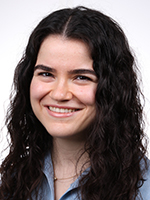
Award: Rising Star
Supervisor: Dr. Alex Wyatt
Area of research: Bladder cancer
Asli Munzur is a skilled computational scientist with an impressive record of achievements, including multiple merit awards and three first-authored publications. In 2025, she was invited to present at the American Society of Clinical Oncology Annual Meeting, a leading international conference for physicians and researchers. Among her peers, she is known as a generous mentor who supports others in computational and genomic analyses.
Munzur’s research centres on bladder cancer, which most commonly affects older adults. Using advanced genomics tools, she aims to detect clonal hematopoiesis (CH), a blood-derived source of aging-associated mutations, in urine samples. With implications for cancer diagnostics, her work could help support the development of a non-invasive method to assess a patient’s blood health status and assist clinicians in evaluating bladder cancer risk.
“There is a growing interest in urine-based technologies for diagnosis and management of bladder cancer,” explains Munzur. “Through urine DNA analysis we can investigate an individual’s risk for both bladder cancer and blood-related abnormalities.”
Identifying therapeutic targets in ALS with advanced MRI
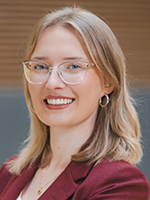
Award: Rising Star
Supervisor: Dr. Erik Pioro
Area of research: Amyotrophic lateral sclerosis
Jacqueline Palik’s research curiosity and mentorship ability position her as a future leader in neuroscience. She is a skilled research communicator who presents her findings with clarity and confidence. Her volunteer work with the ALS Society of British Columbia and the Canadian Mental Health Association reflects her compassion, emotional intelligence and poise in high-stakes circumstances.
Palik investigates the biological changes that occur in the brain and spinal cord in amyotrophic lateral sclerosis (ALS), a neurodegenerative disease that causes progressive loss of motor neurons. Using advanced MRI techniques, she aims to identify subtle abnormalities and uncover the biological changes underlying imaging findings. Her research could help identify new brain regions for therapeutic targets and support the development of more personalized treatments.
“My research could bridge the gap between what we see on MRI and what is actually happening in the brain and spinal cord,” says Palik. “By identifying the cellular and molecular basis of MRI abnormalities, we could develop imaging markers for earlier diagnosis and more accurate monitoring of ALS progression.”