It’s a familiar scenario: after a stressful day at work, the last thing most people want to do is make a time-consuming dinner. Instead, they’ll choose to eat something quick and low-effort at the expense of taste and nutrition. A recently published paper co-authored by Vancouver Coastal Health Research Scientist Dr.
In recent months, B.C. has seen a sharp increase in the rate of accidental overdose deaths with drugs like fentanyl and W-18, which can be fatal at very low doses, hitting the streets disguised as other street drugs. But even prior to recent events, illicit drug overdoses have been on the rise in the province since 2011. The current system alerting people who use drugs (PWUD) about dangerous contamination or a spike in overdose deaths lags a week or two behind the data, putting lives at risk and highlighting the need for a better warning system.
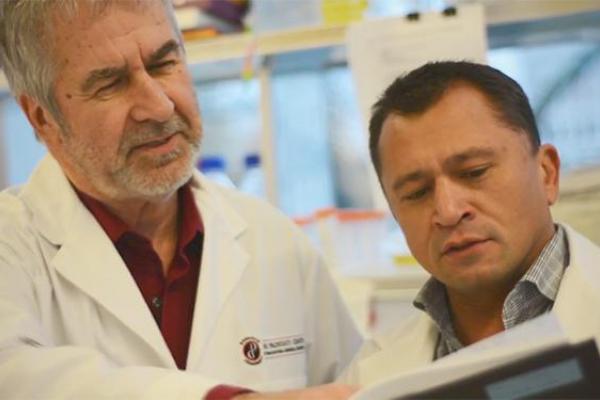
When Vancouver Coastal Health Research Institute (VCHRI) scientist Dr. Horacio Bach was approached by Dr. Thomas Grünewald from the Ludwig Maximilians University of Munich, Institute of Pathology, to help him find possible antibody therapies for Ewing sarcoma – an aggressive cancer that affects mostly children and adolescents – Dr. Bach was moved by his intentions.
The culmination of more than 20 years of research looking into the properties of intravenous anesthetic propofol by Vancouver Coastal Health Research Institute scientist Dr. David Ansley and his team of researchers is reflected in Dr. Ansley’s recently published, and controversial, paper in the Canadian Journal of Anesthesia.
Vitamin B6 plays a key role in keeping the human body healthy. Although research shows that dietary intake of vitamin B6 among Canadians is low, no clear data exists as to whether Canadians are living with suboptimal or deficient vitamin B6 biochemical status levels. And this is a point of concern for Vancouver Coastal Health Research Institute affiliated investigator Dr. Yvonne Lamers, especially when it comes to women’s health.
One out of every six to seven men will develop prostate cancer in his lifetime1. Of those prostate cancer patients, about 25 to 30 per cent will present late or have a recurrence that is typically indicative of metastatic advanced disease, meaning the cancer has spread throughout the body and is virtually incurable. Such difficult cases have propelled Vancouver Prostate Centre (VPC) scientists Dr. Artem Cherkasov and Dr.
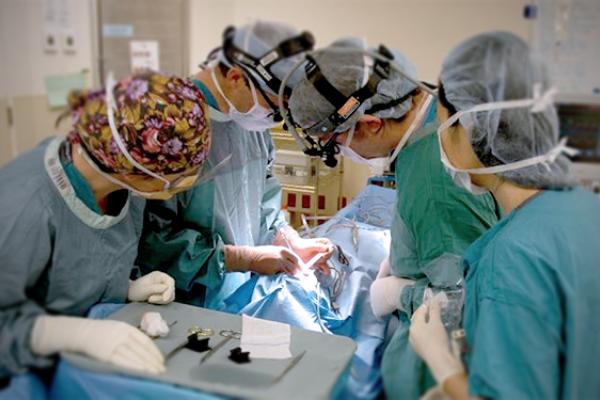
New findings from a study nearly a decade in the making suggest that use of fluorescence visualization (FV) during oral cancer surgery drastically improves the accuracy of the removal of cancerous tissue, significantly reducing local recurrence rates of oral cancer.
“Approximately one-in-three patients who undergo surgery to remove cancerous oral lesions will experience a recurrence of the disease within three years,” says Vancouver Coastal Health Research Institute scientist and study lead author Dr. Catherine Poh.
Multiple sclerosis (MS) patients face a double-edged sword when it comes to three new disease-modifying drugs (DMDs) that have been approved within the past five years to treat MS, says Vancouver Coastal Health Research Institute scientist Dr. Helen Tremlett.