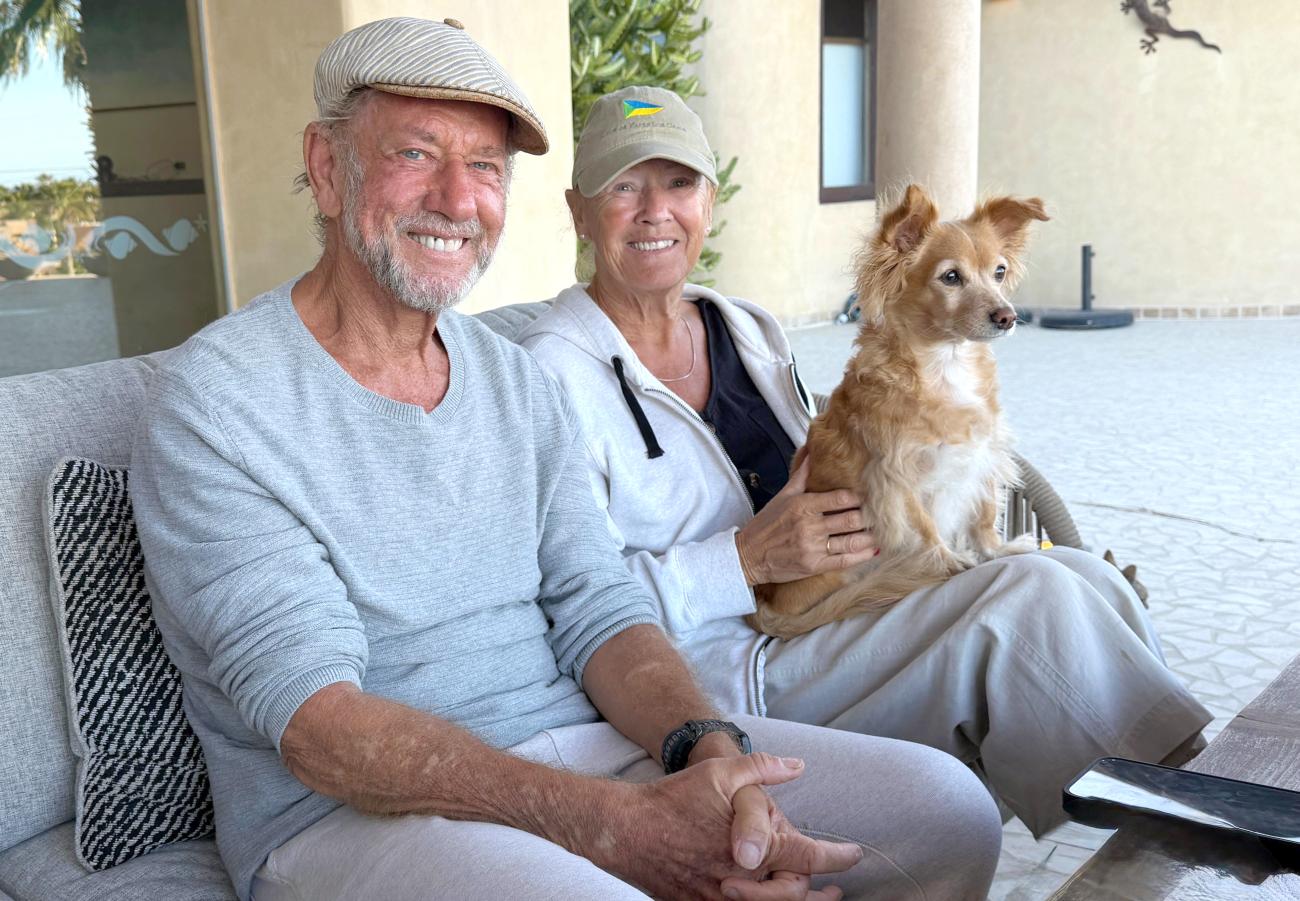
"I say yes to participate in research because it is an opportunity to learn and pay it forward that also gives me a sense of meaning and purpose."
– David Walker, Coquitlam, B.C. and San Jose del Cabo, Mexico
A self-proclaimed Type A personality, David Walker squeezes every drop out of life that he can while managing the symptoms of Parkinson’s disease (PD). A former executive with Prostate Cancer Canada, World Vision and Alzheimer Society of B.C. and Yukon, Walker was diagnosed with PD four years ago, providing a clear explanation of the range of symptoms he had been experiencing, including two significant falls that resulted in a broken left and then right foot.
“I initially thought that I could beat PD because I’ve beaten a ton of things in my life,” recalls Walker, who completed a philosophy degree from Simon Fraser University at age 69. “Then I realized that it was going to be more like a partner that I would need to work with over the next several years. However, last year, I realized that it is my master and I need to respond to it the best that I can mentally, emotionally and physically.”
A chronic and progressive neurological condition affecting over 120,000 Canadians, PD attacks the central nervous system, leading to stiffness, reduced mobility, difficulties with balance, tremor and cognitive decline. While its exact causes are unknown, disease onset has been linked to environmental factors, including pollutants, as well as certain heritable genes.
Since his diagnosis, Walker’s treatment routine has included taking medications and maintaining an active lifestyle. He competed in the T100 Triathlon World Tour in 2025 and plans on finishing the grueling race and raising funds for Parkinson Canada again in August 2026.
Recently, Walker also began participating in the IMPACT 360 for Parkinson’s Disease clinical trial, led by Vancouver Coastal Health Research Institute researcher Dr. Silke Appel-Cresswell. Involving 60 individuals aged 40 to 85 with PD, the study looks at the connection between exercise, meditation and diet. Exercise has the best evidence of any intervention — pharmacological or otherwise — to slow the progression of PD, reduce its symptoms and improve the quality of life of people living with the condition, Appel-Cresswell notes.
People with PD are at higher risk of decreased activity levels, putting them at risk of developing metabolic syndromes like Type 2 diabetes and heart disease, along with other conditions like osteoporosis and muscle loss.
“Parkinson’s is the fastest growing neurological disorder in Canada and worldwide,” Appel-Cresswell imparts. “Our aging population is the main driver of this growth, but there might be more factors to this, making it important to proactively work on PD prevention and also on minimizing disease progression.”
The research team’s goal is to determine how a specific exercise, meditation and diet program impacts eight key indicators of health among study participants. The health indicators being tracked are cognition, inflammation, microbiome diversity, sleep quality, neurological imaging markers, physical function and fitness, cardiovascular health and social and mental well-being. Participants receive MRI imaging, blood work, cognitive testing and other tests prior to and after participating in the study, providing a clear, data-based comparison of study outcomes.
The study team is also looking at the safety and feasibility of this type of intervention, and plans to pursue follow-up studies with a larger cohort of participants.
Experiencing gains from a targeted exercise, nutrition and mediation program
As a study participant, Walker was guided through the exercise, meditation and diet program designed by the research team. Each week for six months, Walker engaged in three moderate- to high-intensity exercise classes followed by a brief guided mediation. Similar to high-intensity interval training, which builds up cardiovascular fitness, the classes also involve lateral movements, which train stabilizer muscles, improving balance and reducing the risk of falls.
“The team of researchers were truly both professional and personable.”
Every second week, Walker attended a nutrition and cooking class with a dietitian who provided advice on preparing PD-friendly meals. Walker also participated in Mindfulness-Based Stress Reduction (MBSR) classes to help him build up a regular mindfulness practice, which has shown potential to help improve life satisfaction among individuals living with PD.

“I never thought that a 76-year-old Irishman who loves meat, potatoes and French fries could ever change to a strict Mediterranean diet,” Walker enthuses. “The benefits have been amazing. My body weight has stabilized and my body fat has gone down. My bone density and VO2 max have increased. I have never felt better.”
Walker also noticed changes in his ability to calm himself during stressful situations. “After following a meditation practice every week, and then doing it on my own, it is like night and day. I can handle more aggravating situations and moods now.”
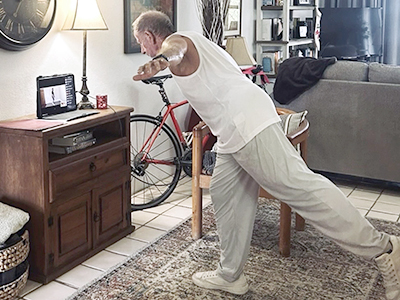
While he has slowed down a bit, Walker still has plenty on his plate to keep his mind and body busy — on top of his new exercise, meditation and diet routine.
Walker writes poetry — which he posts on his Instagram page (@poemsandphotosbydw) — and has taken up sketching and sports photography. He is cycling to raise funds for PD with the Spinning Wheels Tour. He also regularly catches up with fellow peers living with PD and an extensive network of friends and family.
Perhaps the most telling emblem of his personality is emblazoned on his arm. “I have a tattoo that is a life motto. It says: ‘life is sweet’.”
This is one patient's story of participating in a research study. Your experience may differ. Learn about clinical trials before participating.