"I say yes to research because I'm passionate about my community. It’s meaningful to be part of a project focused on improving care for people living in rural and remote areas in B.C."
– Eric Holdyk, Smithers
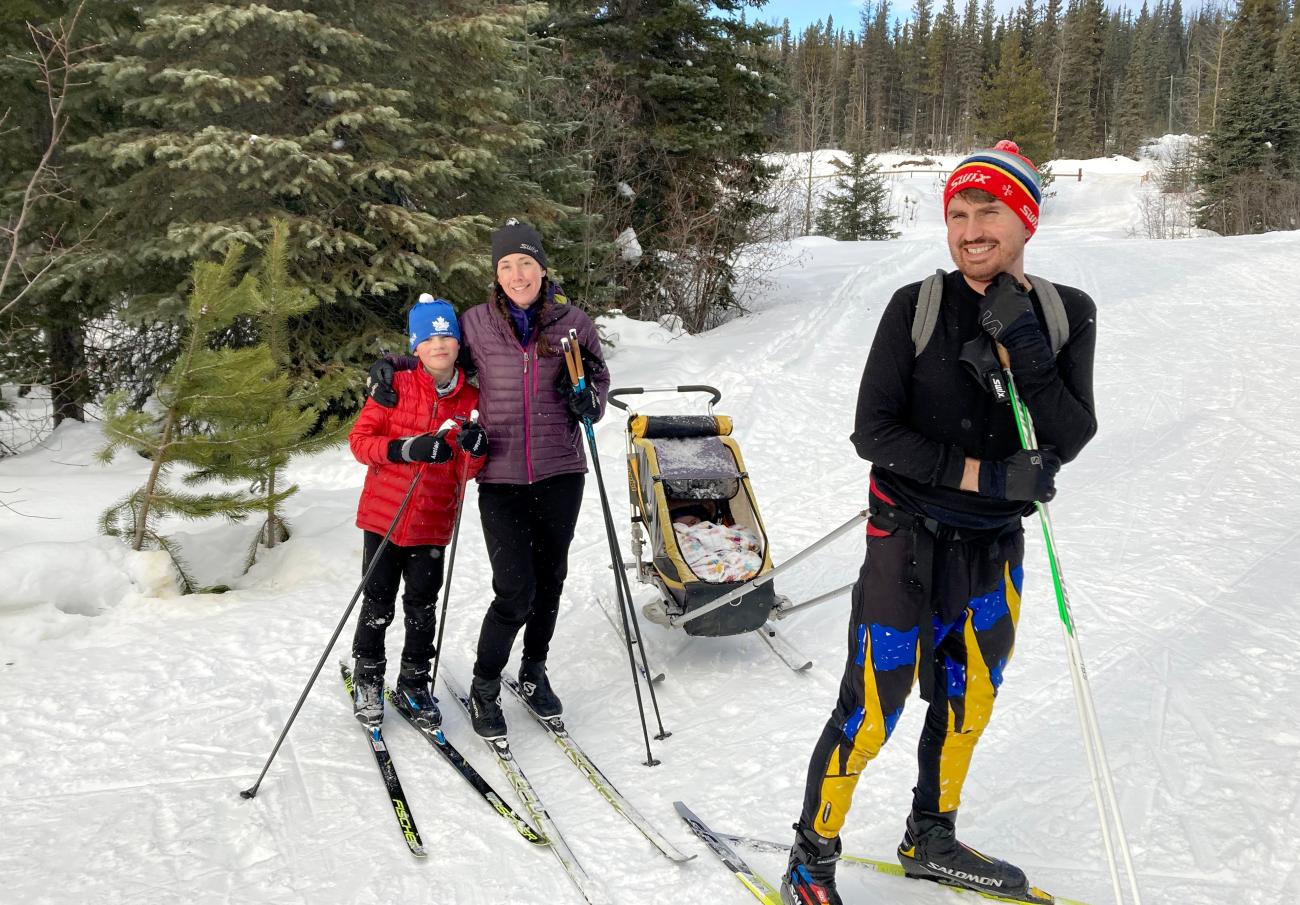
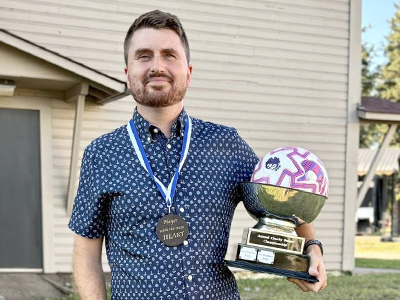
On a warm August morning in Smithers, B.C., Eric Holdyk laced up his cleats and stepped onto a familiar soccer field for a local charity tournament. The 36-year-old father of two — born and raised in the northwestern town — had always been active, from cross-country skiing to playing midfield in soccer. Years earlier, he had even run a sub-three-hour marathon.
In the month leading up to the tournament, Eric noticed occasional wrist and chest pains. He felt them again during the morning games but otherwise felt great. By early afternoon, his heart began pounding unusually hard as he ran up and down the field. Then he collapsed.
“I was having a major heart attack,” he recalls. “Thankfully, there were nurses and the local fire chief at the tournament, so I got life-saving CPR immediately.”
Eric experienced an ST-segment elevation myocardial infarction (STEMI) — a severe type of heart attack that occurs when there is a complete blockage in a coronary artery. After 15 minutes of CPR, his heart began pumping again. Eric was taken to the hospital in Smithers and then flown to St. Paul’s Hospital in Vancouver, where he was treated in the intensive cardiac care ward.
“I was diagnosed with spontaneous coronary artery dissection — SCAD,” Eric says. “I was told I may never find out why it happened, so the focus would be on slowly reintroducing exercise and preventing it from happening again.”
A virtual path to recovery
Returning home to Smithers meant recovering hundreds of kilometres away from his Vancouver-based care team. Like many people living in rural and remote communities, he faced an ongoing challenge: long-term recovery support is often limited to major city centres.
“Small communities have a hard time accessing resources that bigger centres have,” he says. “We don’t have access to all the health specialists or all the equipment.”
That gap inspired Vancouver Coastal Health Research Institute (VCHRI) researcher Dr. Nathaniel Moulson and his team at the Vancouver General Hospital (VGH) Cardiac Rehabilitation Program and Sports Cardiology BC to launch a study exploring virtual cardiac rehabilitation for rural cardiac populations.
“Patients living in rural or remote areas experience significant challenges obtaining the same level of post-hospital or cardiac rehabilitation care as those living in more centralized areas,” Moulson explains. “This program evolved out of experience gained during the COVID-19 pandemic, when virtual platforms became essential to providing timely patient care. Before then, there were very few virtual care options for this type of work.”
The six-month program includes weekly Zoom-based exercise classes, remote health assessments, wearable activity tracking and regular follow-ups. Beyond delivering care, the study aims to evaluate whether virtual rehabilitation is feasible, acceptable and effective for people who otherwise may not have access to any outpatient rehabilitation services.
“For many patients, to receive in-person rehabilitation care equivalent to what is offered in this virtual pilot program would require, at minimum, driving for several hours to the nearest major city.”
Study collaborator and research manager Dr. Reid Mitchell highlights that research teams have also faced logistical challenges when collecting consistent data from study participants spread across northern B.C. One innovative solution has been the virtual delivery of a six-minute walk test over Zoom, during which participants have their blood pressure assessed and complete the task while monitoring heart rate with a wearable. Assessments can take place in various settings, from community centres to workplaces, and can be supported by family members or colleagues.
“It has been really encouraging to see how strong community support systems can be."
Wearable devices also play a key role in offering objective data about activity levels beyond scheduled sessions.
“We often overestimate the amount of physical activity we recall doing,” says Mitchell. “Wearables allow us to collect information on physical activity, heart rate, intensity zones and even sleep quality, giving us a more accurate picture of real-world behaviour outside of scheduled rehab sessions.”
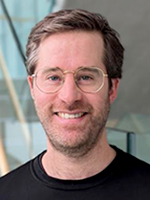
After months of learning about SCAD, Eric wanted to contribute to research that could help others. The program also provided reassurance during recovery, improving his mental health and easing uncertainty.
“Having something structured to show up for that was approved and safe was really helpful,” he says. “Knowing that I can access my case manager and support team when I need guidance has also been incredibly reassuring.”
“It's easy to deprioritize your health once life starts moving again, even after coming within a hair’s width of dying,” he says. “But that’s why I think this program is so important. Care needs to be as accessible as possible.”
The study is in its early stages, with Moulson and his team currently assessing study feasibility, safety, participation and patient satisfaction. The goal is to build evidence, expand access and help ensure that geography no longer determines quality of care.
“We hope that the findings from this study make a strong case for the establishment of long-term virtual cardiac rehabilitation programming for patients in rural and remote communities,” says Moulson.
For Eric, the benefits of the program are evident.
“There are so many people living in the north, and their lives matter just as much as the people down south where most services are located.”
This is one patient's story of participating in a research study. Your experience may differ. Learn about clinical trials before participating.