Researchers uncover why social cues might stick out in our minds more than non-social ones, with potential applications in post-traumatic stress disorder, dementia and autism research.
Most days, we encounter people and things that we either do or do not like. But why are some events and details more memorable than others?
A study led by Vancouver Coastal Health Research Institute researcher Dr. Daniela Palombo, along with Dr. Connor Kerns and Dr. Veronica Dudarev, explored how memory can be impacted by what we pay attention to and whether a situation involved social cues.
Social cues involve signals that convey information about others, including facial expressions, body positioning or gestures. They can be positive, negative or neutral in terms of how they make us feel.
“Social cues are a type of naturalistic information that is relevant to our day-to-day lives and plays a role in how we encode information,” Palombo explains.

To understand how memories of different types of social images are processed and stored in the mind, Palombo and her team recruited 103 healthy adults aged 18 to 30 years to participate in their study. Researchers showed participants pictures of social and non-social situations that were either designed to be negative or neutral in emotionality. Each image was also paired with a picture of an everyday object, such as a vase.
“These complex images were either rich or not rich in social cues, as well as either rich or not rich in negative emotionality.”
The four categories of images were:
- Social and negative, such as a picture of distressed faces.
- Social and neutral, such as two people casually talking.
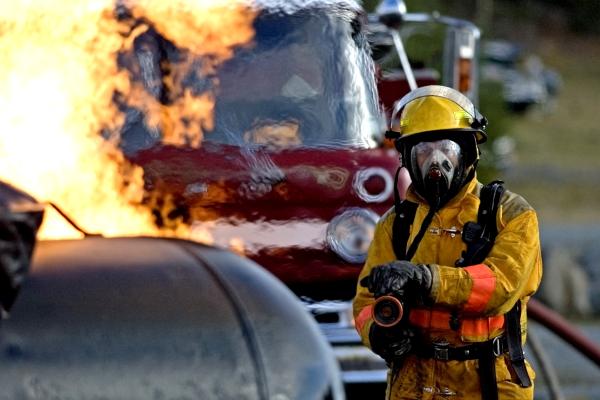
- Non-social and negative, such as a car crash.
- Non-social and neutral, such as a parked car.
Expanding upon similar research into social cues, memory and negative emotions, Palombo’s study integrated eye-tracking technology to create a visual map of the beelines participants’ eyes travelled along as they took in information from one area of an image to another.
“We used eye movements as a proxy for what participants paid attention to most in the images.”
“The starting point of memory is to take note of something, which is why teachers often tell students to pay attention in class,” Palombo explains. “While paying attention does not guarantee that something will be remembered, it is a good predictor of what might be re-membered.”
Social cues boosted image recall and associative memory
After 24 hours, participants were given a surprise test on what they remembered about the images, including which image was paired with which image of an everyday object, as well as whether they found it easy to link the two.
“We tested participants’ memories in different ways, mirroring the complexity of real-world situations where lots of things are happening at once,” says Palombo. “For example, we tested their associative memory by asking participants whether they could remember the pairings of images of everyday objects with social or emotional images.”
As predicted, Palombo and her team found that participants were more likely to focus attention on and recall negative emotional images over neutral images, but less able to re-member the pictures of everyday objects paired with negative images compared to neutral images. This is at least partially because humans evolved to recall negative experiences more than neutral or positive ones for survival. Encountering a poisonous snake stands out in our minds more than a lamp post, for example, because of the importance of learning about and avoiding threatening things like poisonous snakes in the future.
“Negative emotion also tends to reduce our associative memory relative to neutral emotion because, for example, we focus more on the snake than the lamp post, so we forget the lamp post,” Palombo adds. “Things in our environment that elicit negative emotions are remembered better.”
Most interestingly, though, images with social cues boosted image recall and associative memory in spite of participants spending less time looking at negative and neutral social images than non-social images.
“Our brains likely evolved to process social information more rapidly, and, indeed, our data show that participants spent less time dwelling on social images despite remembering them and their associated everyday objects better,” Palombo says.
“Social cues acted like a glue — enhancing the binding of details from the experience into a holistic and interconnected memory.”
With still few studies on social images and memory, Palombo sees this as a rich landscape for further exploration, particularly in research on how to minimize negative memories or support memory retention.
“We believe that there are possible applications in traumatic memory recall, such as among people with post-traumatic stress disorder, as well as in facilitating memory encoding among individuals with memory loss, such as people living with dementia,” says Palombo.
“Our findings could also enhance understanding and support of autistic individuals who process social information in divergent and unique ways and experience an elevated rate of negative social experiences, like bullying, stigma and exclusion.”