Scientists harness cutting-edge technology to drive innovations that are reshaping basic science, translational research and precision medicine.
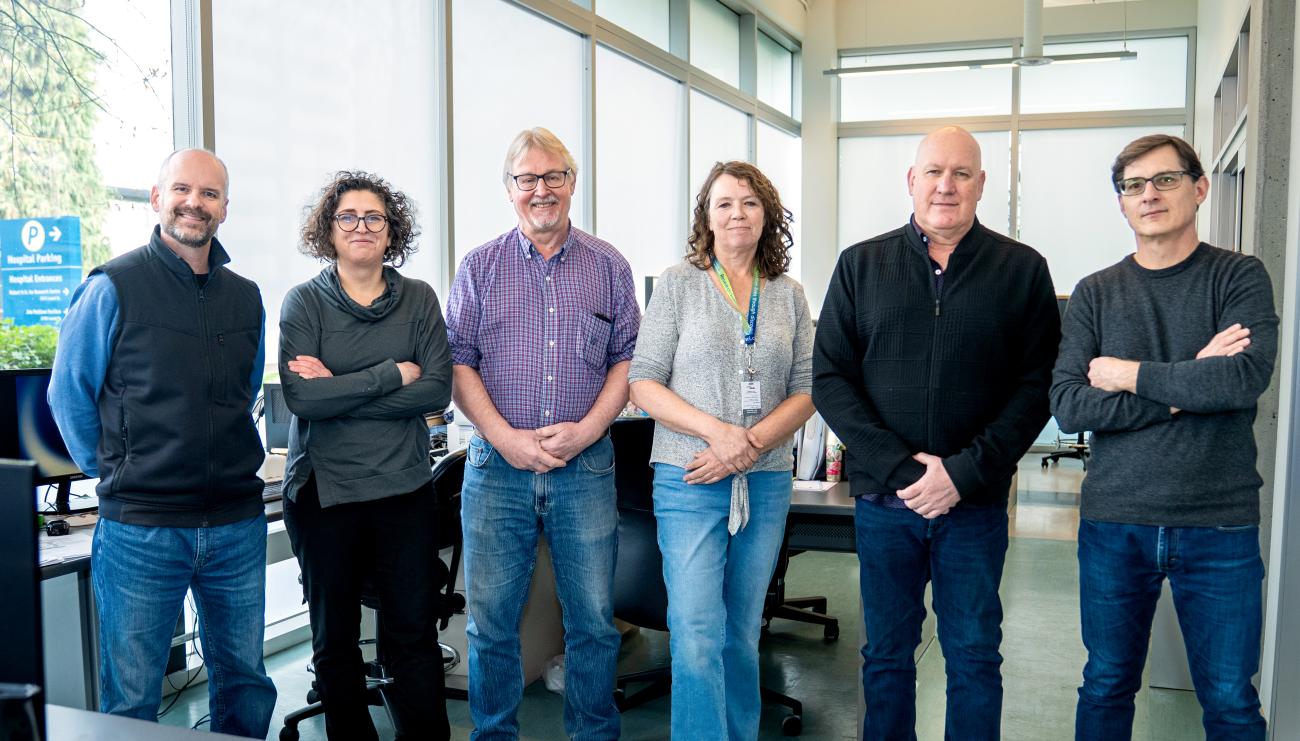
Located within the M. H. Mohseni Institute of Urologic Sciences, the Advanced Genomics & Computational Science Core is on a mission to support Vancouver Coastal Health Research Institute (VCHRI) researchers in developing new and innovative treatments. Led by Dr. Colin Collins and managed by Dr. Stéphane Le Bihan, this Vancouver Prostate Centre’s unit offers specialized services, including advanced bulk and single-cell sequencing, proteomics and, soon, spatial transcriptomic analysis technologies.
“By combining institute-scale infrastructure with deep technical expertise, the core supports clinicians and scientists in pursuing ambitious projects in a more timely manner,” says Collins. “Our goal is to make state-of-the-art genomics and proteomics broadly accessible to researchers.”
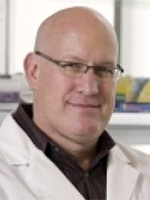
“The core provides tailored solutions for each project,” says Collins. “Starting with a research question, our team can, for example, map genetic variants that drive prostate cancer metastasis, uncovering how certain cells influence tumour progression or identify new therapeutic targets.”
“Our facility integrates wet-lab genomics and proteomics with biostatistics and bioinformatics”, explains Le Bihan. “A defining feature of the core is its role as an innovation hub. With new methods and technologies constantly emerging, our team rigorously evaluate, refine and deploy them for the broader research community.”
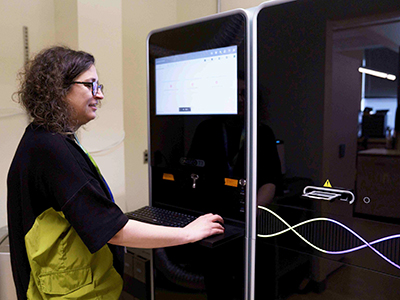
Additionally, the core assists investigators with grant preparation, helping secure funding for innovative projects. Over the past decade, core-supported research has contributed to more than 130 publications and helped researchers secure major grants from the Canadian Institutes of Health Research, Canada Foundation for Innovation, U.S. Department of Defence, Prostate Cancer Foundation and Terry Fox Research Institute, among others.
State-of-the-art equipment in the heart of research
The Advanced Genomics & Computational Science Core serves as an innovation hub for research. The single-cell sequencing available on site helps scientists view gene expression and changes at the level of an individual cell. In addition, spatial transcriptomics, which preserves the spatial context of tissue, allows researchers to explore the connections between cells and their environment.
This advanced level of tissue analysis helps pathologists more accurately classify samples, offering insights into treatment response and drug resistance. Knowledge generated from core research is contributing to disease understanding and prognosis — with the goal to identify more precise, personalized treatments.
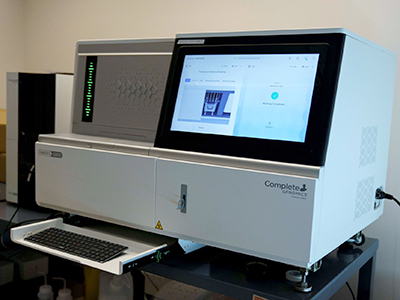
“These tools provide an unparalleled capacity for studying cancers and other diseases from genome to protein function, allowing us to accelerate discoveries and bring them closer to clinical applications,” says Le Bihan.

For Granville, the core’s support with the design, execution and analysis of RNA-seq experiments was instrumental in identifying many new targets and pathways for granzymes — family of enzymes that play a key role in immune function by targeting infected or abnormally growing cells involved in inflammation. Granzyme activity can contribute to tissue injury, inflammation, impaired wound healing and aging. Granville’s discoveries open new avenues for the treatment of autoimmune and age-related conditions such as arthritis or psoriasis.
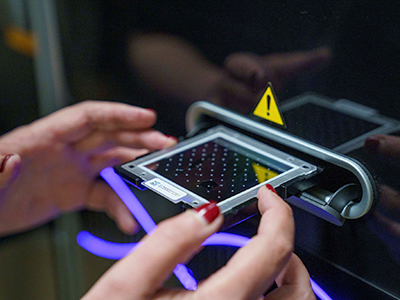
Kramer’s research aims to improve our understanding of spinal cord injury by studying individual cells. Drawing on the core’s transcriptomics expertise, his work examines how cells within the spinal cord tissue communicate with each other during recovery after an acute injury. By identifying the specific locations in the tissue where repair markers appear, this research could open new pathways for targeted treatments.
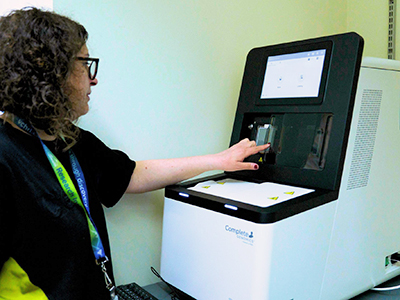
“With a unique combination of scientific innovation, clinical translation and shared efficiency, our facility serves as a cornerstone of precision medicine discoveries,” says Collins.
Learn how the Advanced Genomics & Computational Science Core can help elevate your research.
"Behind the Lab Doors” is a Research Insider series that offers a behind-the-scenes glimpse into the labs of health researchers across VCHRI. These stories explore research currently in the works, including ongoing and long-term studies that have the potential to directly impact the quality of patient care and clinical conditions. To see your VCHRI-affiliated lab featured in an upcoming article, contact us at vchricommunications@vch.ca.