Main menu

  • About Us
    • Leadership
    • Our Team
    • Vision, Mission and Values
    • Health and Economic Impact
    • Research Impact Video
    • Strategic Plan
  • Our Research
    • Research Focus
      • Brain Health
      • Cancer
      • Digital Health and Artificial Intelligence
      • Heart Health
      • Healthy Aging and Mobility
      • Immune System
      • Injury and Rehabilitation
      • Lung Health
      • Mental Health and Substance Use
    • Research Centres and Programs
      • BC Centre on Substance Use
      • Centre for Aging SMART
      • Centre for Clinical Epidemiology and Evaluation
      • Centre for Lung Health
      • Dilawri Cardiovascular Institute
      • Djavad Mowafaghian Centre for Brain Health
      • Immunity and Infection Research Centre
      • International Collaboration On Repair Discoveries
      • M. H. Mohseni Institute of Urologic Sciences
      • Ovarian Cancer Research Centre
      • Community Research Program
      • Emergency Medicine Research Program
      • Hematology Research Program
      • Skin Research Program
      • Other Research Focus Areas
    • News and Stories
    • Researcher Directory
    • Events and Workshops
  • Research Services
    • New to VCHRI
      • Working at VCHRI
      • Regulations and Training
      • Membership with VCHRI
      • Learning and Development
    • Starting Your Project
      • Research Facilitation
      • Awards and Funding
      • Grant Management
      • Operational Approval
      • CST Cerner
    • Developing Your Project
      • Clinical Trials Administration
      • Clinical Research Unit
      • Research Privacy
      • Financial Policies and Procedures
    • Additional Support
      • Indigenous Health Research Unit
      • VCH-VCHRI AI Hub
      • Communications and Media Relations
      • Study Recruitment Support
      • Innovation and Industry Partnership
    • Internal Awards
    • Clinical Research
    • Indigenous Research
  • Participate in Research
    • Reasons to Participate
    • Participant Stories
    • Find a Study
    • Recruitment Support

User menu

  • Log in

Breadcrumb

  1. Home
  2. Our Research
  3. News and Stories
  4. One chord at a time: Community ukulele program builds connection for people living with dementia

One chord at a time: Community ukulele program builds connection for people living with dementia

Stories Mar 23, 2026 3 minutes

Learning music together reveals new ways to build confidence and community in dementia care.

Over 700,000 people currently live with a neurocognitive disorder or dementia in Canada. With 61% of them living in a community setting, there is a growing need for equitable, person-centred engagement and accessible community programs that challenge stigma and foster inclusion.

A new Vancouver Coastal Health Research Institute (VCHRI) study led by VCHRI researcher Dr. Lillian Hung and University of British Columbia (UBC) biomedical engineering student Jason Fu found that learning music together may help build confidence, social connection and improve quality of life of people living with dementia in the community.

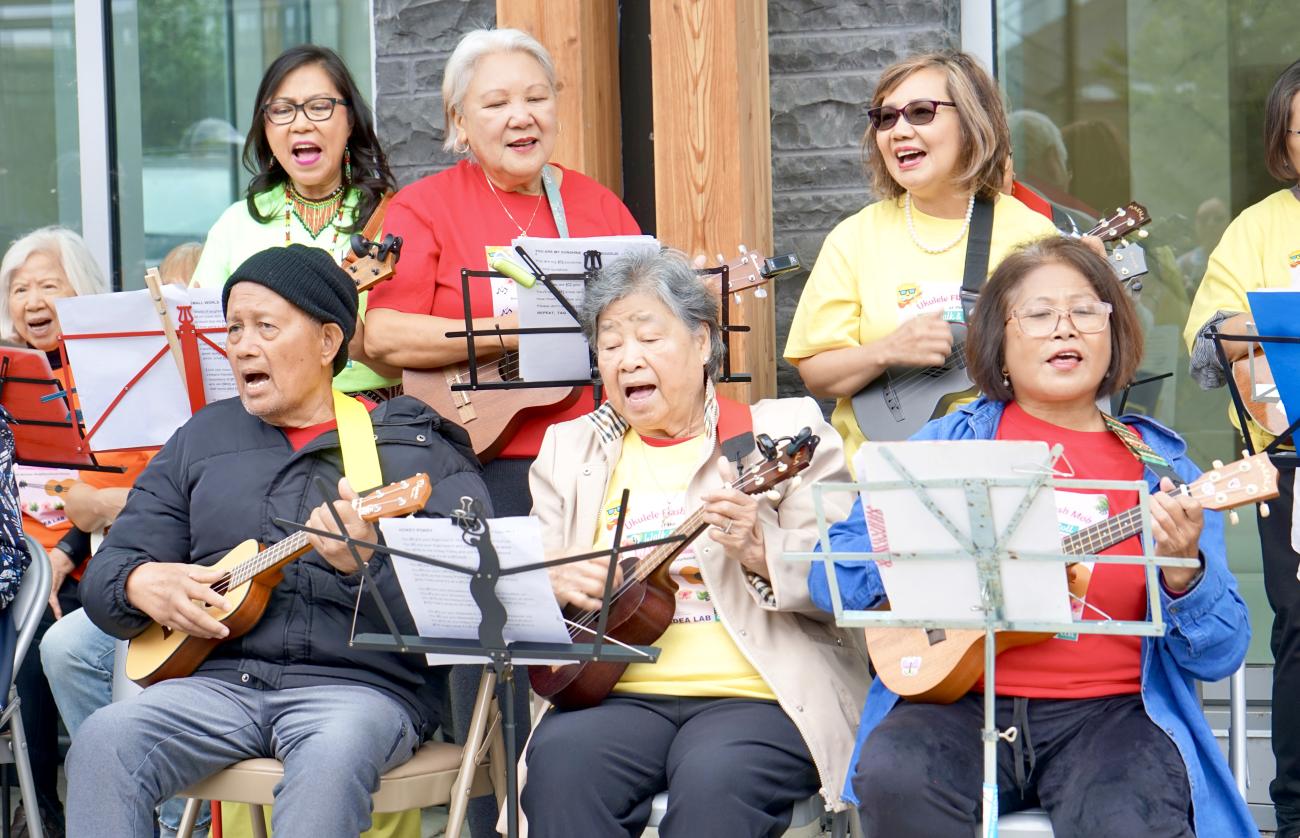
The study reviewed the development and delivery of the 12-week Uke Connect, a community music program launched in partnership with UBC and Burnaby Neighbourhood House. The program provided a supportive learning environment that brought together 15 people living with dementia and three care partners for weekly Uke Connect gatherings. Participants learned how to play the ukulele, practicing simple chords, learning songs and building confidence and relationships with others.

“Music connects people. It is universal,” says Hung. “Music is not and should not be a luxury — it needs to be accessible.”

Dr. Lillian Hung is an associate professor at the UBC School of Nursing and a clinical nurse specialist at Vancouver Coastal Health. Hung is the founder and lead of the Innovation in DEmentia and Aging (IDEA) Lab.

A program shaped by lived experience

Unlike many music programs designed for dementia care in long-term care homes — which often focus on listening or sing-along activities — Uke Connect emphasized active learning. Participants picked up the instrument themselves and learned in real time how to play, showing how learning a new skill can stimulate creativity, coordination and cognitive engagement while strengthening social connection.
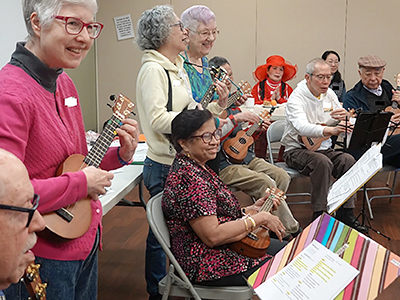
 

The Uke Connect program welcomed participants from diverse cultural backgrounds and varying cognitive abilities, creating an environment where everyone could participate regardless of musical experience. 

The study was based on a co-leadership model, where researchers and people with lived experience work together to test ideas and continually refine programs based on participant feedback. Hung and Fu partnered with Mario Gregorio, a long-time patient partner who lives with dementia, to guide program priorities and decisions related to accessibility, participation and inclusion.

Gregorio challenged traditional assumptions about how research programs engage people living with dementia. 

“Mario taught us that participants were not only there to join the program. They should be actively engaged partners in the project,” says Hung.

Many participants arrived unsure whether they could learn an instrument, Hung shares. 

“People living with dementia are often hesitant to go out on their own. This can lead to social isolation, which is a significant barrier to achieving quality of life for this population.”

But, after attending the first Uke Connect class, many participants kept returning.

Music as a pathway to belonging

Through study feedback, participants reported a shift in how they saw themselves: as active members of a community. And this extended outside of the classroom. Participants encouraged one another to attend Uke Connect each week, calling other participants, who had now become friends, with reminders and invitations.

“Having a sense of agency is powerful,” says Hung. “And not just individual agency, relational agency grown from mutual support.”
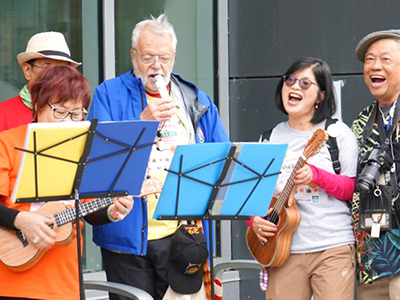
The group worked toward a shared goal of performing together in public. At the end of the program, participants performed in a public space at Metrotown Skytrain Station, sharing their music with passersby in a celebration of connection and visibility. 

For Hung, the experience highlights the importance of expanding how dementia research defines success. 

“In traditional research, we often measure success by clinical outcomes,” she says. “But participants in the program emphasized different outcomes, which can be equally as important, especially for a group where loneliness has a significant impact on quality of life.”

“Connection, joy and belonging are clear markers that made this project so impactful.”

Hung hopes programs like Uke Connect will further inspire communities to rethink how they support people living with dementia. 

“These kinds of programs can build age-friendly and dementia-friendly communities and strengthen intergenerational engagement,” she says. “People living with dementia can still live a very good life. They can learn. They’re important members of society. They belong.”


Researchers

Lillian Hung

Related Articles

The need for equitable communication support in dementia care

Ask an expert: How can technology improve the quality of life for people with dementia?

Finding renewed energy and health during perimenopause

Share:

  • Facebook
  • Linkedin
  • Email

Get the latest research headlines in your inbox

Subscribe

Recent News and Stories

Type
Stories

People in profile: Naomi Jung

Mar 19, 2026 people feature
Type
Stories

Ask an expert: How can I protect my vision if I’m at risk of glaucoma?

Mar 6, 2026 eye, preventative
Type
Participate in Research

Bringing cardiac recovery home

Mar 6, 2026 participate, cardiac, health equity
See more news

Get updates!

Join our newsletter mailing list to stay up to date on features and releases.

Subscribe

Quick Links

  • News and Stories
  • Careers
  • Events
  • Media Enquiries

Follow Us

  • LinkedIn
  • Instagram
  • Bluesky
  • YouTube

© 2026 VCHRI. All rights reserved.

  • Contact
  • Privacy Policy