Physiological signals collected during routine sleep studies may help identify people with obstructive sleep apnea who are at greater risk of cognitive impairment.
More than one in four Canadians are considered at high risk of obstructive sleep apnea (OSA), a common sleep disorder associated with cardiovascular disease, stroke, Type 2 diabetes and cognitive impairment. Despite affecting an estimated one billion people worldwide, many people with OSA remain undiagnosed.
As dementia rates continue to rise in Canada, identifying people at risk of cognitive decline in the context of OSA has become increasingly important. Yet clinicians still rely on the apnea-hypopnea index as the main measure of OSA severity, a decades-old measure that captures only a fraction of the information collected during a routine sleep study.
A study led by VCHRI researcher Dr. Najib Ayas and postdoctoral fellow Dr. Mohammadreza Hajipour suggests other physiological signals routinely collected during overnight sleep studies may help identify people with OSA who are at greater risk of cognitive impairment, laying the foundation for more personalized care.
Beyond a single measure
The study builds on a national cohort established through a Canadian Institutes of Health Research (CIHR)-funded grant led by Ayas. Between 2016 and 2021, researchers at six academic sleep centres across Canada enrolled more than 2,100 people referred for suspected OSA, collecting detailed sleep study data, blood samples and clinical information.
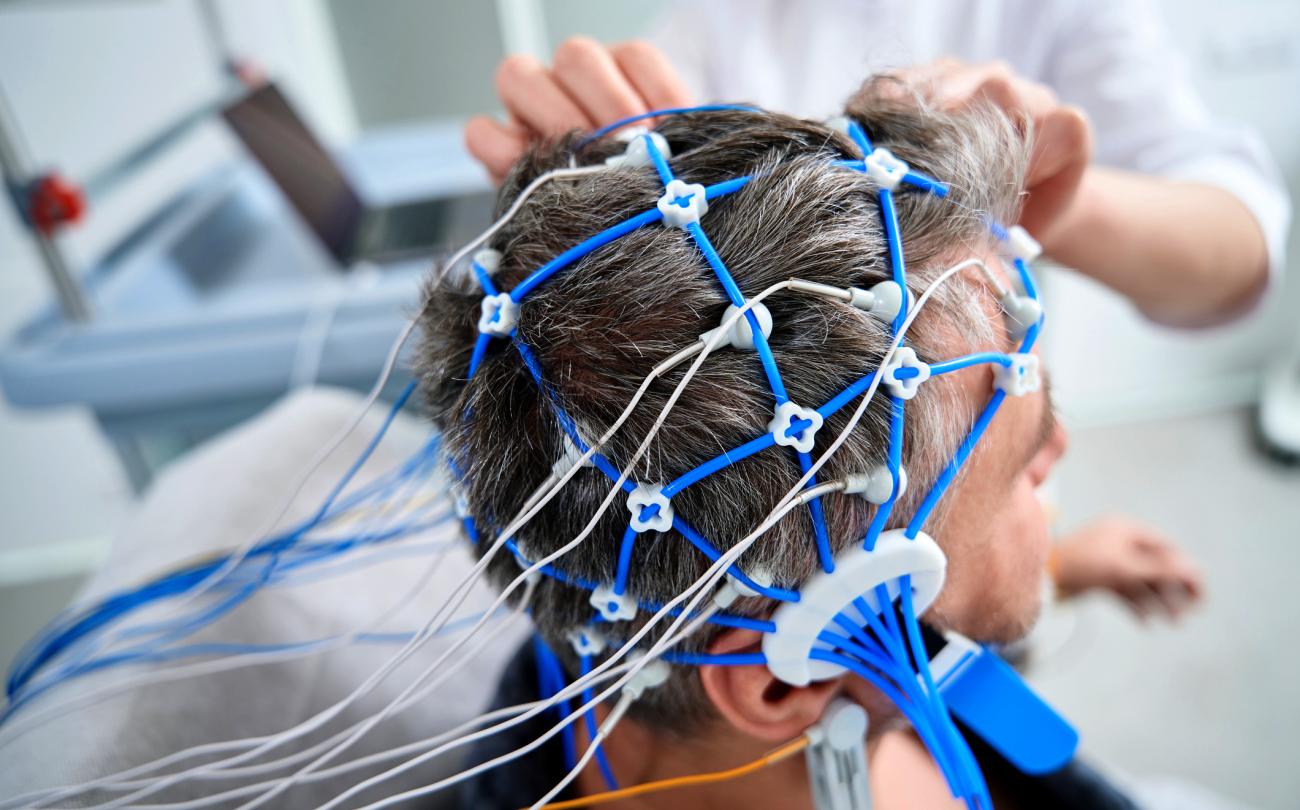
During a sleep study, clinicians used electroencephalography (EEG) to record brain activity, breathing, oxygen levels, heart rate and other physiological signals. However, much of this information is not currently used to assess the severity of OSA.
“We collect a huge amount of physiological data over eight to 10 hours,” says Ayas. “Traditionally, though, we’ve relied on a single measure – the apnea-hypopnea index. Simply counting breathing events doesn’t do justice to the amount of information we receive.”

The researchers wanted to determine whether these additional physiological signals, particularly EEG activity, could better identify patients at risk of cognitive impairment.
“These biomarkers are derived from data already collected during routine overnight assessments, so they do not require new equipment or longer testing if eventually adopted in clinical practice.”
A window into brain health
Hajipour analyzed sleep study data from 537 adults with untreated OSA, focusing a novel EEG-based measure called Brain Response to Event (BReTE), which captures how the brain responds to individual breathing disruptions during sleep. The team also examined heart rate and blood vessel responses and compared these measures with standardized assessments of cognitive function.
“We were surprised to find the opposite of what we expected” says Ayas. “We thought stronger brain responses would be linked to poorer cognitive performance, but the opposite was true. The pattern was remarkably consistent no matter how we analyzed the data.”
“We don’t think these brain responses are causing cognitive dysfunction,” says Ayas. “Rather, they’re likely an indicator of the long-term changes sleep apnea has already caused in the brain – a subtle signal that the sleep study is picking up.”
While these biomarkers are not yet used in routine clinical practice, Ayas believes they could eventually help identify patients who would benefit from earlier intervention.
“If we can identify patients at risk of cognitive decline earlier, we may be able to intervene sooner,” he says. “That could mean closer monitoring, lifestyle changes, more aggressive treatment of sleep apnea or other strategies to help protect brain health.”
Future research will examine whether these biomarkers can predict cognitive decline over time and identify which patients are most likely to benefit from treatments such as continuous positive airway pressure (CPAP). Ultimately, the findings could help clinicians use information already collected during routine sleep study data to better understand an individual’s risk of cognitive decline and tailor care accordingly.