Recipients of the 2026 VCHRI Innovation and Translational Research Awards discuss the impact of funding opportunities for early career researchers across VCHRI.
Early career researchers play an important role in advancing health research, bringing fresh perspectives to complex challenges. The VCHRI Innovation and Translational Research Awards recognize and support researchers at various stages of their careers, helping them pursue innovative ideas with the potential to improve patient outcomes and health care.
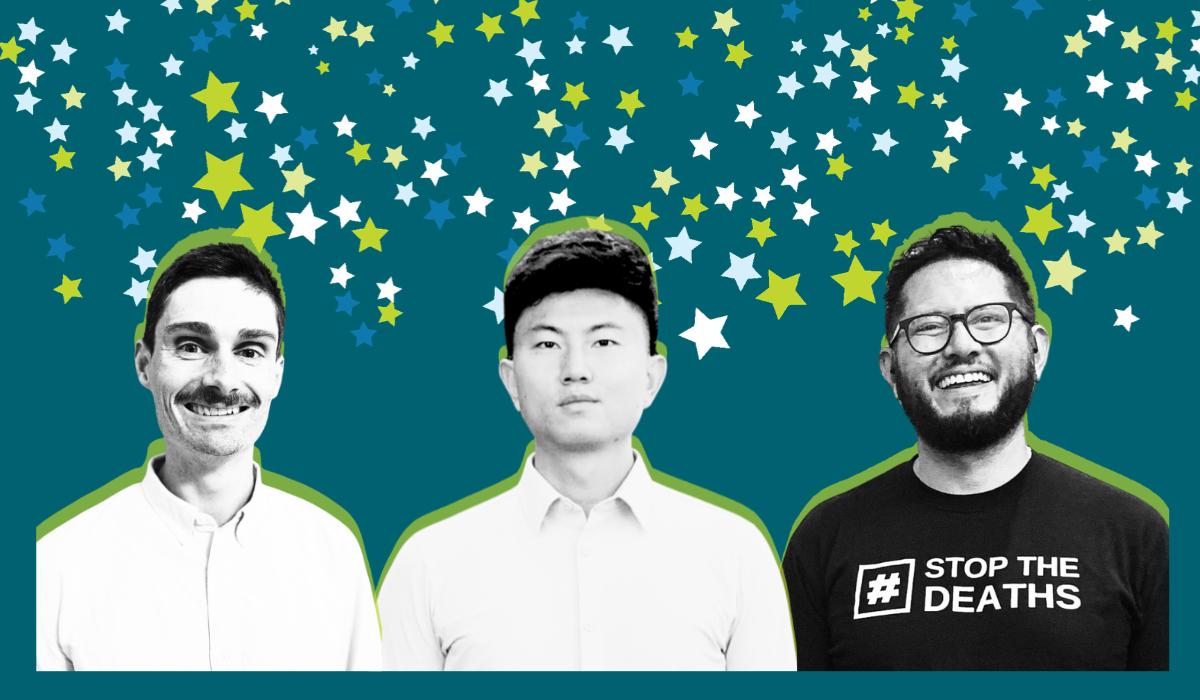
Three 2026 award recipients share the questions driving their work, the lessons they've learned and their hopes for the future of health research in British Columbia.
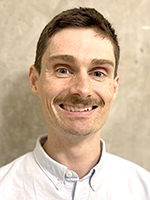
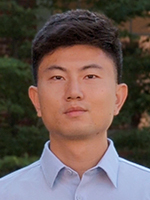
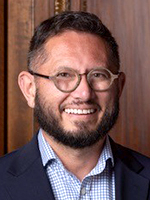
Q: What research question will you address with the Innovation and Translational Research Award?
Mark: Genetic testing can help find and treat chronic kidney disease, but it remains underutilized in B.C. Genetic tests for kidney disease are sent out of Canada, leading to high costs, a large administrative burden and delays in diagnosis. Current tests also carry a risk of false negative results.
Our project aims to provide a single, fast and accessible comprehensive genetic test using targeted adaptive long-read sequencing, performed locally in Vancouver. We are studying the speed, diagnostic utility and cost compared with the existing pathway. If successful, we hope it will revolutionize genetic testing for kidney disease in B.C. and potentially extend to other diseases.
Zhenwei: Surgery is one of the most effective treatments for solid tumours, but removing a tumour is only part of the challenge. In oral cancer, the post-surgical wound is particularly challenging: microscopic cancer cells can be difficult to eliminate, while recovery can restrict everyday activities such as eating, speaking and swallowing.
Our approach is to treat the wound as a biological interface that we can engineer, designing a medical device capable of tackling both challenges. By delivering treatment precisely where it is needed, our goal is to transform the post-surgical wound bed into an active therapeutic biointerface that prevents recurrence while supporting recovery.
Joe: People experiencing homelessness in Vancouver become ill and die younger than almost anyone else in the city. They rely heavily on emergency departments and struggle to access everyday care that would keep them well. VCH Primary Care Clinics aim to remove barriers through health equity interventions, but these are provided unevenly across the wider health care system.
Our project asks how these supports can be better organized so that people get care earlier and stay connected to it. We will interview people experiencing homelessness to understand what works well and what needs to be improved, and hold focus groups with staff to identify practice changes. With patient partners, we will work with health care leaders to implement findings that improve services for the people we care for.
Q: As an early career researcher, how does receiving the Innovation and Translational Research Award contribute to your long-term career and research goals?
Mark: Receiving the Innovation and Translational Research Award removes barriers to developing my research program by opening doors to fast and comprehensive testing. It also represents a significant step forward in kidney genetics research, as targeted adaptive long-read sequencing has not yet been applied to this field. I hope this award will lead to further externally funded grants and potentially the creation of a commercialization test.
Zhenwei: This award provides an important foundation for the next stage of my research program. It allows our team to bring together engineers, scientists and clinicians from ICORD, BC Cancer and Vancouver General Hospital to move our bioengineered technologies from the laboratory toward clinical translation.
My long-term vision is to build an interdisciplinary program that creates a new generation of medical devices that actively interact with the body. This award gives us an opportunity to turn that vision into technologies that could ultimately change how patients are treated.
Joe: For me, impactful research is not only scientific, but also social. Effective research and implementation require building trust among communities with deep-rooted historical mistrust and aligning with the values of the patients we aim to serve. Being new to Vancouver, receiving this award gives me a tremendous opportunity to foster these relationships and networks while co-creating a knowledge base for equity-focused health care improvement for the community I serve.
Q: What has been the most important lesson you've learned so far as an early career researcher?
Mark: I have been lucky to have excellent mentors and colleagues, which has taught me that the key to success is the team you surround yourself with and the importance of collaborations in performing meaningful research.
Zhenwei: Engineers are often trained to ask, “What can we build, and how can we push beyond the status quo?” Translational research has taught me to also ask, “What actually needs to be solved, and how can the technology fit into clinical care?”
Some of my most valuable conversations have been with clinicians who see challenges that are difficult to appreciate from the laboratory. The most impactful innovations emerge when clinical needs, biological understanding and engineering possibilities inform one another throughout the research and development process.
Joe: I began my medical career in the UK’s National Health Service, where I came to understand that simply offering equal access to health care can worsen inequalities because marginalized communities often face steeper barriers to using services. To address this, we need flexibility to allocate resources, outreach and care to those who need it most.
As an early career researcher, I have learned that planning, implementing and evaluating this support is deeply complex, with clinical outcomes shaped by the interactions between patients, health care providers, housing systems, community supports and social services.
Q: What is one challenge in your field that you think could benefit from the perspectives of early career researchers?
Mark: Early career researchers are particularly well positioned to ask questions about how existing systems could be changed to provide better outcomes for patients. We often bring fresh experience from other programs and disciplines, as well as new and unrecognized perspectives.
Zhenwei: As early career researchers, we are fortunate to be working at a time when traditional boundaries between disciplines are becoming increasingly fluid. My own career path has been somewhat non-traditional, moving across engineering, biology and translation. It has taught me the value of being adaptable, continuously learning and being willing to explore unfamiliar territory. As we tackle increasingly complex problems, we can bring together new technologies, diverse perspectives and different ways of thinking to create solutions that no single vantage point could reach alone.
Joe: Entering the field after the COVID-19 pandemic gives us early career researchers a particularly unique perspective. The public health crisis immediately exposed the flaws of evaluating health care in isolation for people experiencing homelessness. Viral illness, for example, could not be addressed as a standalone clinical issue when public health measures such as self-isolation and handwashing were challenging without stable housing.
As a result, it became necessary for us to study the intersection of medical vulnerability, housing instability and municipal policy. This work provided us with practical experience applying complexity theory within implementation research, an approach that continues to be relevant in challenging and unpredictable times.
Q: What do you hope research can contribute to your field in B.C. in the next five years?
Mark: Validating a new kidney genetic testing approach as a cost-effective and efficient tool could support broader access for people at risk of kidney disease in the coming years across B.C. By reducing barriers associated with the current testing pathway, it has the potential to address existing inequities in access to genetic testing and help make genetic testing a routine part of clinical care.
Zhenwei: I hope the next five years will move biomedical research in B.C. toward technologies that are more personalized and adaptive. We are gaining an unprecedented ability to engineer biomaterials and devices that interact with living tissues, while advances in disease modelling and precision medicine are helping us understand how individual patients respond differently to disease and treatment.
B.C. has the expertise across engineering, life sciences and clinical medicine to lead this transition. Getting there will mean building stronger bridges between disciplines and institutions, so that a discovery in one lab doesn’t stall before it reaches a patient.
Joe: Over the next five years, I hope to develop and normalize equity-focused health care improvement approaches so that we can correct systemic and structural barriers faced by our most socioeconomically marginalized populations. Barriers to shared decision-making, gaps in relational autonomy and structural constraints on agency are realities many patients face. These concepts should become part of the everyday vocabulary of providers and health system leaders, accompanied by a shared responsibility to recognize and address them.