Bladder cancer is one of the most common cancers affecting the urinary system, yet many people remain unaware of its risk factors and warning signs. Recent research is expanding our understanding of bladder cancer biology and helping shape more personalized approaches to care, from diagnosis through treatment and survivorship.
A prevention strategy developed by B.C. researchers reduces the risk of the most common and deadly form of ovarian cancer by nearly 80 per cent, according to a new study published today in JAMA Network Open.
A new study is the first to examine the complete proteome — the full set of proteins — in muscle-invasive bladder cancers (MIBCs) before and after chemotherapy treatment. Published in Nature Communications, Vancouver Coastal Health Research Institute researcher Dr. Peter Black’s study, led by researcher-scientists Drs. Alberto Contreras-Sanz and Gian Negri, uncovered clues to treatment resistance and response.
A collaborative team of researchers from the Department of Chemistry at the University of British Columbia (UBC) and the Vancouver Prostate Centre (VPC) have developed a new method to design safer, more targeted cancer drugs. The platform, called baited-SELEX, uses DNA molecules to mimic antibodies and selectively target cancer cells while minimizing harmful side effects of current therapies.
Each year, about 3,000 people in Canada are diagnosed with ovarian cancer. With symptoms that are vague and easily mistaken for less serious health issues, it can be difficult to detect in its early stages. As a result, many people receive their diagnosis when the disease is already advanced.
In a breakthrough study co-led by Vancouver Coastal Health Research Institute researchers, Drs. Christopher Ong and Yuzhuo Wang have identified for the first time a signalling cascade that can be targeted to switch off a form of late-stage prostate cancer.
“Our results pave the way for new precision medicine approaches for prostate cancer, particularly to stop the development of severe disease.”
Vancouver, BC — May 27, 2025 — Vancouver Coastal Health has launched British Columbia’s first dedicated inpatient clinical trials unit for early-phase therapies in blood cancers. Located at Vancouver General Hospital (VGH), the new Hematology Research Unit will deliver revolutionary therapies — including first-in-human treatments such as advanced immunotherapies like CAR T-cell therapy — to patients with relapsed or treatment-resistant hematological diseases.
A new avenue to differentiate between prostate cancers is being investigated by Vancouver Coastal Health Research Institute researchers Dr. Alexander Wyatt and Dr. Cameron Herberts.
Researchers are leveraging the power of machine learning to support breast reconstruction decision-making among breast cancer patients. A breakthrough study, published in the journal Plastic and Reconstructive Surgery: Global Open, converts data on breast reconstruction outcomes following a mastectomy, which involves the removal of all or part of the breast, into a simple-to-use online tool to guide patient care discussions.
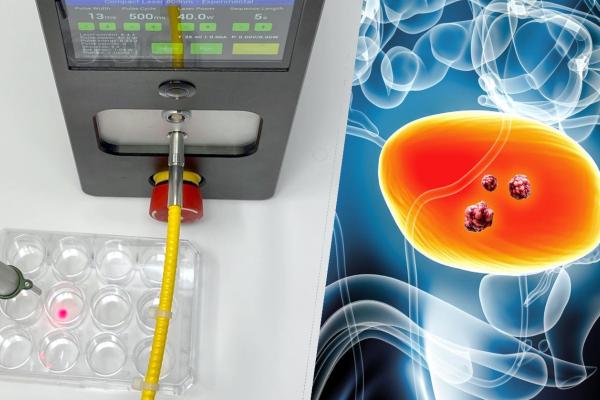
A pulsed laser therapy approach designed by Vancouver Coastal Health Research Institute researcher Dr. Mads Daugaard and his team has shown promise as a first step to cancer cell destruction before patients undergo immunotherapy to boost their immune system’s defences against the cancer.