New research is shifting care toward greater patient inclusion in discussions surrounding their treatment plans. In her recent Canadian Journal of Cardiologystudy, Vancouver Coastal Health Research Institute researcher Dr. Sandra Lauck discusses the shared decision-making (SDM) framework — an internationally recognized health care best practice — as an underutilized essential component in valvular heart disease care.
Wearable health monitoring devices have become omnipresent in the lives of Canadians. However, many questions have been raised about how accurate they are at measuring the vital signs and activity levels of wearers.
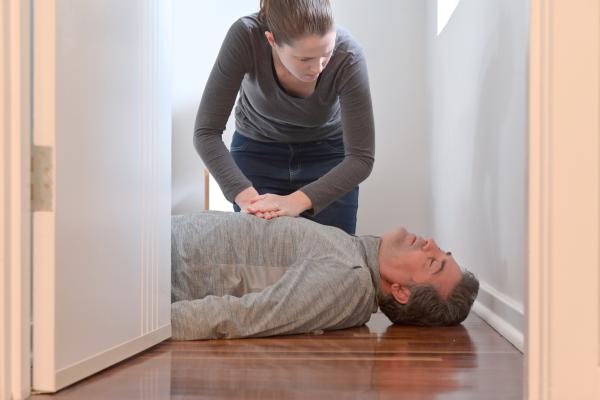
When Buffalo Bills player Damar Hamlin fell to the ground after a tackle during an NFL football game, it seemed inconceivable that the athletic 24-year-old suffered a cardiac arrest. Hamlin is one of around 400,000 North Americans affected by cardiac arrests that happen outside of a hospital setting each year. While Hamlin later received treatment for his condition and recovered, too many others do not survive.
Better long-term outcomes for people in need of treatment for atrial fibrillation may start with a cardiac procedure called cryoballoon ablation (cryoablation), according to a study led by Vancouver Coastal Health Research Institute researcher Dr. Jason Andrade.
Ultra-marathon running has been linked to the temporary lowering of cognition and memory, according to the findings of a study led by Vancouver Coastal Health Research Institute researcher, Dr. Darren Warburton.
“While the benefits of physical exercise far outweigh the risks, it is important to note the potential hazards associated with marathon running during and for a period of time following a race,” says Warburton. “Our research study enters into the territory of discovering what might be the upper limits of the benefits of exercise.”
The most common cardiac arrhythmia, atrial fibrillation (AF), affects up to 500,000 Canadians and contributes to approximately one quarter of strokes among people over 40 years of age. Vancouver Coastal Health Research Institute scientist Dr. Jason Andrade — who was named a ‘World Expert on Atrial Fibrillation’ by Expertscape — shares his insights into the latest approaches to prevent and treat AF.
Time is of the essence to administer the best possible treatment when a patient enters the hospital with a heart attack. In the case of patients with ST-elevation myocardial infarction (STEMI) — one of the most dangerous and potentially deadly forms of heart attack — the coronary artery is completely blocked, restricting life-giving blood from flowing through the arteries to the heart muscle.
Once thought of as a disease that mainly affected men, research has shed light on the fact that heart disease and stroke are the primary cause of premature death among Canadian women.
While the noise of someone snoring loudly is hard to ignore if you’re sleeping next to it every night, the stress that it puts on the heart can be easy to miss. Chronic snoring is often associated with a sleep disorder called obstructive sleep apnea (OSA), which occurs when the muscles of the throat relax during sleep and close off the airway. This cuts off the air supply to the lungs and can trigger highly disruptive gasps for air and low oxygen levels.
Many of us have felt our heart beat faster from exercise or when we get a bit too excited. But when our heart seems to be out of rhythm at odd times, there could be several reasons why. Heart expert and Vancouver Coastal Health Research Institute researcher Dr. Simon Rabkin explains what irregular heartbeats, also known as cardiac arrhythmias, can mean.
Q: Sometimes my heart skips a beat or beats a bit faster. Should I be worried about this?