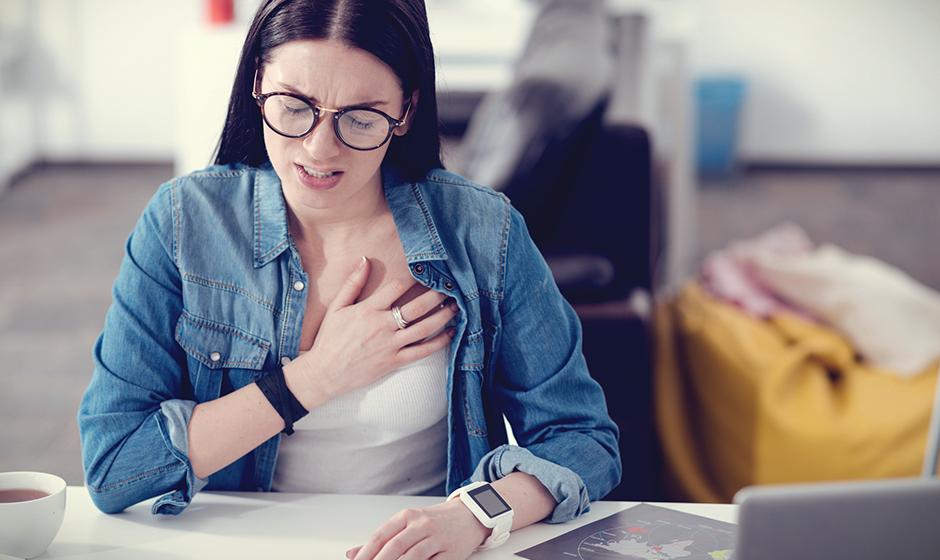
From benign to serious, irregular heartbeats can be linked to common substances and mean a variety of things, as our expert explains.
Many of us have felt our heart beat faster from exercise or when we get a bit too excited. But when our heart seems to be out of rhythm at odd times, there could be several reasons why. Heart expert and Vancouver Coastal Health Research Institute researcher Dr. Simon Rabkin explains what irregular heartbeats, also known as cardiac arrhythmias, can mean.
Q: Sometimes my heart skips a beat or beats a bit faster. Should I be worried about this?
A: A skipped heartbeat could be nothing to worry about if it is only a few skipped beats within a 24-hour time period. But it could also be quite serious if it represents an underlying dangerous cardiac arrhythmia. Because an individual cannot really detect the difference, it is best to contact your doctor if you are concerned. They may recommend a diagnostic test using an electrocardiogram, which tracks electrical activity in the heart.
Sometimes the matter can be related to a greater awareness about one’s heartbeat. This phenomenon starts with nerves that innervate the heart muscle. They connect to centres in the brain responsible for making us aware of our heartbeat. When a brain surgeon stimulates those centres, the patient can think that their heartbeat is irregular even though it is beating at a completely normal rate. So, a stimulated part of the brain, and not a cardiac arrhythmia, can in some circumstances produce the symptoms of skipped heartbeats.
Q: What causes cardiac arrhythmia?
A: Cardiac arrhythmias are experienced as faster, slower or irregular heartbeats. While the causes are many, most can be traced to a ‘malfunctioning’ of the specialized electrical system in the heart muscle, and sometimes in the pulmonary veins connected to the heart. A heart attack or scar tissue in the heart also increases the risk of developing arrhythmias, as do the consequences of long-standing hypertension and certain hereditary conditions that affect the heart. Other causes include electrolyte imbalances and hormonal abnormalities, such as hyperthyroidism.
Q: Can certain foods or substances trigger cardiac arrhythmias?
A: Caffeine in coffee does not produce cardiac arrhythmia unless you drink an enormous amount, such as nine cups or more per day. However, high-energy drinks have been associated with cardiac arrhythmia because of their high caffeine content mixed with taurine and other substances that amplify the effects of caffeine.
Alcohol can induce arrhythmias either because of its direct effects on the electrical properties of the heart or because of the consequences of long-term excessive alcohol consumption on the heart. The metabolism of alcohol can produce metabolites, which may be toxic to the heart in high concentrations. Excessive alcohol consumption can lead to atrial fibrillation, a condition that causes random electrical impulses in the atria, which also increases the risk of stroke. For a long time, binge-drinking has been known to produce an irregular heartbeat that often requires treatment.
Certain medications can cause cardiac arrhythmia, particularly stimulants and adrenaline-like medications that are commonly prescribed to treat conditions such as attention deficit disorder. Decongestants for colds and several psychiatric medications have the potential to lead to cardiac arrhythmia. However, your doctor knows whether the benefits of these medications outweigh the risks of an arrhythmia. Marijuana can also induce arrhythmias and produce heart palpitations.
Q: Are certain age groups more prone to cardiac arrhythmia?
A: The risk of cardiac arrhythmia increases with age, which puts older adults in a higher risk category.
Q: What lifestyle changes can reduce the risk of developing a heart arrhythmia?
A: An overall healthy lifestyle supports a healthy heart. This includes maintaining a healthy weight, as being overweight is particularly associated with atrial fibrillation. Hypertension can negatively impact the heart, so good blood pressure control is also important, as are getting quality sleep and managing stress. Interestingly, and perhaps counterintuitively, people who are heavy duty, regular exercisers are more likely to develop arrhythmias. However, regular, moderate exercise decreases the odds of getting an arrhythmia.