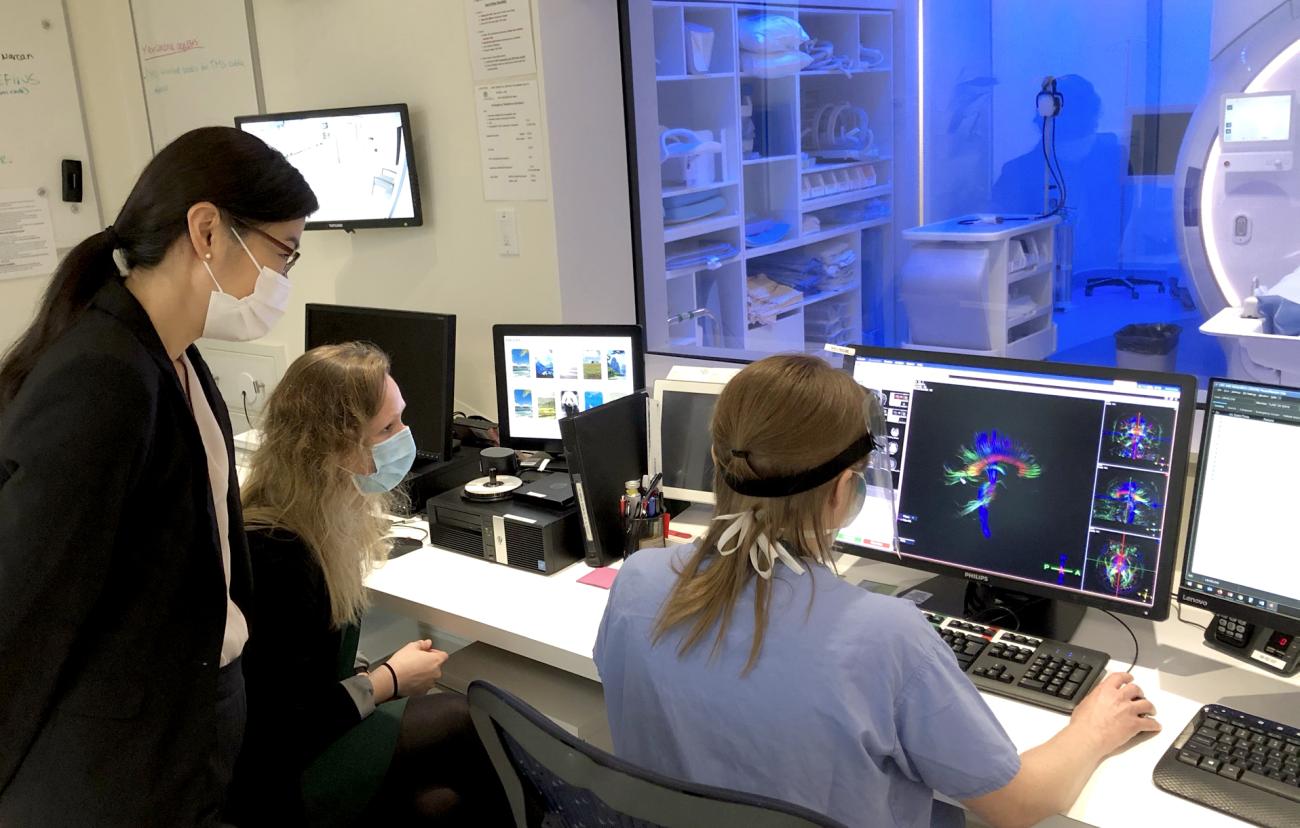
Research platform will provide critical data to the future development of screening and prevention strategies that promote brain health for aging Canadians.
The Canadian Longitudinal Study on Aging (CLSA) is launching a new project called the Healthy Brains, Health Aging Initiative, which will shed light on the many factors that influence brain health as we age, including lifestyle and the human microbiome.
Dr. Teresa Liu-Ambrose, Canada Research Chair at the Djavad Mowafaghian Centre for Brain Health, professor in the Department of Physical Therapy at University of British Columbia (UBC) and researcher at the Vancouver Coastal Health Research Institute, will be one of the neuroimaging leads on the project.
This new initiative builds on the work that Dr. Liu-Ambrose started with the CLSA COVID-19 Brain Health Study, in which she assembled and leads the CLSA Neuroimaging Working Group.
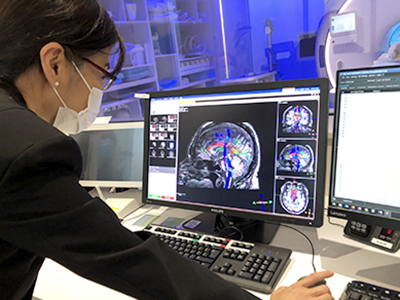
“I am thrilled to continue working together with the various CLSA research teams from across Canada on this new initiative,” says Dr. Liu-Ambrose. “By incorporating neuroimaging and microbiome data into the CLSA, we will be able to get a much fuller picture of Canadians’ brain health, which will help in our long-term goal of promoting healthy aging.”
The Healthy Brains, Healthy Aging Initiative will feature a cohort of 6,000 research participants who are currently enrolled in the CLSA. It marks the first time a national study of aging in Canada has introduced both brain imaging and microbiome analyses to investigate cognitive aging in the population over time. With more than 50,000 participants, the CLSA follows Canadian men and women for 20 years to better understand why some people remain healthier than others as they age.
Critical data to better understand the basis of successful cognitive aging
The goal of the six-year Healthy Brains, Healthy Aging Initiative is to enhance the CLSA platform with longitudinal data from magnetic resonance imaging (MRI) of the brain and microbiome analyses of the gut, to help researchers examine how diverse lifestyle, medical, psychosocial, economic and environmental factors as well as changes in the microbiome correlate with healthy aging outcomes. This data will be critical to the future development of screening and prevention strategies that promote brain health for aging Canadians.
This initiative was made possible by a $12-million research grant from the Weston Family Foundation, which has set an ambitious goal of improving and maintaining brain health in its overall efforts to improve the well-being of Canadians. The Healthy Brains, Healthy Aging Initiative and the resulting datasets could prove pivotal in these efforts.
“These enhancements to the CLSA research platform will provide researchers with critical data to better understand the basis of successful cognitive aging,” says professor Parminder Raina, lead principal investigator of the CLSA and scientific director of the McMaster Institute for Research on Aging.
“We thank the Weston Family Foundation for their generous support and commitment to this incredibly important area of study, which we hope will have an undeniable impact on the health of Canadians.”
Potential breakthroughs as a result of data gathered by the Healthy Brains, Healthy Aging Initiative will not only improve the health of Canadians as they age but will generate research evidence to inform policy and programs that increase the agency of Canadians on their own health outcomes.
The Canadian Longitudinal Study on Aging (CLSA) is a large, national research platform on health and aging allowing researchers to answer critical questions on the biological, medical, psychological, social, lifestyle and economic aspects of aging, disability and disease. The CLSA follows 51,338 men and women, who were aged 45 to 85 at recruitment, for 20 years. The aim of the CLSA is to find ways to help us live long and live well, and to understand why some people age in healthy fashion while others do not. The addition of brain imaging and gut microbiome assessments to the CLSA will provide researchers in Canada and around the world with critical data to better understand the basis of successful cognitive aging.
The Healthy Brains, Healthy Aging Initiative is a six-year study, funded by the Weston Family Foundation, that will create new datasets to enhance the CLSA database and facilitate independent research into the link between lifestyle, the human microbiome and brain health. The study will involve 6,000 research participants enrolled in the CLSA, including more than 2,500 who will undergo magnetic resonance imaging (MRI) to monitor brain structure and function as they age. The resulting standardized datasets will be available for use by approved public-sector researchers in Canada and internationally.