Main menu

  • About
    • Leadership
    • Our Team
    • Vision, Mission and Values
    • Health and Economic Impact
    • Strategic Plan
    • News and Stories
    • Careers
  • Research
    • Research Focus
      • Brain Health
      • Cancer
      • Digital Health
      • Healthy Aging and Mobility
      • Heart Health
      • Immune System
      • Injury and Rehabilitation
      • Lung Health
      • Mental Health and Substance Use
      • Other Research Focus Areas
    • Research Centres and Programs
      • BC Centre on Substance Use
      • Centre for Aging SMART
      • Centre for Clinical Epidemiology and Evaluation
      • Centre for Lung Health
      • Dilawri Cardiovascular Institute
      • Djavad Mowafaghian Centre for Brain Health
      • International Collaboration On Repair Discoveries
      • M. H. Mohseni Institute of Urologic Sciences
      • Ovarian Cancer Research Centre
      • Community Research Program
      • Emergency Medicine Research Program
      • Hematology Research Program
      • Skin Research Program
    • Research Cores
      • Clinical Trials Platform
      • VCH-VCHRI AI Hub
      • Indigenous Health Research Unit
    • Researcher Directory
    • Events and Workshops
    • Participate in Research
  • Research Services
    • New to VCHRI
      • Working at VCHRI
      • Regulations and Training
      • Membership with VCHRI
    • Research Development
      • Awards and Funding
      • Research Facilitation
      • Grant Management
      • Learning and Development
    • Contracts and Compliance
      • Contract Facilitation at VCHRI
      • Operational Approval
      • Research Privacy
      • Clinical Trials Administration
    • Research Support
      • Communications and Media Relations
      • Financial Policies and Procedures
      • VCH-VCHRI AI Hub
    • Internal Awards
    • Clinical Research
    • Indigenous Research
  • Clinical Trials
    • Clinical Trials Platform
      • Phase 1 Clinical Trials Research Unit
      • Hematology Research Unit
      • Clinical Research Unit
    • Find a Study
    • Researcher Directory
  • Participate in Research
    • Reasons to Participate
    • Participant Stories
    • Find a Study
    • Recruitment Support

User menu

  • Log in

Breadcrumb

  1. Home
  2. Research
  3. Participate in Research
  4. The beat goes on: Shaping up to curb an irregular heart rhythm

The beat goes on: Shaping up to curb an irregular heart rhythm

Participate in Research Feb 6, 2020 4 minutes

"I say yes to participating in research because it could help prevent people like me from having to get a pacemaker or undergo surgery.”

– Gloria Muche, Richmond

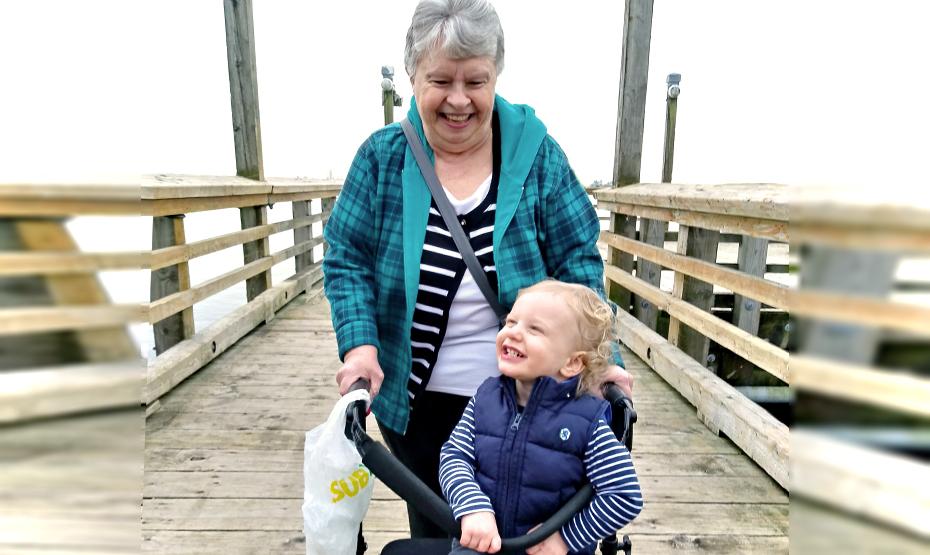
Talk with Gloria Muche now and the active 70-year-old will tell you that she regularly volunteers at her local church, works out at the gym and goes for long walks with her children and grandchildren. It is hard to believe that less than one year ago Muche led a relatively sedentary life, struggled to walk up a flight of stairs and was experiencing heart palpitations.

“I was out of breath just walking down the hall,” she recalls. “I spent a lot of time sitting and watching TV, and my energy levels were low. ”

Muche’s life changed after she met Dr. Teddi Orenstein Lyall, a Vancouver Coastal Health Research Institute researcher who led a six-month clinical trial in which Muche participated.
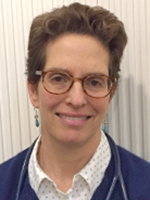
Dr. Teddi Orenstein Lyall is a cardiologist at Richmond Hospital, as well as an associate member of the Division of Cardiology and a clinical assistant professor in the Department of Medicine at the University of British Columbia.

The study gave participants with non-valvular atrial fibrillation (AF) tools to manage their symptoms. Non-valvular AF is an irregular heart rhythm often associated with such things as high blood pressure, sleep apnea, obesity, diabetes and sedentary behaviour. Researchers wanted to determine whether a program of diet, exercise and stress management training would lessen adverse cardiac symptoms and improve participants’ health and quality of life.
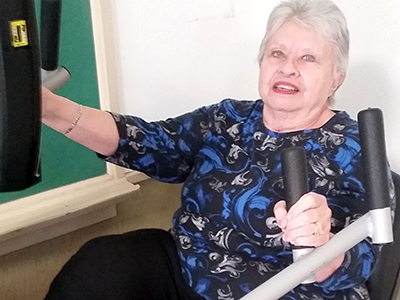
“Now I have more energy and am more involved in the community. My skin is better and I look and feel better,” says Muche.

“Atrial fibrillation is a continuum that can wax and wane,” says Orenstein Lyall. “As the years go by, it can become permanent.” 

“A lot of participants did not exercise at all beforehand. This program aimed to change their attitudes about diet and exercise, and make it part of their daily routines.”

Lifestyle changes boost health and vitality

After meeting with Orenstein Lyall to discuss her heart palpitations, Muche started taking medication to manage her symptoms and signed up for the clinical trial, which was her first time participating in a research study. 

“I knew I needed help, and I was so excited to be involved in the study.” 

As a participant, Muche underwent an initial health assessment. Then, she and other study participants took part in twice-weekly stress management, health and nutrition classes for four months, followed by twice-weekly high-intensity interval training exercise classes for another two months. 

“In the nutrition classes, they taught me how to read the ingredients on packages so I could understand what everything means, like the fats, modified fats and percentages,” recalls Muche. “I used to eat a lot of chips and didn’t drink enough water. After I started on the diet program, I lost 10 pounds right away and I’ve kept that weight off.”

She and other participants also learned about meditation and other stress management techniques that help keep blood pressure under control, and the mind and body healthy. 
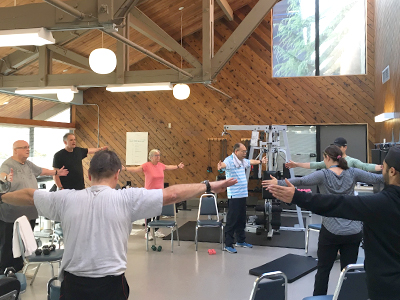
Patients did interval training on the aerobic machines that worked best for them, followed by brief free weight exercises.

Muche completed the clinical trial in late 2019, and continues to participate in group exercise classes at least twice per week. She also walks regularly around the track at her local community centre and outside with her children and grandchildren. 

Muche’s friends and family have noticed that her energy levels are up. And Muche can tell that she has more stamina to cook healthy meals for herself and her family, as well as to volunteer in the kitchen at her local church where she helps prepare food for members of the congregation. 

“Dr. Orenstein Lyall and her research team were so helpful. They encouraged me so much. I feel blessed to have been a part of the program.”

“Participating in the study has changed my life by making me more aware of how important exercise is for your body,” says Muche. “People can tell you, but until you find that out for yourself, it’s like leading a horse to water and trying to make it drink. I got the guidance, knowledge and awareness I needed to improve my health.”


THIS IS ONE PATIENT’S STORY OF PARTICIPATING IN A CLINICAL TRIAL. YOUR EXPERIENCE MAY DIFFER. LEARN MORE ABOUT CLINICAL TRIALS BEFORE PARTICIPATING.


Related Articles

Alternative first-line treatment proves effective for persistent atrial fibrillation

Bringing cardiac recovery home

Ask an expert: How does high-intensity exercise affect my heart?

Share:

  • Facebook
  • Linkedin
  • Twitter
  • Instagram
  • Email

Related Research Centres/Programs

Community Research Program

Get the latest research headlines in your inbox

Subscribe

Recent News and Stories

Type
Stories

Ask an expert: How can I strike a healthier balance with my daily habits?

Sep 10, 2026 exercise, mobility
Type
Stories

Moving endometrial cancer prevention upstream

Sep 8, 2026 women, cancer, uterine
Type
Stories

Improving respiratory protection for wildland firefighters

Sep 3, 2026 lung, environment, safety
See more news

Get updates!

Join our newsletter mailing list to stay up to date on features and releases.

Subscribe

Quick Links

  • News and Stories
  • Careers
  • Events
  • Media Enquiries

Follow Us

  • LinkedIn
  • Instagram
  • Bluesky
  • YouTube

© 2026 VCHRI. All rights reserved.

  • Contact
  • Privacy Policy