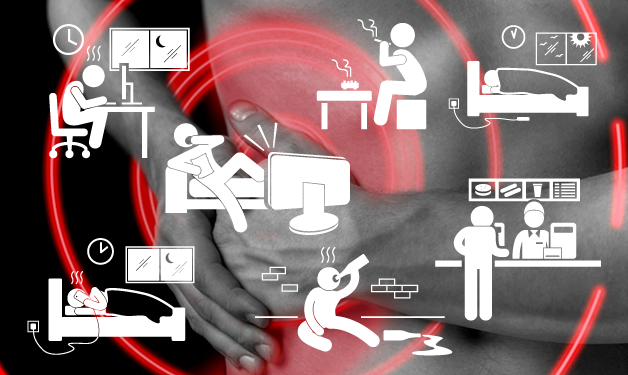
March is liver health month and registered hepatology nurse Carolyn Klassen tells us the surprising facts about liver disease in Canada and why it’s critically important to keep our livers healthy.
Q: Is alcohol consumption the only risk factor for liver disease?
A: Liver disease may be caused by both internal and external factors. Though alcohol is a toxin that your liver must process and excrete, there are many other genetic and external factors that can lead to long-term damage. Viruses, inhalants, medications, genetic disorders, lack of activity, and excess caloric intake can be detrimental to your liver’s health.
Q: What is non-alcoholic fatty liver disease (NAFLD)?
A: NAFLD is the increased storage of fat in your liver. Individuals who carry excess weight around their midsection are at greatest risk of having NAFLD. This excess of fat deposited in the liver can lead to inflammation of the liver cells. This is called steatohepatitis, which can lead to scarring (fibrosis) in the liver. Approximately five per cent of people with NAFLD will develop the scarring that can lead to liver cirrhosis (which is a pattern of scar tissue in the liver). Liver cirrhosis can lead to liver failure or liver cancer. The most common cause of NAFLD in Canada is obesity, which continues to rise across the country. According to Statistics Canada, one in four adult Canadians, or about 6.3 million people, were obese in 2011–2012. Since 2003, the proportion of Canadians who were obese has increased 17.5%.
Q: How prevalent is liver cancer in Canada and what are the leading causes of liver cancer?
A: Liver cancer is unfortunately on the rise. It is the sixth leading cause of cancer related deaths in Canada. The leading causes of liver cancer are uncontrolled viral hepatitis B and current or cured viral hepatitis C.
Q: How can I help keep my liver in tip-top shape?
A: A well balanced diet is integral to promoting liver health. Canada’s food guide offers a great formula for getting in enough vegetables, fruit, grains, protein, and fat. Thirty minutes of physical activity every day also does wonders for your liver’s health. Set aside time each day for a 30-minute walk. This focused exercise will not only improve your liver’s health, but your overall health too. Make an achievable goal like 30 minutes of walking each day (e.g. on your lunch break, with your dog, with a friend) and all your internal organs will thank you.
Q: What’s being done to reduce rates of liver cancer and liver disease in Canada?
A: When caught early, liver cancer has high cure rates. In terms of screening, an abdominal ultrasound should be completed every six months for anyone who has cirrhosis, regardless of the cause (viral, genetic, fat, alcohol), and/or anyone who has viral hepatitis B and is male over 40 years, or female over 50 years, and/or of African descent. An abdominal ultrasound should be completed every year for anyone with viral hepatitis B.
Treatment is usually completed by an interventional radiologist after a decision by the weekly Liver Tumor Round and monitored by the patient’s specialist.
Radio frequency ablation, microwave ablation (NEW), chemo or bland embolization, percutaneous alcohol ablation, resection, Y90, SBRT, sorafenib, DEB TACE, IRE to name a few options. These are completed on an outpatient basis. If the affected individual’s disease is more advanced, they may be admitted pre-procedure and monitored post therapy.
Finally, there are new clinical trials that are looking at effective treatments with new medications such as drug eluding beads and alternatives to sorafenib.