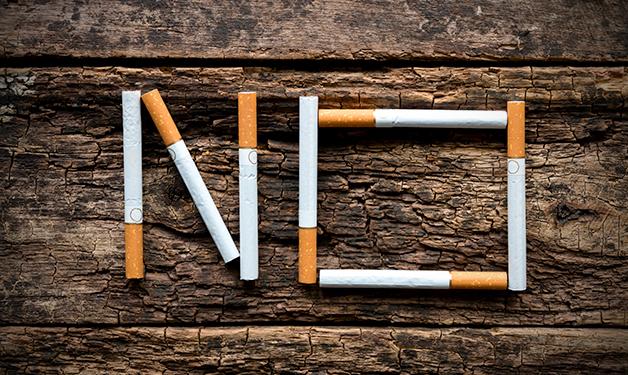
Dr. Ka Wai Cheung explains why even if you’ve tried and failed to quit smoking in the past, you’re still on the right path.
Q: I’ve tried to quit smoking many times, but I haven’t been successful. Why bother trying again?
A: On average, it takes about eight attempts to quit before an individual is fully done with smoking. So don’t despair if the first attempt doesn’t quite work out! Quitting smoking is challenging. However, with each attempt, you are forging ahead and making the healthy choice for your body.
Quitting smoking has immediate and long-term benefits:
- In 20 minutes, heart rate and blood pressure improve
- In 8 hours, carbon monoxide levels become normal
- In 2 days, taste and smell improve
- In several weeks or months, heart and lung function improve
- In 1 year, heart disease risk decreases by half
- In 5 years, risk of death from lung cancer decreases by half
Lung cancer is the leading cause of death in Canada. Quitting smoking is the best thing you can do for your health.
Q: Are certain quitting methods more effective than others?
A: There are many ways of quitting smoking, including quitting “cold turkey” or quitting more gradually, which may involve setting up a quit smoking plan and quit date with a counsellor. However, using nicotine replacement therapies (the gum, patch, and inhaler are all available in Canada), or using prescription medications may potentially double your chances of quitting. At this point, there is not enough evidence to recommend hypnosis or acupuncture for quitting smoking. Talk with your doctor about what may be the best option or combination of options for you. Every individual is different, and what may be effective for one person may not be for someone else.
Q: Does smoking prematurely age my appearance?
A: Smoking can cause the early development of facial wrinkles, reddened and tired eyes, teeth discoloration, and hair loss. It is thought that smoking narrows the blood vessels that supply the skin, which decreases the supply of oxygen and other vital nutrients to the skin. Smoking can also potentially damage the skin’s connective tissue, which results in skin thinning and decreased skin elasticity. Direct heat and cigarette smoke can also irritate the eyes. Quitting smoking can improve the look of your skin, eyes, teeth, and hair.
Q: Can e-cigarettes help me quit or are they just as addictive as regular cigarettes?
A: E-cigarettes (electronic cigarettes) are battery-powered devices that vaporize a liquid that is then inhaled. This e-liquid is a mixture of chemicals, often including nicotine, propylene glycol, and additional flavours. Over the last several years, e-cigarettes have become increasing available to the general public, and major tobacco companies are now producing their own. However, the production of e-cigarettes remains unregulated, and they are not approved by Health Canada.
As many e-cigarettes contain nicotine, they can be just as addictive as regular cigarettes. There is currently not enough evidence to recommend e-cigarettes for quitting smoking, and there are no safety studies on their long-term use. Also, dual use of e-cigarettes and regular cigarettes may delay quitting and renormalize smoking. Individuals who wish to consider using e-cigarettes as a quit strategy should set a quit date.
Q: I’m ready to quit! What resource would you recommend to help me?
A: QuitNow.ca is the website for QuitNow Services, a great resource for smokers, friends and family of smokers, and health care professionals looking after patients who smoke. It offers updated information on the effects of smoking, the benefits of quitting smoking, and how to approach quitting. On QuitNow.ca, you can join a chat group with expert counsellors, or enter the Tobacco Free Tuesdays Challenge to win a cash prize. QuitNow Services also offers phone support 24/7 as well as text support. You can reach one of QuitNow’s counsellors by calling toll-free at 1.877.455.2233 any time.