Main menu

  • About
    • Leadership
    • Our Team
    • Vision, Mission and Values
    • Health and Economic Impact
    • Strategic Plan
    • News and Stories
    • Careers
  • Research
    • Research Focus
      • Brain Health
      • Cancer
      • Digital Health
      • Healthy Aging and Mobility
      • Heart Health
      • Immune System
      • Injury and Rehabilitation
      • Lung Health
      • Mental Health and Substance Use
      • Other Research Focus Areas
    • Research Centres and Programs
      • BC Centre on Substance Use
      • Centre for Aging SMART
      • Centre for Clinical Epidemiology and Evaluation
      • Centre for Lung Health
      • Dilawri Cardiovascular Institute
      • Djavad Mowafaghian Centre for Brain Health
      • International Collaboration On Repair Discoveries
      • M. H. Mohseni Institute of Urologic Sciences
      • Ovarian Cancer Research Centre
      • Community Research Program
      • Emergency Medicine Research Program
      • Hematology Research Program
      • Skin Research Program
    • Research Cores
      • Clinical Trials Platform
      • VCH-VCHRI AI Hub
      • Indigenous Health Research Unit
    • Researcher Directory
    • Events and Workshops
    • Participate in Research
  • Research Services
    • New to VCHRI
      • Working at VCHRI
      • Regulations and Training
      • Membership with VCHRI
    • Research Development
      • Awards and Funding
      • Research Facilitation
      • Grant Management
      • Learning and Development
    • Contracts and Compliance
      • Contract Facilitation at VCHRI
      • Operational Approval
      • Research Privacy
      • Clinical Trials Administration
    • Research Support
      • Communications and Media Relations
      • Financial Policies and Procedures
      • VCH-VCHRI AI Hub
    • Internal Awards
    • Clinical Research
    • Indigenous Research
  • Clinical Trials
    • Clinical Trials Platform
      • Phase 1 Clinical Trials Research Unit
      • Hematology Research Unit
      • Clinical Research Unit
    • Find a Study
    • Researcher Directory
  • Participate in Research
    • Reasons to Participate
    • Participant Stories
    • Find a Study
    • Recruitment Support

User menu

  • Log in

Breadcrumb

  1. Home
  2. Research
  3. Participate in Research
  4. Palliative care initiative improves clinician comfort with end-of-life conversations for frail, elderly patients

Palliative care initiative improves clinician comfort with end-of-life conversations for frail, elderly patients

Stories Nov 18, 2016 3 minutes

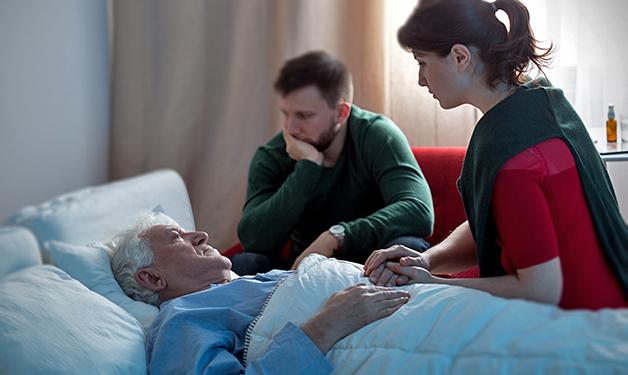
Talking openly about death helps families and elderly patients make better end-of-life decisions.

It’s hard for families to talk about death with their elderly loved ones. It’s also hard for caregivers. Research shows clinicians and staff in residential care are often reluctant to initiate conversations about dying with patients and their families. In fact, many elderly patients die without having being told their condition is terminal. Palliative care experts like Vancouver Coastal Health Research Institute research scientist Dr. Margaret McGregor say avoiding the reality of death and failing to plan for it means many elderly people undergo stressful, often detrimental medical treatment in their final days. Dr. McGregor says families need to be told what dying looks like, what to expect, and how to prepare for what might happen, rather than thinking that maybe if they go to the hospital everything will be better. 
“When families don’t clearly understand the final stages of life, when that reality has not been effectively communicated to them, they have unrealistic expectations of recovery for frail, elderly loved ones. So, in the final months of life, many frail elderly are transferred back and forth to hospital when they may have been better to stay in a familiar environment receiving appropriate, gentle, palliative care.”

Dr. McGregor says hospitalization has been linked to delirium, falls, infections, adverse drug reactions, pressure ulcers and mobility-related complications in the nursing home population. Being transferred in and out of ambulances, being given CPR – which can break ribs – and being left on a bed in an emergency room hallway surrounded by noise and chaos are not experiences family members want for a loved one. But those realities are not always explained.

Dr. McGregor recently worked with Alexis Kezirian, a UBC nursing student, on a Practice Improvement Project to address the problem. The project was developed with the Vancouver Division of Family Practice, Vancouver Coastal Health (VCH) Home Hospice, VCH Practice Support Program and UBC’s Department of Family Practice, Community Geriatrics. It brought together clinicians from 15 local facilities for two interactive training sessions with experienced educators in dementia, frailty, and palliative care. Clinicians learned about staging and prognosis of dementia and frailty. And they learned how to better communicate with patients and families. Each residential care facility then implemented 9-week action period. Kezirian is now finalizing the project report. 

Better communication about dying needed for residential care 
Despite encouraging results related to comfort level of clinicians, there was no statistically significant drop in hospital admissions, even though clinicians reported that they increased the frequency of updating end-of-life directives. But Kezirian says there could be a few reasons for this. She says the study period was perhaps too short to capture a systemic shift. And she notes that the project took place over the winter, when influenza admissions were at their peak. Both Kezirian and Dr. McGregor are confident ongoing clinician education will enable more elderly patients to die with dignity, in a comfortable and peaceful setting, an outcome that would also mean cost savings for the health care system. 

 

Researchers

Margaret McGregor

Related Articles

Discovery reveals timing differences in brain versus bodily functions during death

Ask an expert: How do I navigate conversations around advance care planning?

End-of-life planning in the South Asian community

Share:

  • Facebook
  • Linkedin
  • Twitter
  • Instagram
  • Email

Related Research Centres/Programs

Centre for Clinical Epidemiology and Evaluation

Get the latest research headlines in your inbox

Subscribe

Recent News and Stories

Type
Stories

Ask an expert: How can I strike a healthier balance with my daily habits?

Sep 10, 2026 exercise, mobility
Type
Stories

Moving endometrial cancer prevention upstream

Sep 8, 2026 women, cancer, uterine
Type
Stories

Improving respiratory protection for wildland firefighters

Sep 3, 2026 lung, environment, safety
See more news

Get updates!

Join our newsletter mailing list to stay up to date on features and releases.

Subscribe

Quick Links

  • News and Stories
  • Careers
  • Events
  • Media Enquiries

Follow Us

  • LinkedIn
  • Instagram
  • Bluesky
  • YouTube

© 2026 VCHRI. All rights reserved.

  • Contact
  • Privacy Policy