Main menu

  • About
    • Leadership
    • Our Team
    • Vision, Mission and Values
    • Health and Economic Impact
    • Strategic Plan
    • News and Stories
    • Careers
  • Research
    • Research Focus
      • Brain Health
      • Cancer
      • Digital Health
      • Healthy Aging and Mobility
      • Heart Health
      • Immune System
      • Injury and Rehabilitation
      • Lung Health
      • Mental Health and Substance Use
      • Other Research Focus Areas
    • Research Centres and Programs
      • BC Centre on Substance Use
      • Centre for Aging SMART
      • Centre for Clinical Epidemiology and Evaluation
      • Centre for Lung Health
      • Dilawri Cardiovascular Institute
      • Djavad Mowafaghian Centre for Brain Health
      • International Collaboration On Repair Discoveries
      • M. H. Mohseni Institute of Urologic Sciences
      • Ovarian Cancer Research Centre
      • Community Research Program
      • Emergency Medicine Research Program
      • Hematology Research Program
      • Skin Research Program
    • Research Cores
      • Clinical Trials Platform
      • VCH-VCHRI AI Hub
      • Indigenous Health Research Unit
    • Researcher Directory
    • Events and Workshops
    • Participate in Research
  • Research Services
    • New to VCHRI
      • Working at VCHRI
      • Regulations and Training
      • Membership with VCHRI
    • Research Development
      • Awards and Funding
      • Research Facilitation
      • Grant Management
      • Learning and Development
    • Contracts and Compliance
      • Contract Facilitation at VCHRI
      • Operational Approval
      • Research Privacy
      • Clinical Trials Administration
    • Research Support
      • Communications and Media Relations
      • Financial Policies and Procedures
      • VCH-VCHRI AI Hub
    • Internal Awards
    • Clinical Research
    • Indigenous Research
  • Clinical Trials
    • Clinical Trials Platform
      • Phase 1 Clinical Trials Research Unit
      • Hematology Research Unit
      • Clinical Research Unit
    • Find a Study
    • Researcher Directory
  • Participate in Research
    • Reasons to Participate
    • Participant Stories
    • Find a Study
    • Recruitment Support

User menu

  • Log in

Breadcrumb

  1. Home
  2. Research
  3. Participate in Research
  4. Treating Pain in the Brain

Treating Pain in the Brain

Stories Jul 7, 2017 3 minutes

Biomarkers are helping researchers get closer to understanding how we experience pain differently.

This May, the Government of Canada released a “Federal Action on Opioids” plan, part of a push to reduce the unnecessary use of prescription painkillers and combat the growing fentanyl and carfentanil crisis. ICORD researcher Dr. John Kramer has been watching these developments closely, as his latest research may provide inroads for new pain reduction interventions.  

“Pain management is an emerging health crisis,” says Dr. Kramer. “We have increased rates of pain in the general healthy population, we have pain associated with chronic health conditions that are increasing—diabetes, for example, and other complex health conditions—so this is only going to become more of a problem.”

Most pain interventions available today mask pain, but don’t remove it, Dr. Kramer adds.

Dr. Kramer is a principal investigator with ICORD (International Collaboration On Repair Discoveries), a spinal cord injury research centre of VCH Research Institute and the UBC Faculty of Medicine.
Photo by Martin Dee

Scanning the brain for answers

Dr. Kramer is the principal investigator of an ongoing Natural Sciences and Engineering Research Council of Canada-funded research study to examine the makeup of chemicals in the brain and their relationship to pain thresholds.   Glutamate levels in the brain are monitored as volunteers are exposed to a pain stimulus while undergoing an MRS (magnetic resonance spectroscopy) scan. The noninvasive MRS scans reveal additional data about the chemical composition and metabolism of a person’s tissues.

Dr. Kramer hypothesizes that the MRS scan used for this study will show increased concentrations of glutamate in the brains of participants who report higher pain levels when they are exposed to the pain stimulant. 

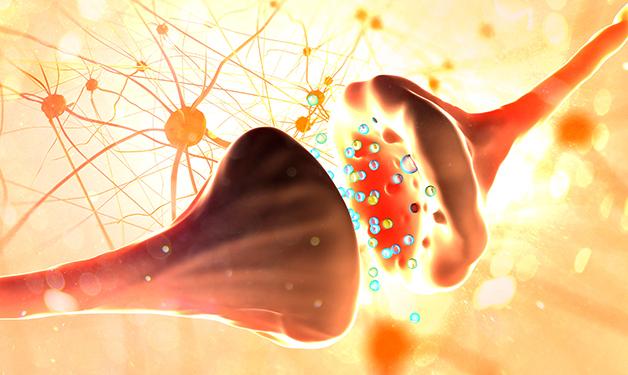
“Glutamate is a neurotransmitter; it communicates between cells in the brain,” he says. “So we think that the higher someone reports the pain, such as at a 10, they should have more glutamate in their brain than someone who is reporting their pain as a 1.” 

While the study is first looking at normal healthy people, Dr. Kramer’s goal is to eventually apply the test to a chronic pain population, such as individuals with spinal cord injury neuropathic pain. His research could also be useful for evaluating other chronic pain conditions where the physiological symptoms aren’t visible, such as fibromyalgia. 

“If you know what the cause of their neuropathic pain is, then you can target it with a drug or therapy,” notes Dr. Kramer. For example, if glutamate is a source of pain, therapies could be developed to reduce the amount of glutamate in the brain to treat it. 

The road to personalized pain treatment

Perceptions of pain can vary from patient to patient, as there is currently no standardized test for ranking the degree of pain someone experiences. There are also pitfalls to assessing the outcomes of different therapeutic interventions because of the placebo effect, which can influence how people rank their level of pain, regardless of the intervention they have received. 
Dr. Kramer’s research could provide an objective test to gauge the level of pain a patient experiences and validate different types of medical interventions, including the use of opioids. 

“The MRS scan could be used to objectively evaluate the effect of a therapy. It has the dual purposes of understanding the cause, as well as why we are seeing meaningful pain relief when we perform some kind of intervention.” 

Non-pharmacological interventions, such as meditation, might result in better pain management outcomes than opioids for some patients, says Dr. Kramer. Physiological biomarkers, such as glutamate, could give practitioners an objective tool to evaluate pain and develop more effective and personalized medical care.

The “Pain in the Brain: Glutamate as a Biomarker for Pain Intensity” study is currently recruiting candidates 19 to 45 years of age. To participate, please contact Jessica Archibald: jessica.archibald@ubc.ca or Dr. Catherine Jutzeler: catherine.jutzeler@ubc.ca.  

 

Researchers

John Kramer

Related Articles

The influence of social situations on memory

Rethinking head impacts across contact sports

Behind the lab doors: Investigating blood biomarkers as a window into brain health at Wellington Laboratory

Share:

  • Facebook
  • Linkedin
  • Twitter
  • Instagram
  • Email

Related Research Centres/Programs

International Collaboration on Repair Discoveries

Get the latest research headlines in your inbox

Subscribe

Recent News and Stories

Type
Stories

Ask an expert: How can I strike a healthier balance with my daily habits?

Sep 10, 2026 exercise, mobility
Type
Stories

Moving endometrial cancer prevention upstream

Sep 8, 2026 women, cancer, uterine
Type
Stories

Improving respiratory protection for wildland firefighters

Sep 3, 2026 lung, environment, safety
See more news

Get updates!

Join our newsletter mailing list to stay up to date on features and releases.

Subscribe

Quick Links

  • News and Stories
  • Careers
  • Events
  • Media Enquiries

Follow Us

  • LinkedIn
  • Instagram
  • Bluesky
  • YouTube

© 2026 VCHRI. All rights reserved.

  • Contact
  • Privacy Policy