Liver diseases affect more Vancouverites than expected, highlighting an urgent need for early screening and lifestyle changes to reduce the burden of the condition.
A recent study led by Vancouver Coastal Health Research Institute (VCHRI) researcher Dr. Daljeet Chahal, and supported by VCHRI researchers Drs. Peter Kwan and Eric Yoshida, has unveiled that a significant portion of the Greater Vancouver population is living with undiagnosed metabolic dysfunction-associated steatotic liver disease (MASLD).
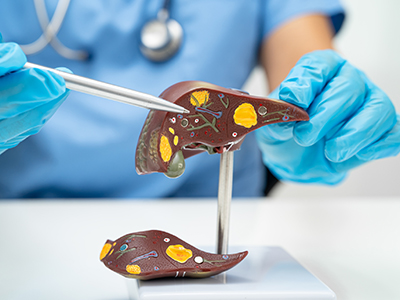
MASLD is an umbrella term that encompasses various liver conditions ranging in severity. The condition is caused by excess fat accumulation in the liver, known as steatosis. Often asymptomatic in earlier stages, it can silently progress to liver inflammation and scarring, called fibrosis. Without treatment, the disease can further advance to cirrhosis — irreversible scarring that prevents the liver from functioning properly — which is associated with serious symptoms such as jaundice, weakness and fluid buildup.
"We were alarmed by the high prevalence of MASLD in our study, even in the Vancouver region known for its active and healthy lifestyle," says Chahal. “This study is a sobering revelation of how many people are unaware of the threat of liver disease and its risk factors.”

"Many people with MASLD don’t experience any signs or symptoms until the disease has considerably advanced, at which point it may be too late to reverse the damage," Chahal adds. "That is why it is so important to raise awareness about the disease and screen people early."
Understanding the various risk factors of liver disease
The study, published in the Journal of Clinical and Translational Hepatology, involved 4,193 participants from different age groups and ethnic backgrounds across B.C.’s Lower Mainland. Using a non-invasive ultrasound technology called FibroScan, the research team measured the liver stiffness of participants to assess the presence and severity of MASLD. Additional data on known comorbidities of MASLD, including obesity, diabetes and hypertension, were also collected.
The study’s findings reinforced previously published findings that have established a strong connection between metabolic conditions and the development of MASLD. Notably, participants with obesity had over two times higher odds of advanced fibrosis compared to individuals without obesity.
Chahal emphasizes the importance of early intervention to prevent progression. “If individuals with metabolic conditions lose just five to 10 per cent of their body weight, they can see a significant reduction in liver inflammation, even potentially reversing early-stage MASLD,” he explains.
"Making healthy diet and lifestyle changes and controlling risk factors like obesity, diabetes and hypertension is key to preventing disease progression."
The study also uncovered new insights into the role of ethnicity in liver disease. For example, while people of South Asian descent are at higher risk for cardiovascular disease — a condition that shares common risk factors with liver disease — Chahal’s team did not find higher rates of MASLD among this population. This suggests that, while metabolic conditions are major drivers of MASLD, ethnicity may not be as strongly linked to liver disease progression as previously believed.
"Greater Vancouver’s diverse population provided a unique opportunity to compare the prevalence of MASLD across individuals of different ethnicities," says Chahal. “However, we found no significant difference in MASLD rates between Caucasian, Chinese and South Asian individuals who participated in our study.”
Despite this finding, Chahal emphasizes that the relationship between ethnicity and liver disease warrants further exploration. Different populations may have distinct risk factors for MASLD and understanding these could help refine public health strategies and tailor interventions more effectively.
Greater education and screening practices to support liver health
Chahal, Kwan and Yoshida’s research underscores the need to expand current screening practices for MASLD.
“We do not yet have routine liver disease screening for the general population in British Columbia,” Chahal states. “Simple blood tests and non-invasive procedures like FibroScan are screening techniques that the health care system could apply to aid in the early detection of MASLD as well as several other forms of liver disease.”
Chahal adds that enhanced MASLD screening practices and lifestyle changes can not only support better long-term health outcomes for individuals, but can also help alleviate the rising burden of MASLD on the health care system. Over the past few years, B.C. has seen a dramatic increase in liver transplants, many of which were linked to MASLD and its complications.
"Addressing MASLD early not only improves individual long-term health, but also eases the strain on our health care system by reducing the growing demand for liver transplants."
The research team plans to continue collecting data, with the goal of building a more comprehensive understanding of the disease's prevalence and progression in the Greater Vancouver population. This ongoing research will help to further refine the link between metabolic conditions, lifestyle factors and liver health, Chahal notes.
“Ultimately, greater public awareness is needed about the silent threat of liver disease, particularly among individuals at higher risk, with symptoms often presenting only once the disease has become severe and harder to treat,” says Chahal. “Research is an important step to encourage a deeper understanding of public health interventions and screenings to support liver health.”