
A motivational interviewing-based app features targeted digital content designed to help support people with eating disorders while they wait for specialized treatment.
For people living with eating disorders, seeking help can be one of the most difficult steps toward recovery. Even after reaching out, many people still experience distress and loss of motivation for recovery during the period before treatment begins.
Eating disorders affect an estimated 2.9 million Canadians, with many individuals never receiving a diagnosis and only about 10 per cent receiving specialized treatment. Individuals with eating disorders are also significantly less likely to seek mental health services than other populations, often due to stigma, shame and ambivalence about seeking help.
To address these barriers, a study led by Vancouver Coastal Health Research Institute (VCHRI) researchers Amané Halicki-Asakawa and Dr. Maya Libben examined whether a motivational interview-based mobile app could support people waitlisted for eating disorder treatment.

"Longer delays before treatment can increase the risk of symptoms worsening, heighten treatment waitlist dropout rates and lead to poorer outcomes,” says Halicki-Asakawa.
Without support during that time, she explains, people may also experience declining motivation and confidence, which can make it harder to engage in treatment once it becomes available.
An innovative approach to eating disorder support
The research team developed an app-based program grounded in motivational interviewing — a therapeutic approach commonly used in the early stages of eating disorder treatment that helps individuals explore their own reasons for change and strengthen their motivation to address their eating disorder.
The app, called MI-Coach: ED, was adapted from an existing platform developed by a mental health technology provider and a clinical psychologist. The original platform was designed to support motivation for a range of health behaviour changes, including physical activity, smoking cessation and sleep habits.
“Our app applies much of the same structure of the initial platform, but tailors it for individuals living with eating disorders,” says Halicki-Asakawa.
Similar to a therapy session, each of the app’s seven self-guided modules focuses on a different element of a motivational interviewing session. The modules combine clinician-led videos, educational materials and exercises that encourage users to reflect on personal values, recovery goals and readiness for recovery.
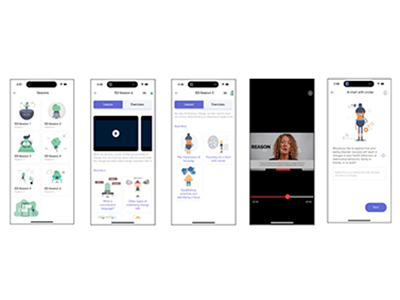
“Safety is our top priority,” Halicki-Asakawa says. “Eating disorders often involve obsessive features and many interventions focus on tracking eating, weight and symptoms.”
“We chose motivational interviewing because it focuses on values, readiness and reasons for staying engaged in seeking care, rather than symptom monitoring.”
Unlike traditional therapy, the program is designed as a program-led intervention, meaning it provides structured therapeutic support without requiring real-time clinician involvement. This includes using prompts to encourage self-reflection, providing exercises that help users identify their values and behaviours and leveraging language that normalizes mixed feelings and uncertainty about change. Because the content is delivered through a mobile platform, the intervention can also be accessed privately and at a user’s own pace.
“Digital tools do not have to replicate therapy one-to-one,” says Libben. “The goal is not to replace therapy, but to make it more accessible through this mobile interface.”

Libben notes that approaches like this may be particularly valuable for people living in rural or remote communities, where specialized eating disorder services are often limited.
From interface to in-real-life
To understand how the tool functioned in practice, the research team conducted a four-week pilot study with individuals seeking eating disorder treatment in British Columbia.
Participants were recruited through the Vancouver Coastal Health eating disorders network, with clinicians sharing study information with individuals navigating access to treatment services. Fourteen individuals with lived experience of eating disorders participated in the pilot, while five clinicians working within eating disorder programs also reviewed the app and provided feedback on its clinical relevance and potential integration into care pathways.
The qualitative evaluation examined participant and clinician satisfaction, whether the app offered meaningful support during the pretreatment period and how easy it was to use.
“One comment really humbled me as a researcher,” says Halicki-Asakawa. “A participant said the content did not matter as much as knowing something was made for her and that she could access it during difficult moments.”
"The feedback we received reinforced for us the power of simply creating something for a group that has very little support while waiting.”
A more recent study from the research team has also examined the feasibility of implementing the tool in routine care settings.
For Libben, findings from both the qualitative and feasibility studies highlight how digital tools could help expand early support for people beginning their journey toward treatment.
“We are currently evaluating the efficacy of this intervention on a larger scale and building relationships with public health eating disorder programs across the province,” she says.