As wildfires and extreme heat become more frequent, a new action plan helps people with chronic respiratory conditions stay safe and better manage their lung health.
With climate change intensifying, British Columbia is experiencing longer wildfire seasons and more frequent heat waves. These weather events pose serious health risks, particularly for people living with respiratory conditions such as asthma and chronic obstructive pulmonary disease (COPD). The 2021 heat dome, which sparked catastrophic wildfires and led to a sharp rise in heat-related hospitalizations and deaths, underscored the urgency of these risks.
“We are living through climate change. We need solutions that protect our health today and in the years ahead.”
To respond to this growing challenge, researchers at the Vancouver Coastal Health Research Institute conducted a quality improvement project developing and testing a written Wildfire Smoke and Extreme Heat Action Plan. This simple, one-page tool is designed to help people prepare for and respond to smoke or heat events with clear, practical steps.
“As health care providers, we see the impacts of climate change in our practice,” says Dr. Emily Brigham, the project’s lead. “Our goal was to give people the knowledge and tools to protect themselves when smoke and extreme heat threaten their lungs.”

The action plan was developed collaboratively, with input from patient partners, certified respiratory educators (CREs), knowledge translation specialists and public health experts. Patient partners shared lived experience to ensure the tools reflect real-world needs, while CREs — respiratory therapists who support people with chronic lung disease — provided clinical expertise. Together, they helped shape the resource that is available online and has been shared with providers nationally and internationally.
Putting preparedness into practice
Action plans are widely used in the care of patients with asthma or COPD to help individuals living with these diseases recognize symptom changes and respond appropriately, including adjusting medications or seeking care. This new action plan builds on that model by addressing environmental risks.
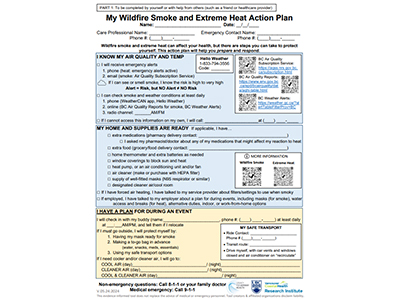
Patient partners and CREs emphasized the importance of addressing extreme heat alongside wildfire smoke in the plan, noting these events often occur together. They also highlighted the need for accessible formats, leading to the development of both a printable plan and a forthcoming digital version.
“It was important for us to engage patient partners and end users early on,” explains Brigham. “Their perspectives helped make this tool more practical and relevant for everyday use.”
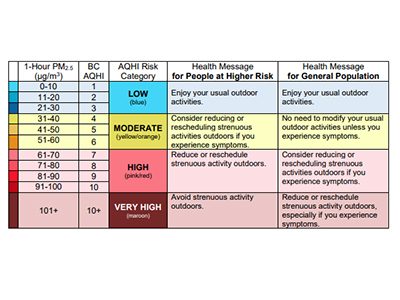
Chart courtesy of BC Centre for Disease Control
Early feedback has been encouraging. Participants who responded to the team’s survey reported a better understanding of climate-related health risks and increased confidence in taking preventive action. CREs involved in focus groups noted the provider guide was particularly helpful in completing the tool and provided insightful feedback on ways to further optimize the tool and its dissemination for greatest effect on preparedness.
Building climate-ready health care systems
The project highlights the importance of embedding climate preparedness into routine care. By consolidating established evidence into a one-stop resource, the action plan is designed to support people in protecting their health. It also acknowledges that not all recommendations can be implemented by everyone, emphasizing that even small actions can make a meaningful difference.
“Readiness looks different for everyone,” notes Brigham. “We want patients to leave their appointments feeling more prepared than when they arrived.”
The team continues to grow through collaboration, and is continuing to refine the tool and is engaging with organizations including the BC Lung Foundation, Canadian Thoracic Society, Asthma Canada and COPD Canada. Efforts are also underway to adapt the plan to a digital platform, and to consider unique needs and preferences of rural and Indigenous communities.
"This work is an opportunity to underscore and support climate preparedness as an essential part of treatment.”
The action plan is part of a broader effort to integrate climate preparedness into health care delivery. Since its initial pilot in B.C., the team has connected with new partners in British Columbia, and across Canada, the U.S. and Australia, contributing to a growing global effort to address climate-related health risks.

This work was made possible through the contributions of past and present Action Plan project team members, including participants, trainees, patient partners and co-investigators. The research team also acknowledges the valuable support of partners involved in the Digital and Indigenous Action Plan projects: Drs. Samir Gupta, Stacey Butler, Femke Hoekstra, Sameh Mortazhejri, Pat Camp and Briony Gray; clinical research educators Jacqueline Turvey and Jerome Beaupre; and Carrier Sekani Family Services.