Main menu

  • About
    • Leadership
    • Our Team
    • Vision, Mission and Values
    • Health and Economic Impact
    • Strategic Plan
    • News and Stories
    • Careers
  • Research
    • Research Focus
      • Brain Health
      • Cancer
      • Digital Health
      • Healthy Aging and Mobility
      • Heart Health
      • Immune System
      • Injury and Rehabilitation
      • Lung Health
      • Mental Health and Substance Use
      • Other Research Focus Areas
    • Research Centres and Programs
      • BC Centre on Substance Use
      • Centre for Aging SMART
      • Centre for Clinical Epidemiology and Evaluation
      • Centre for Lung Health
      • Dilawri Cardiovascular Institute
      • Djavad Mowafaghian Centre for Brain Health
      • International Collaboration On Repair Discoveries
      • M. H. Mohseni Institute of Urologic Sciences
      • Ovarian Cancer Research Centre
      • Community Research Program
      • Emergency Medicine Research Program
      • Hematology Research Program
      • Skin Research Program
    • Research Cores
      • Clinical Trials Platform
      • VCH-VCHRI AI Hub
      • Indigenous Health Research Unit
    • Researcher Directory
    • Events and Workshops
    • Participate in Research
  • Research Services
    • New to VCHRI
      • Working at VCHRI
      • Regulations and Training
      • Membership with VCHRI
    • Research Development
      • Awards and Funding
      • Research Facilitation
      • Grant Management
      • Learning and Development
    • Contracts and Compliance
      • Contract Facilitation at VCHRI
      • Operational Approval
      • Research Privacy
      • Clinical Trials Administration
    • Research Support
      • Communications and Media Relations
      • Financial Policies and Procedures
      • VCH-VCHRI AI Hub
    • Internal Awards
    • Clinical Research
    • Indigenous Research
  • Clinical Trials
    • Clinical Trials Platform
      • Phase 1 Clinical Trials Research Unit
      • Hematology Research Unit
      • Clinical Research Unit
    • Find a Study
    • Researcher Directory
  • Participate in Research
    • Reasons to Participate
    • Participant Stories
    • Find a Study
    • Recruitment Support

User menu

  • Log in

Breadcrumb

  1. Home
  2. Research
  3. Participate in Research
  4. Cholesterol-lowering medication not to blame for tendon rupture

Cholesterol-lowering medication not to blame for tendon rupture

Stories Jan 25, 2019 4 minutes

Results debunk theory linking statin use to Achilles tendon rupture, easing fears around exercise.

For years many clinicians and researchers theorized that statins—a cholesterol lowering medication that can reduce the risk of heart attack and stroke by between 25-35 per cent—were toxic to tendons and could increase the risk of tendon rupture. But new findings from a pioneering study led by Dr. Alex Scott, a Vancouver Coastal Health Research Institute investigator, prove otherwise.

“Our study reassures patients with high cholesterol that taking statins should not have a negative impact on their Achilles tendons.”

High cholesterol is a buildup of fatty deposits in the body’s blood vessels that can restrict blood flow through arteries and can lead to heart disease, heart attack and stroke. Exercise assists with losing excess weight and maintaining a healthy body weight by reducing the amount of unhealthy fats in a person’s bloodstream. This makes it particularly important for patients with high cholesterol to lead active lifestyles to control weight and improve cardiovascular health. 

Dr. Alex Scott is the director of the Tendon Injury Prevention and Rehabilitation Laboratory at the Centre for Hip Health and Mobility. He is also an associate professor in the Faculty of Medicine, Department of Physical Therapy at the University of British Columbia.

“Patients may have been reluctant to take statins in the past due to the possible side effect of Achilles tendon rupture,” says Scott. “Yet, this potentially life-saving medication can be highly recommended for patients with elevated cholesterol levels because of its effectiveness at decreasing the risk of heart disease.” 
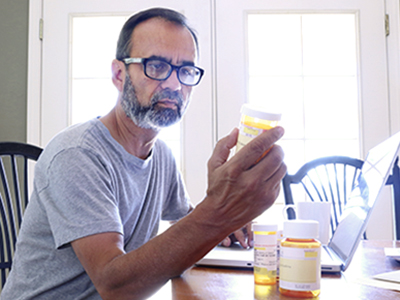
“Our study may help ease patients’ concerns about taking statins and increasing their activity levels, such as taking up jogging. In the long run, this can save lives.”

Questioning previous findings could help high cholesterol patients

Scott became interested in researching statins after studying the effect high cholesterol has on musculoskeletal tissues—the tissues that support movement—particularly tendons. He and his team of researchers noted that patients who have elevated cholesterol levels tend to have tendons that are less stiff and less able to support the load of their bodyweight. This affects patients’ ability to move efficiently, even with such things as walking. 

"Our previous research demonstrated that the tendons of people with high cholesterol tended to stretch more, which forced their muscles to work harder as a result.”

While conducting this research, Scott came across a study out of France that linked statins to Achilles tendon rupture—based on information sourced from a database of reported patient side effects. A United Kingdom study later refuted these findings using information from a large medical registry. The UK team found that bodyweight, age and various other factors could be contributing to an increased incidence of Achilles tendon rupture, and not the use of statins. 

Scott and colleagues’ most recent study is the first to directly measure the Achilles tendon structure of individuals of a similar age and gender—33 of whom had been taking statins for at least one year and 33 of whom had never taken statins. 

“We found no significant difference in the health of Achilles tendon tissues among individuals taking statins and those who had never taken statins.”

Statins were thought to cause structural changes to the collagen of the Achilles tendon. For their study, Scott and colleagues used the high-frequency sound waves of ultrasound technology to take pictures of Achilles tendon collagen inside the body. These images showed no difference in the structure and health of the collagen in either group of study participants. They did, however, find a connection between a higher body mass index (BMI)—the measurement of someone’s body fat based on their weight and height—and an increased risk of Achilles tendon rupture. 
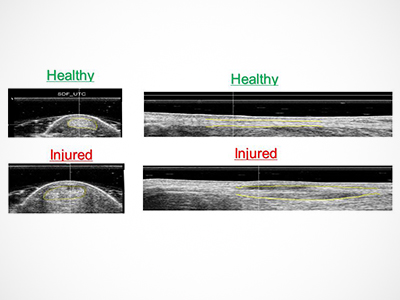
Ultrasound images of a healthy and an injured Achilles tendon

“We found that the higher someone’s BMI, the worse their tendon structure.”

Scott believes that this secondary finding could impact the rehabilitative exercises prescribed to patients with a higher BMI, who would likely need a slower progression of exercise intensity to protect against Achilles tendon inflammation and rupture. 

 

Researchers

Alex Scott

Related Articles

Ask an expert: How can I strike a healthier balance with my daily habits?

David Walker’s life is even sweeter with Parkinson’s lifestyle skills

Fitness app users make gains with carrots, not sticks

Share:

  • Facebook
  • Linkedin
  • Twitter
  • Instagram
  • Email

Related Research Centres/Programs

Centre for Aging SMART

Get the latest research headlines in your inbox

Subscribe

Recent News and Stories

Type
Stories

Ask an expert: How can I strike a healthier balance with my daily habits?

Sep 10, 2026 exercise, mobility
Type
Stories

Moving endometrial cancer prevention upstream

Sep 8, 2026 women, cancer, uterine
Type
Stories

Improving respiratory protection for wildland firefighters

Sep 3, 2026 lung, environment, safety
See more news

Get updates!

Join our newsletter mailing list to stay up to date on features and releases.

Subscribe

Quick Links

  • News and Stories
  • Careers
  • Events
  • Media Enquiries

Follow Us

  • LinkedIn
  • Instagram
  • Bluesky
  • YouTube

© 2026 VCHRI. All rights reserved.

  • Contact
  • Privacy Policy