Vancouver Coastal Health Research Institute (VCHRI) scientist Dr. Andrew Krahn would not normally describe himself as “the old man”, but when talking about the next generation of heart and lung researchers recently recruited at VCH and the Centre for Heart and Lung Health, the title does not bother him at all.
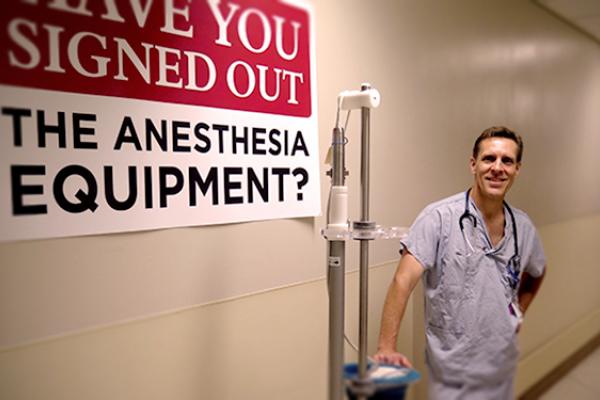
The culmination of more than 20 years of research looking into the properties of intravenous anesthetic propofol by Vancouver Coastal Health Research Institute scientist Dr. David Ansley and his team of researchers is reflected in Dr. Ansley’s recently published, and controversial, paper in the Canadian Journal of Anesthesia.
Dr. J. Mark FitzGerald never planned on being a respirologist, but in the early 1980s while working as a general internist in Lesotho, Southern Africa, for two years, he witnessed the devastation caused by tuberculosis and lung diseases and it changed his life’s direction.
A study being led by Vancouver Coastal Health Research Institute scientist Dr. Jacqueline Saw is the largest of its kind to date investigating spontaneous coronary artery dissection (or SCAD) – an under-diagnosed and poorly understood heart condition that leads to heart attacks mostly in young women who are otherwise healthy.
High quality health research evidence brings maximum value only when it is put into practice. Knowledge translation interventions involving researchers, clinicians, policy makers, and patients are needed to see positive health outcomes. In order to facilitate knowledge translation around women’s heart health, the Vancouver Coastal Health Research Institute (VCHRI) hosted a public event, Your Heart Your Health, on May 12.
Senior biomedical engineer technologist Daniel Driedger’s original motivation for gathering feedback from six stakeholder groups at Vancouver General Hospital (VGH) and advice from more than 20 medical professionals about how to better handle and transport a commonly used cardiac surgery device was simple: cost savings. The device, known as a transesophageal echocardiogram probe (or TEE probe), uses an ultrasound transducer at its tip that, when inserted into the esophagus during an echocardiogram, records images and offers Doppler evaluation during cardiac surgery procedures.
Twenty-nine year old south Vancouver resident Marc Bains has the best health interests of others – even total strangers – at heart. Bains, a business and marketing development professional, is a regular participant in health research, including clinical trials seeking to improve his heart health.
"I say yes to participating in research because I want people to benefit from devices or medication from the studies that I take part in,” says Marc Bains. “Anything I can do to help not only myself, but patients in the future, I’m willing to do – no problem.”
Even though heart disease is perceived as a ‘man’s’ health concern, each year in Canada more women die from heart disease than breast cancer. In 2011, Statistics Canada reported that more than 22,000 women died due to heart disease, compared to 4,958 deaths due to breast cancer. According to research by Dr.