
Project aims to boost ADE prevention through better understanding of causes and improved communication.
Prevention is the best medicine, especially when considering that up 70 per cent of all adverse drug events (ADEs) that land people in hospitals are potentially preventable. ADEs are unwanted and unintended medical events related to the use of medications. Vancouver Coastal Health Research Institute (VCHRI) scientist and Richmond Hospital clinical pharmacy specialist Jane de Lemos helps diagnose and resolve ADEs. She is embarking on a project to study why these events happen and how patients, physicians, and pharmacists can better prevent them.
“We don’t know the true root causes of what the prescriber, patient, or family may be doing or not doing that could cause an ADE,” says de Lemos, who works in Richmond Hospital’s emergency department.
“Day in and day out, I see patients with these complications from medications and there’s no feedback mechanism globally to the community of prescribers or to patients and families.”
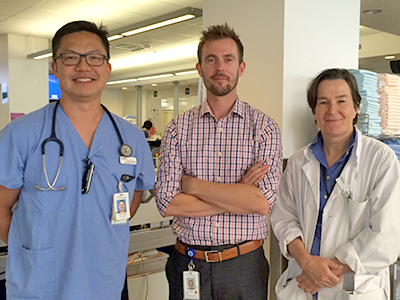
de Lemos recently received a VCHRI Innovation and Translational Research Award to investigate and identify root causes of ADEs that are deemed preventable. She and her research team, comprising a research nurse, a pharmacist, four physicians at Richmond Hospital and two Richmond family doctors, hope to create a system to routinely capture ADEs, and to report, monitor, and mitigate preventable ADE-related causes of admission.
“Part of the problem is not all hospitals have a system to capture how many people are coming in because of an ADE that could have been prevented,” she adds. “Many don’t record that information on an ongoing basis.”
For a six-month period the researchers will be reviewing patient case summaries to confirm ADE incidents, whether or not the events were preventable, and their severity. For the duration of the study, Richmond Hospital’s physicians and pharmacists have been asked to diligently report such events to the research team so they can conduct in-depth interviews with ADE patients to uncover the most common root causes of ADEs. The research team will also conduct telephone interviews with the prescriber and community pharmacist.

"So, if we really know the reasons why patients are experiencing these events and they’re preventable, we can develop key learning messages for the patients and their families and the prescribers so we can share this info with the local community.”
For example, de Lemos describes that when many individuals with diabetes get sick, they experience ADEs because they continue to take their insulin or blood sugar-lowering medications throughout a phase of sickness in which they may naturally eat less. Because they aren’t eating as much but are still taking their medication, their blood sugar levels may plunge to dangerously low levels.
“And when we ask our diabetes patients, they may have never been told that when they’re sick they need to halve their diabetic medication or they forget to adjust their insulin dose and watch their sugar levels more closely,” explains de Lemos. “So, sick day management could be one of those root causes we could learn from.”
The researchers hope to uncover the root causes for the top three or four types of ADEs found and will be working with content developers to create key messaging and materials to send to prescribers and patients. To disseminate the prevention information, the researchers are partnering with the B.C. Ministry of Health’s Provincial Academic Detailing (PAD) service.
“The PAD service has a group of pharmacists that work with general practitioners providing two to three academic detailing sessions per year on a variety of topics,” explains de Lemos. “We’re very pleased that they have decided to partner with us on this because it’s very relevant to their goals as well, which is to optimize prescribing and decrease drug-related morbidity.”