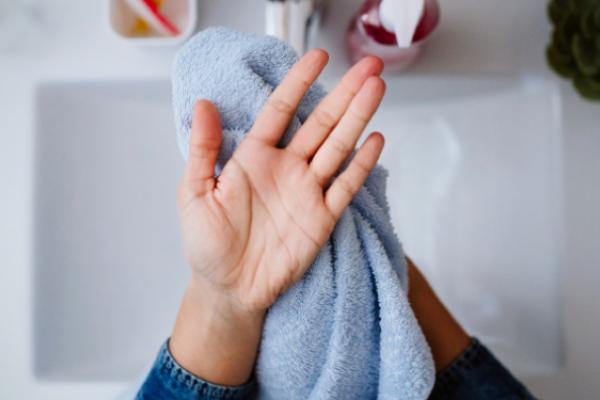
Q: How can I continue washing my hands this often, but also stop my skin from drying out?
A: Every time you wash your hands and they’re wet, you’re adding moisture to your skin. But when you wash and dry the skin over and over again, you eventually leach out all of its natural lipids (i.e. oils) and it can become dry and brittle. The key is to restore some of those lost lipids by applying emollient lotions and creams (i.e. moisturizers) that act as barriers to protect your skin.
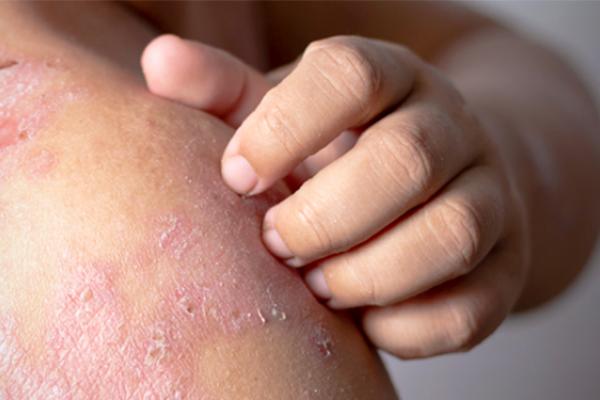
Approximately 15-20 per cent of Canadians live with some form of atopic dermatitis (AD), also known as eczema. In a bid to find a better treatment to prevent eczema’s debilitating effects, findings by Vancouver Coastal Health Research Institute (VCHRI) researchers—recently published in the Journal of Investigative Dermatology—have identified a key enzyme that contributes to the condition.
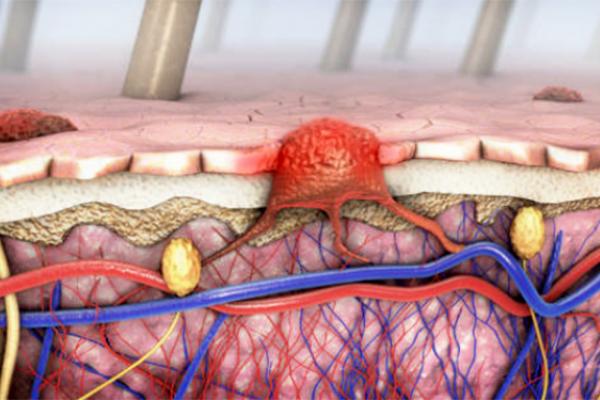
Melanoma, the deadliest form of skin cancer, is diagnosed in more than 130,000 people globally every year. Now, work is being done on a tool to help in its early detection: a simple, compact laser probe that can distinguish between harmless moles and cancerous ones–in a matter of seconds.
Imagine having a sunburn all the time. This is the reality for patients with autoimmune diseases that cause blistering. But hope is on the horizon. Research findings of primary investigator and Vancouver Coastal Health Research Institute scientist Dr. David Granville and his team have revealed the culprit that exacerbates blistering and prevents healing.
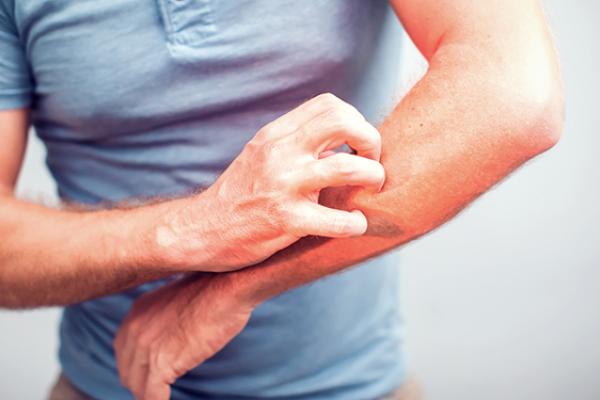
We know that exposure to the sun’s rays can cause premature aging of the skin, but in some cases it can also lead to an allergic reaction. Dr. Harvey Lui explains how to tell if that rash is from the sun and when to see your doctor.
Steveston resident Vicky Dabbs believes in giving back. Although she’s in great health, the 64-year-old semi-retired nurse has taken part in the trial of a new shingles vaccine. Dabbs feels compelled to do her part for research because she’s seen firsthand the impact shingles can have.
“I saw a lot of geriatric patients with shingles when I worked in hospitals. Many of them were quite weakened for a considerable length of time and in a lot of pain. Sometimes it’s very debilitating.”
A new product developed in BC by Vancouver Coastal Health Research Institute (VCHRI) scientist Dr. Aziz Ghahary may solve the painful health burden of slow healing wounds. These wounds include pressure ulcers (or bedsores), large burns, and diabetic sores. They are very costly to treat. In BC alone, the cost of treating pressure ulcers in spinal cord patients is about $50 million per year. Pressure ulcers come from hours spent immobile in wheelchairs or in bed. Circulation becomes cut off, tissue is destroyed, and the resulting wounds are deep and painful.
While campfires have been banned across BC this summer, many are unaware of the significant risk of burns from BBQs and other sources. Vancouver Coastal Health Research Institute (VCHRI) research scientist and plastic surgeon Dr. Anthony Papp wants people to become more aware of a dangerous type of burn called accelerant burns. These burns are caused when using products like gasoline, propane, or butane to start BBQs and bonfires, burn garbage and even manufacture drugs.
Seek shade and avoid the sun in peak hours. Those are two of the common suggestions for skin cancer prevention. But what if you can’t follow that advice? Outdoor workers—in construction, landscaping and road maintenance—can’t pick and choose when they’ll be outside. And they can’t seek out shade in an open worksite. These workers are in a high-risk category for skin cancer, and researchers are starting to focus on prevention strategies for them.
Q: Should I get a base tan before I spend lots of time outdoors this summer?
A: The best analogy for the supposed purpose and function of a base tan is smoking filtered versus unfiltered cigarettes. I suppose filtered cigarettes might be considered marginally better than unfiltered ones, but not smoking cigarettes at all is without a doubt the best scenario.
Is a base tan better than no tan before prolonged sun exposure? I suppose. But it’s better not to tan at all.