
The PRECISE-X tool successfully identified patients at risk of severe exacerbations, offering a new opportunity to improve long-term health outcomes.
A new risk prediction tool could help reduce the burden of chronic obstructive pulmonary disease (COPD) on patients and health care systems. The PRECISE-X model tested by lead researcher and Vancouver Coastal Health Research Institute scientist Dr. Mohsen Sadatsafavi identified a series of patient characteristics linked to severe exacerbations of COPD following diagnosis.
“The first severe exacerbation is the most important to prevent, as it causes additional damage to already damaged airways,” says Sadatsafavi.
“Severe exacerbations of COPD can trigger a snowball effect toward airway and health deterioration.”
COPD affects over two million Canadians and is one of the top reasons for hospitalization in British Columbia and Canada, as well as a leading cause of mortality globally. A chronic, progressive condition caused by damage to the airways in the lungs, early interventions are essential to prevent lung attacks.
Lung attacks, also called exacerbations, are acute, inflammatory events usually related to an infection, requiring urgent care and hospitalization. These events speed up the progression of COPD disease, worsening patient health outcomes and quality of life.
“Research has shown that COPD exacerbations are not only a product of COPD, but lead to further damage to lung function and airways that can set patients on a trajectory of rapid decline, sometimes doubling disease severity in a relatively short period of time,” notes Sadatsafavi.
“Preventing exacerbation early in the course of the disease is of utmost importance for COPD patients to retain as much lung function as possible for as long as possible.”
While many patients experience generally mild symptoms following diagnosis, others deteriorate faster, experiencing significantly reduced lung function that can limit daily activities, including exercise, and heighten their risk of a future severe exacerbation.
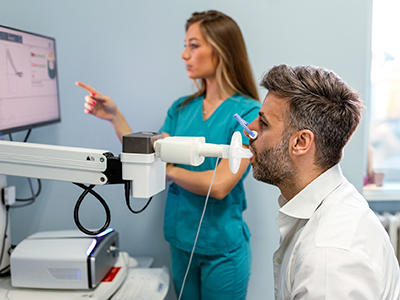
The PRECISE-X tool aims to support risk stratification at the time of COPD diagnosis by offering a proven model to score patients by risk category, with higher-risk patients potentially able to see their likelihood of a severe exacerbation within the next one to five years.
This early warning tool would provide physicians and patients with the information needed to make informed decisions about treatment plans and lifestyle changes, such as smoking cessation, to prevent a severe exacerbation.
“We know that we can prevent a lot of these exacerbations with proactive outpatient care.”
With up-front information about which patients are at greater risk of severe exacerbations, health care practitioners can focus more resources and attention on the proactive disease management of individuals who would benefit most from lifestyle changes or adjustments to treatments, such as the use of inhalers.
Stratifying risk at the point of diagnosis to improve long-term health outcomes
Sadatsafavi’s study developed and validated the PRECISE-X statistical model using medical histories from 219,015 COPD patients included in a large, United Kingdom-based primary care dataset. The research team’s data analysis looked at patient charts from the point of diagnosis of COPD up to five years after, determining whether a patient experienced a severe exacerbation of their COPD.

Looking at all the data, PRECISE-X identified that patient risk of a first severe exacerbation was about 4.2 per cent within one year and 30 per cent within five years. From this information, the model identified four key predictors of disease: patient sex, age, dyspnoea score — or shortness of breath — and forced expiratory volume in one second, along with 28 additional predictors that could heighten model accuracy.
Researchers then applied the PRECISE-X model, now loaded with the predictors of severe exacerbations among COPD patients identified in the prior data analysis, to patient records from different geographic regions in the UK. These results validated the ability of the predictors of disease to accurately categorize a patient’s risk of experiencing a severe COPD exacerbation within one or five years.
Of particular importance is that the predictors of disease used in the model drew from routine clinical data gathered for COPD diagnosis and tracked in patient charts.
“The availability of clinical data used for the PRECISE-X model makes it conducive to seamless integration into clinical practices, including patient databases.”
In clinical practice, PRECISE-X could be a powerful tool for physicians and patients when discussing a COPD diagnosis, providing concrete data on a patient’s risk of severe exacerbations and informing preventative care planning and decision-making.
“While further testing is needed, the PRECISE-X model shows promise as a means to support earlier risk stratification of severe COPD exacerbation and proactive disease management,” Sadatsafavi says. “Importantly, though, this model tells us that severe exacerbations of COPD are indeed predictable, making it an exciting avenue to pursue for enhanced patient diagnostics and care outcomes.”
The research team is actively pursuing follow-up studies to further validate the PRECISE-X model in other countries, including in Canada.