
Researchers have developed a sophisticated scribble-based AI algorithm to support the clinical evaluation of vitiligo lesions.
Vitiligo is a painless but often psychologically distressing autoimmune condition that causes the loss of skin pigmentation. Tens of thousands of British Columbians have the chronic disorder, which affects around one per cent of the global population. Accurately assessing depigmented lesions — patches of skin that have lost their colour — is essential for tracking disease and treatment outcomes. A new advanced artificial intelligence (AI) interface developed by Vancouver Coastal Health Research Institute researcher Dr. Tim Lee shows promise as a clinical enhancement tool.

For Lee’s study, recently published in Medical Image Analysis, researchers tested a new AI image analysis computer algorithm that detects the lost skin pigmentation found in vitiligo lesions, clinically referred to as lesion segmentation. Their GloW-VSNet algorithm was able to segment vitiligo lesions comparably to clinicians, and within a fraction of the time required for similar algorithms.
Vitiligo attacks melanocytes that produce skin colour, resulting in people with the condition developing patches of skin and sometimes hair stripped of its pigmentation. Treatments, such as light therapy, and certain medications can slow or even reverse the presence of lesions, with disease tracking essential to evaluating treatment effectiveness.
Capturing a global view of lesions in a fraction of the time
GloW-VSNet was trained on only a small fraction of the annotated medical images of vitiligo typically needed for programs of its kind; however, researchers found that the powerful algorithm was able to accurately identify lesions with only scribble annotations as a guide.
“To the best of our knowledge, the GloW-VSNet algorithm we developed is the first lightweight global-view vitiligo lesion segmentation method based on scribble annotations.”
Similar to an artist making a quick sketch of a person’s face before filling in the details, scribble annotations are quick lines identifying the location of vitiligo lesions. Taking only a few minutes, this process is drastically faster than detailed annotations that label pixels around lesion boundaries, which can be painstaking and time-consuming for clinicians to complete.
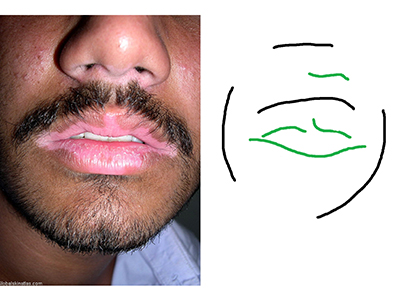
Leveraging the speed of scribble notations, GloW-VSNet achieved in record time an accuracy of within 0.2 per cent of an expert clinician in terms of estimating the percentage of body surface area affected by vitiligo. The program accomplished this using images that capture a global view of multiple lesions in an area of the body, as opposed to a local view of a single lesion.
“A global view is essential for precise, long-term disease tracking,” shares Lee. “It more closely mimics clinical settings by creating a broader context for the AI algorithm to assess whether a patient’s lesions are multiplying or expanding.”

Apart from its speed and accuracy, another benefit of GloW-VSNet, developed with postdoctoral fellow Dr. Yuheng Wang, is the diversity of images of vitiligo that the program can accurately process.
“Medical images are often affected by what we call artifacts, or pixel distortions, that reduce the contrast between depigmented skin and unaffected skin,” shares Wang. “The presence of a dark background, uneven illumination and human artifacts such as hair make it even more difficult to accurately define lesion boundaries.”
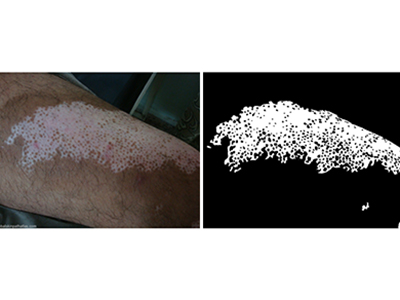
With the rise in smartphone photography, GloW-VSNet’s additional edge could be its capacity to handle hazy or pixelated images, including those taken in lower light. However, more research is needed to confirm this and to what extent.
“Our results demonstrate that GloW-VSNet is capable of accurate and reliable segmentation, with potential applications for clinical assessment of the severity of vitiligo and, potentially, other skin diseases using clinical photography.”
The next phase of this research is to move towards clinical trials, says Lee. On top of that, Lee hopes to be able to develop GloW-VSNet clinical guidelines and a training program to complement their freely available programming code.