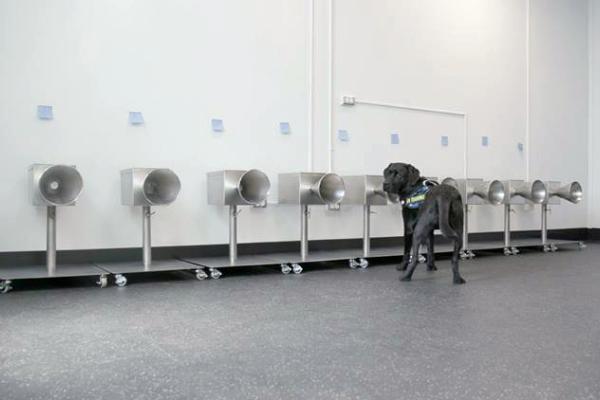
Dogs who can sniff out disease could be a valuable addition to certain clinical settings, according to research led by Vancouver Coastal Health Research Institute researchers Dr. Marthe Charles and Dr. Elizabeth Bryce.
For their pilot study, published in the Journal of the Association of Medical Microbiology and Infectious Disease Canada, the research team recruited specialist dogs and their trainers for an experiment to see whether the dogs could detect COVID-19 by its smell.
Deciding which patients to treat and when were among the many challenges presented by the COVID-19 pandemic.
With limited resources and staff available to care for patients, health care decision-makers were faced with an unprecedented situation in which patients and health-care resources needed to be allocated based on ever-evolving rules and guidelines.
Researchers have discovered evidence of brain shrinkage and cognitive decline among individuals with mostly mild SARS-CoV-2 virus infection. Published in the journal Nature in March 2022, the first longitudinal imaging study of its kind compares the brain scans of people taken before and after the start of the global COVID-19 pandemic.
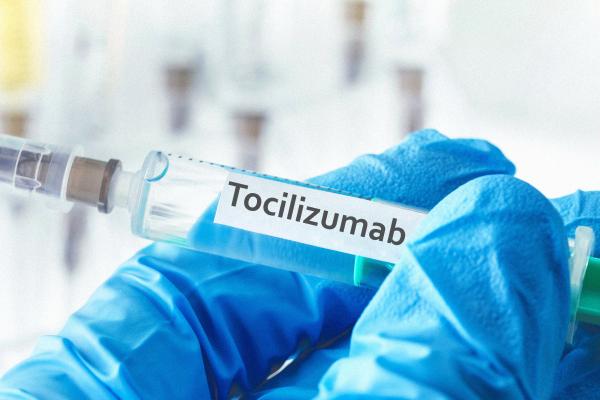
Vancouver, B.C. - Scarcity of a drug central to the treatment of critically ill COVID-19 patients inspired British Columbia researchers to develop a novel dosing strategy that resulted in more people being treated with smaller doses of a life-saving drug.
Sometimes you have to push boundaries to advance medical science.
That is exactly what Dr. Eric Yoshida, a principal investigator with Vancouver Coastal Health Research Institute and the former medical director of the BC Liver Transplant Program, and his team did in 2021 when they successfully completed an orthotopic liver transplant into a young patient with active COVID-19.
It was the first successful instance of such a transplant in Canada and only the second one recorded worldwide.
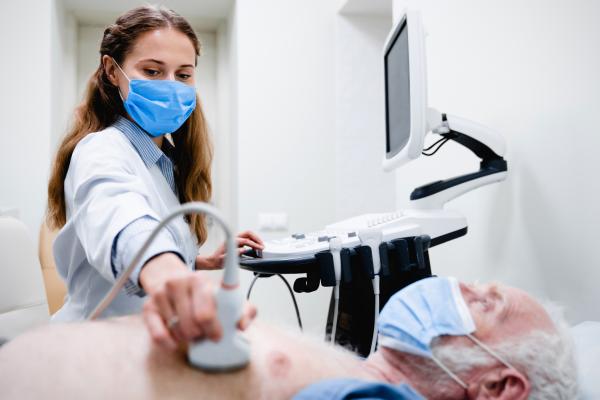
The global rally to stop the spread of COVID-19 has spurred the discovery of new approaches to streamline and enhance disease detection and triaging. A recent study led by Vancouver Coastal Health Research Institute (VCHRI) researcher Dr. Teresa Tsang summarizes evidence for why point-of-care ultrasound (POCUS) technology could be a leading, next-generation part of COVID-19 care.
We have come a long way since the start of the COVID-19 pandemic almost two years ago. The efforts of countless researchers, clinicians and health care workers have equipped us with vaccines, preventative measures and a better understanding of the disease. Thanks to them, we are better informed and prepared for the road ahead. I want to start off by thanking you for your perseverance and resilience during this time. Your efforts are supporting the best possible health and well-being of British Columbians, as well as global populations.
Vancouver, B.C. – Researchers at the Vancouver Prostate Centre (VPC) have engineered the fastest, artificial intelligence (AI)-enabled technology of its kind to identify novel medications for the SARS-CoV-2 virus. The team’s published study explains how they were able to supercharge the computational screening for potential antiviral compounds more than 100-fold, opening the door to the rapid development of medications to treat infected individuals.
Care providers and people living in long-term care homes were among the most affected by the COVID-19 pandemic. A study led by Vancouver Coastal Health Research Institute (VCHRI) researcher Dr. Lillian Hung explores how the person-centred culture of care and positive attitude at one care home brought staff and residents closer together and improved the mealtime experience for residents.